What are hebe shrubs?
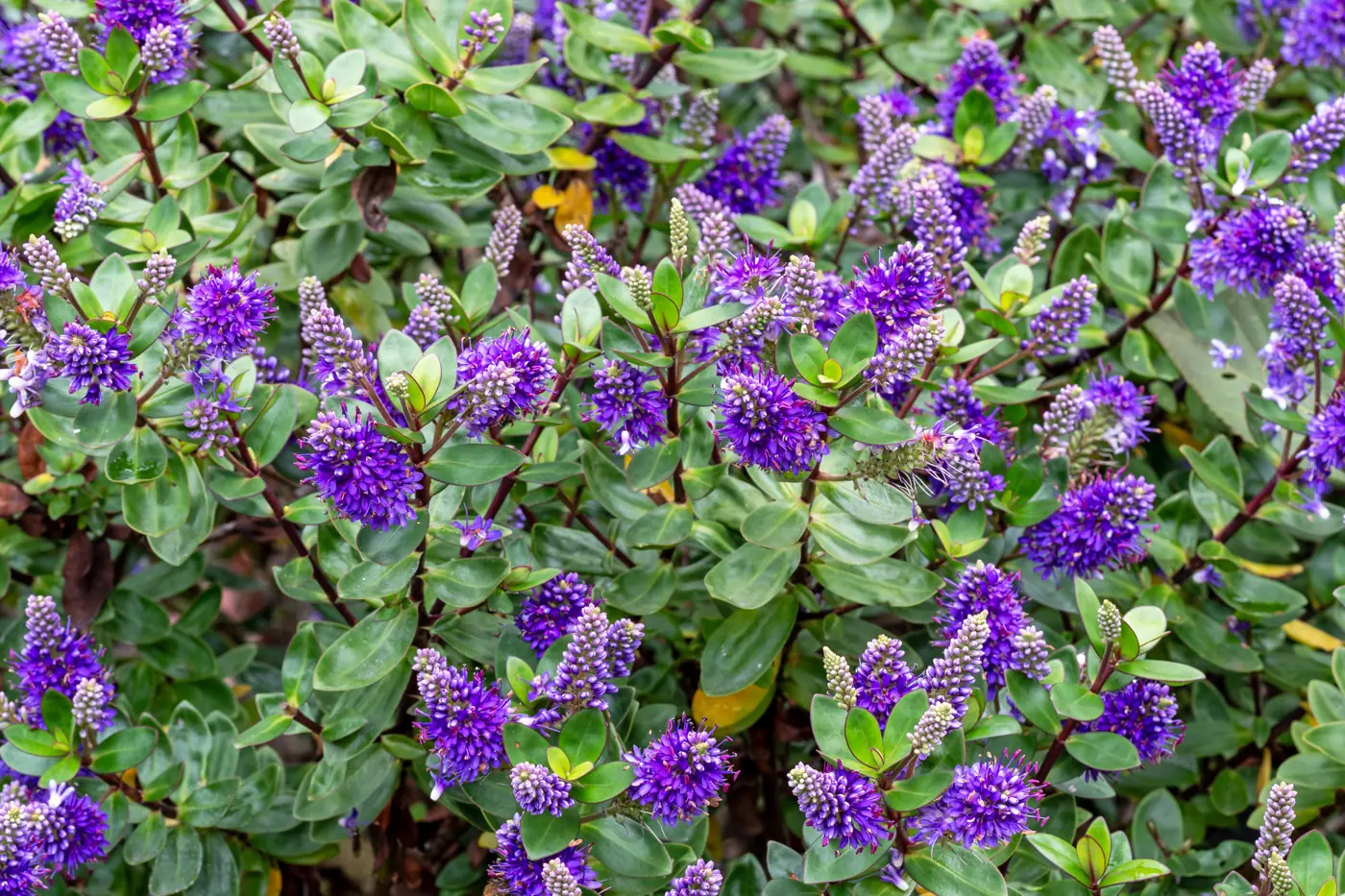
Hebe shrubs, often called shrubby veronicas, are evergreen plants that originally come from New Zealand. Botanists now group many of them under the name Veronica, but gardeners still know them as hebes. They have glossy leaves in shades of green, grey-green or variegated cream, and spikes of small flowers in white, pink, purple or blue.
Flowering times vary between varieties. Some hebes produce their first flower spikes in late spring, while others bloom during summer or continue into autumn. Their nectar-rich flowers attract bees, butterflies and hoverflies, particularly when planted in a sunny, sheltered position.
You will find two main types in garden centres and online. Small-leaved hebes have tiny, box-like foliage and are generally much hardier, coping with cold winters and exposed sites. Large-leaved hebes have broader, sometimes glossy leaves and bigger flower spikes, but they are more tender and suit sheltered town gardens or mild coastal areas.
Where is best to plant a hebe?
Hebes do best in a sunny, open spot. In shade they grow leggy, flower poorly and are more likely to suffer from mildew. A south-facing or west-facing border is ideal, especially if it is sheltered from cold winter winds.
The soil must drain freely. Hebes hate sitting in wet ground over winter, which causes root rot. On heavy clay, a raised bed or slight mound is usually safer than planting at ground level. Improve drainage across the surrounding bed with suitable coarse mineral material and organic matter rather than adding grit to the planting hole alone. Sandy soils usually drain well, although young plants may need additional watering while their roots establish. Many hebes tolerate chalky ground provided it is not persistently wet.
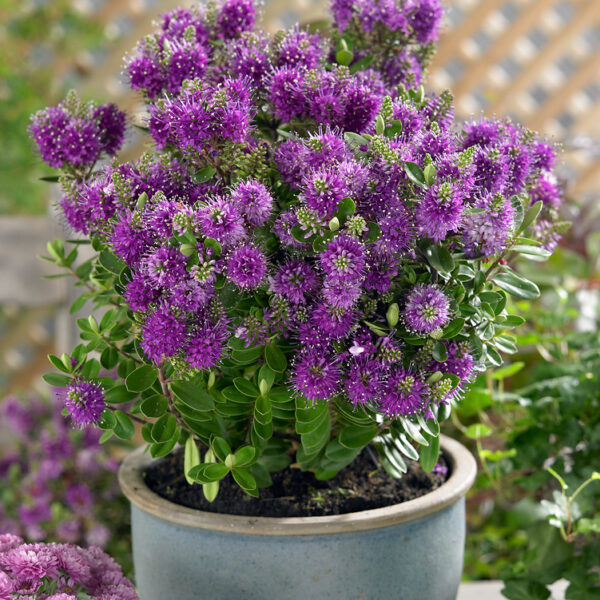
One of the real strengths of hebes is their tolerance of salt-laden winds. They are a first-rate choice for seaside gardens, where they form neat, wind-resistant mounds. In a small town garden, a hebe in a large pot on a sunny patio will thrive, as long as the compost is gritty and the pot has good drainage holes.
For a new-build plot with compacted soil, spend time improving drainage before planting. Dig in organic matter and sharp sand over a wide area rather than only the planting hole, so water can move through the soil freely.
Which hebe is most hardy?
Small-leaved hebe varieties are the toughest and most reliable in UK winters. They shrug off frost and snow much better than their large-leaved cousins. Look for varieties with tiny, closely packed leaves, often described as whipcord or box-like.
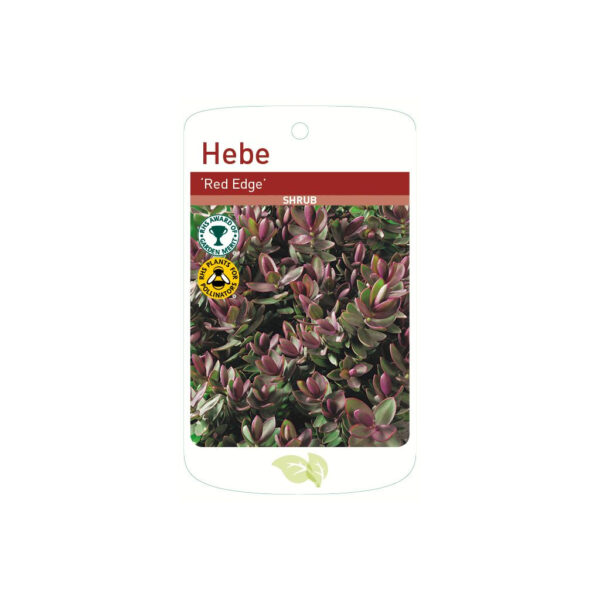
Hebe Red Edge is a useful choice for a sheltered UK border. Its small, grey-green leaves develop distinctive reddish margins, particularly during colder weather, and lilac-blue flowers appear in early summer. Hebe pinguifolia Pagei, with its low, silvery foliage, and the rounded, white-flowered Hebe rakaiensis are other small-leaved varieties worth knowing, although their suitability depends on local winter conditions. Plants for Garden stocks Hebe Red Edge in 9cm pots, in packs of 2, 3, 4 or 6 plants.
Large-leaved hebes, such as Hebe Midsummer Beauty or Hebe Great Orme, are best treated as slightly tender. They need a warm, sheltered spot, such as against a south-facing wall, and may need fleece protection if temperatures drop below minus 5 degrees Celsius for more than a night or two.
If you garden in a cold inland area or on an exposed hillside, stick to small-leaved varieties. In mild city gardens or coastal plots, you can experiment with a wider range.
Shop the plants in this guide
We offer a range of hebe shrubs, including mixed hebe collections and the ever-popular Hebe Red Edge, in pot sizes to suit new borders, low hedges or patio pots.
How to plant a hebe step by step
Planting a hebe properly gives it the best start. The ideal times are spring or early autumn, when the soil is warm and moist. Avoid planting into frozen or waterlogged ground.
Follow these steps for a hebe going into a border or a large pot.
- Water the hebe thoroughly in its pot an hour before planting.
- Dig a hole twice as wide as the rootball and the same depth.
- If your soil is heavy, fork grit or sharp sand into the base and sides of the hole.
- Tease out the roots gently if they are circling the pot.
- Set the plant in the hole so the top of the rootball sits level with the soil surface.
- Backfill with the dug-out soil, firming gently with your hands as you go.
- Water well to settle the soil around the roots.
- Spread a 5 cm layer of gravel or grit mulch around the base, keeping it clear of the stem.
Hebe spacing and sizing for hedges and borders
How far apart you plant hebes depends on the variety and the look you want. For a dense, low informal hedge, space small-leaved types closer together. For individual specimen shrubs in a border, give them room to spread naturally.
The table below gives a quick guide for common planting situations.
| Planting purpose | Spacing between plants | Notes |
|---|---|---|
| Low informal hedge (small-leaved hebes) | 30 to 40 cm apart | Gives a tight, bushy line within two to three years |
| Specimen shrub in a border | 60 to 90 cm apart | Allows the natural rounded shape to develop |
| Large-leaved hebe as a feature plant | 1 to 1.2 m apart | Needs space for the broader leaf spread |
| Hebe in a patio pot | One plant per 30 to 40 cm pot | Use a pot just wider than the current rootball |
Watering and feeding hebes
Established hebes can tolerate periods of dry weather, particularly when their roots have spread through free-draining soil. Water newly planted shrubs during dry spells throughout their first growing season. Once established, check the soil before watering rather than following a fixed fortnightly schedule. Give the roots a thorough soak when the ground is dry, allowing excess water to drain away. Persistently wet soil, especially during winter, is a greater concern than an occasional dry spell.
Hebes in pots need more attention. Container compost dries out faster, so check it regularly from spring to autumn. Water when the top 2 to 3 cm of compost feels dry, and never leave the pot standing in a saucer of water over winter.
Feeding is straightforward. Hebes are not greedy plants. A light mulch of homemade garden compost or well-rotted manure in spring, spread around the base but not touching the stems, provides all the nutrients they need. If you grow them in pots, a balanced liquid feed once a month during the growing season keeps them healthy. Avoid high-nitrogen fertilisers, which encourage soft, sappy growth that winter frosts can damage.
Should you cut back a hebe?
Yes, but with a light touch. Hebes do not respond well to hard pruning into old, bare wood. The best approach is a gentle trim each year to keep the shrub bushy and to remove spent flower spikes.
The table below shows a simple month-by-month pruning plan for UK gardens.
| Month | Pruning task |
|---|---|
| March to April | Remove any frost-damaged or dead shoots, cutting back to healthy growth |
| June to August | Lightly trim spent flower heads as they fade, snipping just below the flower spike |
| September | Give a final light shaping trim if needed, but keep cuts shallow |
| October to February | No pruning; let the plant rest and avoid creating wounds that frost can enter |
What is the lifespan of a hebe?
In most UK gardens, a hebe shrub will look good for around five to ten years. After that, the centre often becomes woody and bare, and flowering can decline. This is natural for hebes, especially the larger-leaved types.
You can extend the life of a hebe by giving it that light annual trim after flowering, which encourages new shoots from lower down. Planting in free-draining soil and avoiding heavy feeding also helps keep the growth tight and healthy.
When a hebe does eventually become too leggy and unproductive, it is usually best to replace it with a young plant. A young replacement will gradually develop a rounded shape, although the time needed to fill the space depends on the variety, growing conditions and size of the original shrub.
Common hebe problems and how to fix them
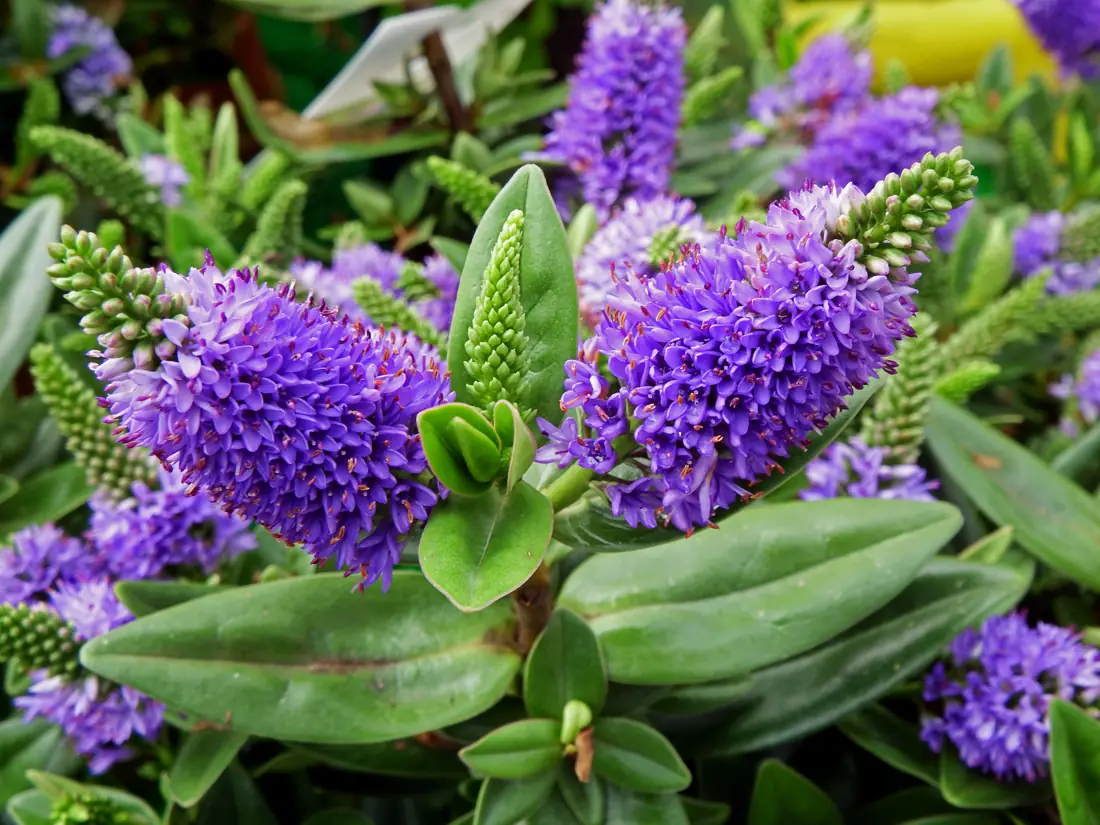
Hebes are generally trouble-free, but a few issues can crop up. Catching them early makes all the difference.
Powdery mildew appears as a white dusting on leaves, usually in dry soil or crowded, shady spots. Improve air flow by thinning nearby plants, water the roots rather than the leaves, and mulch to keep moisture even.
Poor drainage is a common cause of hebe decline, particularly during cold, wet winters. Affected plants may develop yellowing leaves, wilting shoots or dying branches despite the soil remaining damp. Severely damaged roots rarely recover. Improve drainage across the planting area or use a raised bed, and avoid watering when the ground is already wet. If a plant continues to deteriorate, inspect the roots before replacing it.
Frost damage shows as blackened shoot tips in spring. Simply snip these off in April, cutting back to a live bud. Small-leaved hebes usually recover well; large-leaved types may need fleece in very cold snaps.
Aphids can cluster on soft new growth in spring. A strong jet of water from the hose often shifts them. For persistent attacks, use a soft soap spray or encourage ladybirds by planting pollinator-friendly flowers nearby.
Growing hebes in pots
Hebes make excellent container plants for a sunny patio, balcony or front doorstep. Choose a pot with wide drainage holes and use a mix of two parts peat-free multipurpose compost to one part horticultural grit. This gives the sharp drainage they need.
Small-leaved varieties such as Hebe Red Edge or Hebe pinguifolia Pagei are perfect for long-term pots. They stay compact and cope with the restricted root run better than large-leaved types.
Repot every two to three years in spring, moving to a pot just one size larger. Top-dress with fresh gritty compost each year if you are not repotting. In winter, move pots to a sheltered spot, such as against a house wall, to protect the roots from freezing.
Design ideas with hebes
Hebes are versatile shrubs that fit into many garden styles. Their neat, evergreen shape gives structure all year, while the summer flowers add a soft, informal touch.
For a coastal garden, plant a ribbon of small-leaved hebes along a path or at the front of a border, with lavender and sea holly behind. The grey-green leaves look right at home against gravel or pebbles.
Low-growing hebes make attractive edging plants beside lawns and paths, where their small evergreen leaves provide colour through winter. Leave enough room for their mature spread so branches are not repeatedly damaged by foot traffic or garden games. An occasional light trim after flowering will help maintain their rounded shape.
For a modern courtyard, three matching hebes in large glazed pots either side of a bench create a calm, balanced look. Underplant them with low-growing sedums or thyme for extra interest.
As a wildlife-friendly choice, mix hebes with other pollinator plants such as salvias, catmint and single-flowered roses. The long flowering season keeps bees busy from June until the first frosts.
Hebe varieties to try
There are dozens of hebe varieties available, but a handful stand out for UK gardens. Here are some reliable choices.
Hebe Red Edge is a firm favourite for good reason. The grey-green leaves have a red margin that intensifies in cold weather, and the lilac-blue flowers appear in early summer. It is hardy, compact and easy to grow.
Hebe pinguifolia Pagei forms a low carpet of silvery-blue leaves, reaching only about 30 cm tall. White flowers appear in May and June. It is one of the hardiest hebes and brilliant for ground cover or the front of a border.
Hebe rakaiensis is a rounded, dome-shaped shrub with glossy bright green leaves and short white flower spikes in summer. It reaches about 1 m tall and wide, and is tough enough for exposed sites.
For a larger feature plant, Hebe Midsummer Beauty has long, tapered leaves and spikes of purple flowers that fade to white. It needs a sheltered spot and looks wonderful against a warm wall.
Propagating hebes from cuttings
Taking cuttings is a reliable way to make new hebe plants that are true to the parent. The best time is mid to late summer, when the current season’s growth has firmed up slightly but is not yet woody. Choose healthy, non-flowering shoots about 10 cm long. Trim the cutting just below a leaf node, remove the lower leaves, and dip the base in rooting hormone powder to speed up root formation.
Insert the cuttings around the edge of a pot filled with a mix of equal parts horticultural grit and peat-free multipurpose compost. Water gently and cover the pot with a clear plastic bag, keeping it away from direct sun to prevent scorching. A bright windowsill or a sheltered cold frame works well. Roots usually develop within four to six weeks, after which you can pot each cutting individually.
Overwinter young plants in a frost-free place, such as a cold greenhouse or a porch. Plant them out the following spring once the risk of frost has passed. This method is particularly useful for replacing older shrubs that have become leggy, and it is a good way to increase stock of favourite varieties like Hebe Red Edge without extra cost.
Hebes and wildlife gardening
Hebe flowers provide nectar for bees, butterflies and hoverflies, making flowering varieties useful additions to wildlife-friendly borders. Depending on the variety, flower spikes can appear from late spring through summer and into autumn. Planting varieties with different flowering periods helps extend the availability of nectar, especially towards the end of the growing season.
The evergreen foliage offers shelter for insects and small birds throughout the year. In coastal and exposed gardens, a hebe hedge creates a windbreak that benefits more delicate plants and provides safe nesting sites. Avoid using pesticides on or near hebes, as this can harm the beneficial insects they attract. Instead, encourage natural predators such as ladybirds and lacewings by planting a mix of flowering shrubs nearby.
To maximise the wildlife value, plant hebes in groups rather than singly. A cluster of different varieties, including early and late bloomers, extends the flowering period and supports a wider range of species. Hebe Red Edge, with its lilac summer flowers and compact habit, fits neatly into a mixed border where it can mingle with lavender, sedums, and other pollinator favourites. Deadheading is not essential, but a light trim after the first flush of flowers can prompt a second show and keep the shrub tidy without reducing its appeal to insects.
Buying hebe plants
When you buy hebes, look for plants with healthy, unmarked leaves and a bushy shape from the base. Avoid any with yellowing lower leaves or signs of mould on the compost surface.
For several plants along a border or low hedge, the 9cm pot options are a practical starting point. Mixed hebes are available in packs of 4, 6, 12 or 18 plants in 9cm pots, with a separate option of 4 plants in 2 litre pots. Hebe Red Edge is available in 9cm pots in packs of 2, 3, 4 or 6. The larger pot option gives you more established plants initially, while smaller plants need additional growing time before they fill their allocated space.
Plant hebes as soon as you can after they arrive. If the ground is not ready, keep them in a sheltered spot outdoors and water them regularly until planting day.
Common questions
Where is best to plant a hebe?
A sunny, sheltered spot with free-draining soil is ideal. Hebes thrive in south-facing or west-facing borders and cope well with coastal salt spray. Avoid heavy shade and waterlogged ground.
Should you cut back a hebe?
Give hebes a light trim after flowering, removing spent flower spikes and just a little of the leafy growth. Never cut hard into old, bare wood, as it rarely regrows.
What is the lifespan of a hebe?
Most hebes look good for five to ten years. After that they often become woody and flower less. Light annual pruning and good drainage can extend their life, but they are generally replaced after a decade.
Which hebe is most hardy?
Small-leaved hebes such as Hebe Red Edge, Hebe pinguifolia Pagei and Hebe rakaiensis are the hardiest. They withstand frost and snow much better than large-leaved varieties.
Can hebes grow in pots?
Yes, hebes grow well in pots if you use a gritty, free-draining compost and a container with good drainage holes. Small-leaved varieties are especially suited to long-term container growing.
When do hebes flower?
Most hebes flower from early summer into autumn, often from June until October. The exact timing depends on the variety and the weather, but they are among the longest-flowering evergreen shrubs.
Are hebes good for wildlife?
Yes, hebe flowers are rich in nectar and attract bees, butterflies and other pollinators. Planting them helps support garden wildlife through the summer and autumn months.
How fast do hebes grow?
Hebes are moderately fast-growing shrubs. Small-leaved types typically put on 15 to 30 cm of growth a year, while large-leaved varieties can grow faster in warm, sheltered spots.