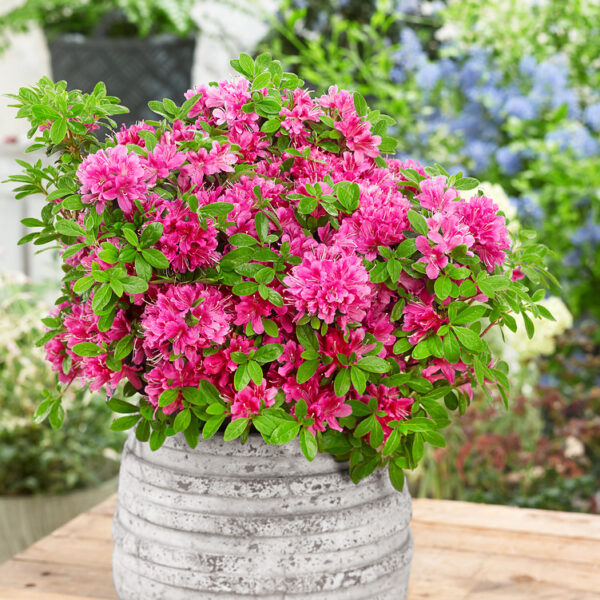
Rhododendron, evergreen azalea group
£17.99 per pack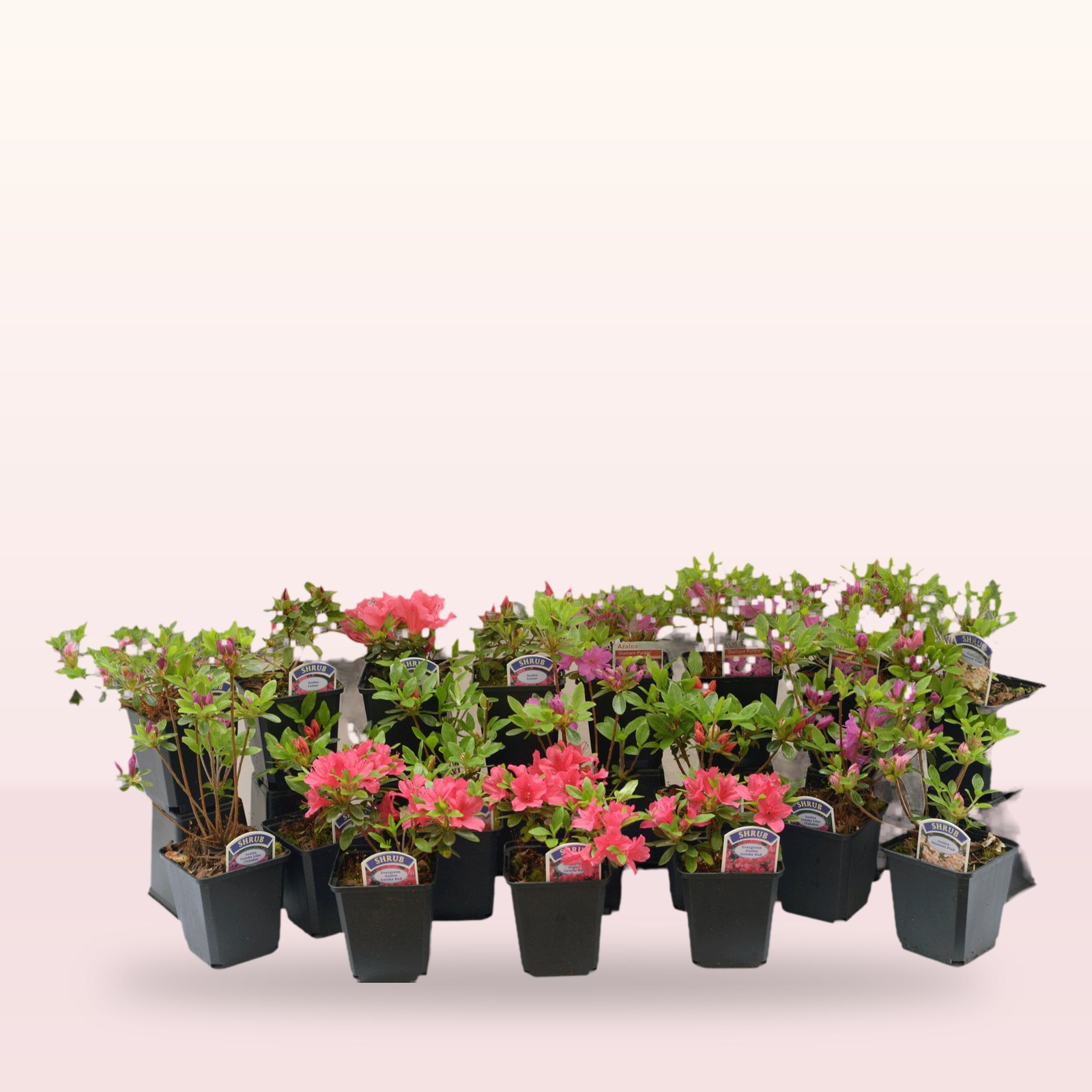
- UK Nursery Grown
- Grow Guarantee
Mixed Japanese Azalea Shrubs in Pots
Rhododendron, evergreen azalea group
£17.99 per pack
A varied spring display of compact evergreen Japanese azaleas supplied in mixed colours. Use the collection as a group across a small acidic border, line a lightly shaded path or divide between patio pots filled with ericaceous compost. Shallow-rooted and long-lived, these shrubs need shelter, reliable moisture and acid soil to thrive.
- Mixed colours for varied spring impact
- Compact evergreen shrubs for pots and borders
- Thrives in acidic soil or ericaceous compost
1. How would you like it supplied?
Grown and sent in a pot, so you can plant it in any month when the soil is not frozen or waterlogged. Ask us a question
Pots, bare root and rootball
- Bare root
- Arrives with bare roots and little soil. Keep them damp and plant while the weather is cool.
- Rootball
- Arrives with soil wrapped around the roots. Lift it by the soil ball rather than the stems and plant as directed.
- Potted
- Comes in a nursery pot. Each option shows the pot size and the height you will receive.
2. Pick your plant
Not sure which shrub to pick?Tell us about your garden and we will help you choose
Position
Sheltered dappled shade
Soil
Acidic, moist but well-drained soil or ericaceous compost
Supplied size
9cm pot
Ordering
Order from 1 pack
Description
Mixed Japanese Azalea Shrubs in Pots
What are mixed Japanese azaleas?
Japanese azaleas have small, dark evergreen leaves and clusters of funnel-shaped flowers in spring. Mixed collections can include pink, red, white and purple shades, with the precise colours depending on the plants selected. Grouping several together gives a varied flowering display along an acidic border or across individual patio pots. The plants stay naturally compact, making them a good fit for the front of a border, a low hedge-like edge or a set of patio containers.
Flower colours, mature sizes and exact flowering times vary between the azaleas in the collection. Some may open a week or two earlier than others. Check the label on each pot as you arrange the group and allow enough room for each shrub to reach roughly 60 to 90cm tall and wide over time.
Why choose a mixed Japanese azalea collection?
A mixed collection brings different flower colours into the same planting area. Set the pots out before planting to see how the colours sit together, leaving room for each shrub to spread. Outside the flowering season, their small evergreen leaves form low, rounded shapes that give the border structure.
Japanese azaleas are also shallow-rooted, which means they grow well in containers where you can control the soil. If your garden sits on chalk or alkaline ground, pots of ericaceous compost let you enjoy these shrubs without trying to change the soil in the ground.
Eventual height, spread and growth rate
Expect most Japanese azaleas in this collection to reach around 60 to 90cm tall and wide after 10 to 15 years. They are slow to moderate growers, typically putting on 5 to 10cm of new growth each year once settled. The compact habit means you rarely need to cut them back hard to keep them within bounds.
Growth rates and mature dimensions vary between the plants supplied. For distinct shrubs in a border, start with roughly 60 to 80cm between plants, adjusting the spacing where a particular variety is likely to spread further. In pots, choose a container at least 30 to 40cm wide to give the shallow roots room to spread.
Ways to use mixed Japanese azaleas
Four or six azaleas can form a loose flowering edge along a lightly shaded path. Leave enough room for their mature spread so branches do not obstruct the paving, and keep the planting in acidic soil that retains moisture without becoming waterlogged. Plant them in a cluster through a small front garden border, spacing them among ferns and hostas that enjoy similar conditions.
On a patio or balcony, put one azalea per pot and group the containers together for a coordinated look. Because the flower colours vary, the display changes as you move between pots. You can also use the collection to fill gaps in an existing acidic shrub bed, slotting the plants between larger rhododendrons or camellias.
Choosing a size: pot and pack options
There are three listed combinations: four plants in 9cm pots, or four or six plants in 2 litre pots. The smaller plants suit a border being planted from scratch, where there is time for the shrubs to develop. Consistent watering during their first growing season is particularly important. The 2 litre plants are more developed, with a fuller root system and more top growth, so they make a quicker impact in a border or container.
All plants are supplied in pots, so you can plant them at any time of year when the ground is workable, avoiding frozen or waterlogged soil.
| Option | Supplied size | Pot or root type | Best for | Plants per pack |
|---|---|---|---|---|
| 9cm pot | 4 plants | 9cm pot | Pot-grown | Starting a new group on a budget | 4 |
| 2 litre pot | 4 plants | 2 litre pot | Pot-grown | Faster impact in borders or pots | 4 |
| 2 litre pot | 6 plants | 2 litre pot | Pot-grown | Larger planting area or more pots | 6 |
Growing and care
Planting and looking after it
When and how to plant Japanese azaleas
Pot-grown Japanese azaleas can go into the ground at any time of year, provided the soil is not frozen or waterlogged. Spring and early autumn are ideal, giving the roots time to settle before summer heat or winter cold. Water each pot thoroughly before you start.
Dig a hole as deep as the rootball and twice as wide. Set the plant so the top of the rootball sits level with the surrounding soil: planting too deep can smother the shallow roots. Backfill with the original soil if it is naturally acidic, firm gently and water well. Adding ericaceous compost alone will not make alkaline ground suitable in the long term; use containers or a properly prepared acidic bed instead. In containers, use pure ericaceous compost and make sure the pot has drainage holes.
Spacing for a low azalea hedge or group
If you want the plants to grow together into a loose, informal hedge or continuous border edge, space them roughly 50 to 60cm apart. For individual shrubs that keep their own shape without merging, allow 70 to 80cm between plants. The table below shows how many plants you need for three common lengths when spacing at 55cm for a hedge effect.
| Length to cover | Plants needed (spaced at 55cm) |
|---|---|
| 5 metres | 10 plants |
| 10 metres | 19 plants |
| 20 metres | 37 plants |
Watering and feeding
Japanese azaleas have fine, shallow roots that dry out faster than deeper-rooted shrubs. Check the soil regularly during dry spells, especially in the first two growing seasons. Use rainwater where you can, particularly in hard-water areas, because tap water can gradually raise the soil pH.
Feed with a fertiliser formulated for ericaceous plants in early spring, just as new growth starts. A second light feed after flowering supports bud formation for the following year. Avoid high-nitrogen lawn feeds or general-purpose fertilisers that can push soft growth at the expense of flowers.
Trimming and aftercare calendar
Japanese azaleas need very little pruning. The main task is to remove any dead, damaged or crossing shoots in late spring, immediately after the flowers fade. This timing is important because next year's flower buds form on the new growth that follows. If you trim too late in summer or during autumn, you risk cutting off the developing buds.
Lightly shaping the plant after flowering helps keep a dense, tidy outline. You do not need to cut back into old, leafless wood; azaleas can be slow to regenerate from hard pruning. Mulch around the base each spring with ericaceous compost or leaf mould, keeping the mulch away from the stems to prevent rot.
Winter care and hardiness
Many Japanese azaleas tolerate substantial winter cold once established, but hardiness varies by cultivar. Some can withstand temperatures around -15u00b0C in suitable conditions, while others need greater protection, particularly in exposed gardens. The main winter risks are not cold alone but a combination of frozen soil and drying wind. A sheltered spot out of strong winds and a layer of mulch over the roots both help.
In containers, the roots are more exposed. Move pots to a sheltered corner or wrap the sides with bubble wrap during prolonged cold snaps. Water sparingly in winter but do not let the compost dry out completely.
Choose plants for acidic soil Compare collection sizes Looking after new plants
Our planting guideMore growing help: RHS plant and growing guidance
Sizes and prices
Mixed Japanese azaleas sizes, prices and minimum orders
| Option | Supplied height | Pot or root | Plants | Price | Minimum order | Availability |
|---|---|---|---|---|---|---|
| 9cm pot | 4 plants | – | 9cm pot | 4 | £17.99 per pack | None | Available |
| 2 litre pot | 4 plants | – | 2 litre pot | 4 | £29.50 per pack | None | Available |
| 2 litre pot | 6 plants | – | 2 litre pot | 6 | £39.99 per pack | None | Available |
Prices are for the option you select. Pack size is the number of plants you receive, and the minimum order is the smallest number we can send.
How sizes and quantities workDelivery
Delivery for your plant order
You will see delivery options and any charge in your basket before you pay.
Your plants are alive when they reach you, so open the box on the day, water if the compost feels dry and stand them somewhere sheltered until planting.
Delivery informationPlant questions
Good to know
Are Japanese azaleas hardy?
Many Japanese azaleas are hardy in UK gardens, although tolerance varies between cultivars. Some established varieties cope with temperatures around -15u00b0C in sheltered positions, but this should not be assumed for every plant in a mixed collection. The bigger risk is cold, drying wind hitting the evergreen leaves while the roots sit in frozen soil. Plant in a sheltered spot, mulch the roots and, for pots, move them to a protected area or wrap the container during severe cold.
Do Japanese azaleas come back every year?
Yes, Japanese azaleas are long-lived evergreen shrubs that return year after year. They keep their leaves through winter and produce new flowers each spring. Acidic soil, consistent moisture and protection from drying winds help these shrubs remain healthy over many years. Light pruning after flowering is usually enough to maintain their rounded shape.
How long do Japanese azaleas flower for?
The main flowering period runs from mid to late spring, typically lasting three to five weeks depending on the variety and the weather. Cool, overcast conditions can extend the display, while hot sun shortens it. Because this mixed collection contains several varieties, the overall flowering window may stretch a little longer as different plants open in sequence.
How to take care of azalea japonica?
Give Japanese azaleas a sheltered spot in dappled shade with acidic, well-drained soil that stays evenly moist. Water with rainwater where possible, especially in hard-water areas. Feed with an ericaceous plant food in early spring and again after flowering. Trim lightly after the blooms fade to remove dead wood and keep the shape neat, but avoid cutting into old wood or pruning after midsummer.
Can I grow Japanese azaleas in pots?
Yes, Japanese azaleas grow well in containers. Use a pot at least 30 to 40cm wide with drainage holes and fill it with ericaceous compost. Check the moisture regularly: container compost dries faster than garden soil. Water with rainwater if you can and feed with a liquid ericaceous fertiliser during the growing season. Repot every three to four years into fresh compost.
How much ground will a pack of 4 cover?
Four mixed Japanese azaleas spaced at 55cm centres occupy roughly 2.2 metres of planting length when an allowance is made for their eventual spread at both ends. In a grouped arrangement, allow approximately 1.5 metres square, with extra room if individual varieties become broader than expected. If you want the shrubs to stay as individual specimens without touching, space them 70 to 80cm apart, which covers a border length of around 3 metres.
Ask us about this plantGoes well with