Privet hedge plants for sale online UK
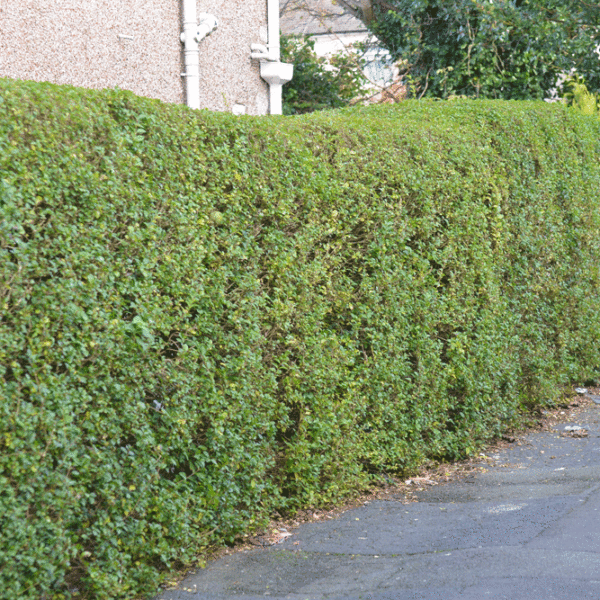
Privet hedging has small oval leaves and fine, twiggy growth that responds well to clipping. It suits front gardens, roadside boundaries and narrow spaces where a broad hedge would take up too much room. Our privet is supplied bare root in two heights, 40-60cm and 60-90cm, for planting during the dormant season, roughly November to March. It tolerates urban conditions and a range of soils, provided drainage is reasonable. Plant in a single row for a narrower boundary or a staggered double row where you have room for thicker growth. Privet is semi-evergreen, so some winter leaf loss is normal.
Why privet: speed, density, semi evergreen in hard winters
Privet (Ligustrum ovalifolium) is familiar along British front paths and garden boundaries, where its small oval leaves form a dense surface after regular clipping. Established plants can make around 30 to 60cm of annual growth in favourable conditions. Reaching eye level may take several seasons, depending on the supplied size, soil and pruning. The closely branched growth provides useful privacy once the plants meet, although it should not be relied on as a sound barrier against traffic.
Privet often keeps much of its foliage through a mild UK winter. In colder or exposed gardens, however, it can shed a substantial proportion of its leaves and look quite open until spring growth returns. That seasonal variation matters if you need reliable screening in January as well as July. New leaves generally emerge as temperatures rise in spring, although the timing changes with the weather. Small white flower clusters appear in summer if you let a few stems grow unclipped, followed by shiny black berries that blackbirds love.
How many privet plants per metre?
Spacing depends on the size you buy, how patient you are and whether you plant a single or double row. A single row is the most popular choice for a standard garden hedge; a staggered double row fills in faster and gives a thicker hedge from the start.
Use the table below to work out exactly how many bare root privet plants you need for your hedge length. The figures are based on typical planting densities for the sizes we sell.
- For a staggered double row, double the numbers above and offset the plants in a zigzag pattern.
- For a thicker screen, use the 60 to 90cm plants in two staggered rows, allowing 4 plants per metre in each row, or 8 plants per metre in total. Leave enough distance between rows for roots and branches to develop.
- New-build plots and exposed gardens benefit from the higher planting density to get shelter established sooner.
| Plant size | Single row spacing | Plants per metre (single) | Plants for 5 metres | Plants for 10 metres | Plants for 20 metres |
|---|---|---|---|---|---|
| 40-60cm | 4 to 5 per metre | 4 to 5 | 20 to 25 | 40 to 50 | 80 to 100 |
| 60-90cm | 3 to 4 per metre | 3 to 4 | 15 to 20 | 30 to 40 | 60 to 80 |
Planting bare root privet
Bare root privet hedge plants are lifted from the field while they are dormant and sent to you without soil around the roots. This keeps them light, affordable and easy to handle. They must be planted during the dormant season, roughly November to March, while the ground is not frozen or waterlogged.
Start by soaking the roots in a bucket of water for an hour or two while you dig the trench. Mark out a straight line with string and canes. Dig a trench about 30cm wide and deep enough to cover the roots up to the nursery soil mark on the stem. Space the plants as shown in the table above, firm the soil back gently with your heel and water thoroughly. A mulch of bark chippings or compost around the base helps keep moisture in and weeds down during the first year.
Privet is famously unfussy about soil type. It grows happily in clay, chalk, sand or loam, as long as the ground drains reasonably well. It copes with full sun, partial shade and even quite deep shade under trees, though growth will be slower in darker spots.
How tall does a privet hedge grow?
Left untrimmed, a privet hedge can reach 4 to 5 metres tall. Most gardeners keep it clipped between 1.2 and 2.5 metres, which is a comfortable height for privacy without blocking light to the house or annoying the neighbours. The key is to start trimming early and often, so the hedge thickens from the base upwards rather than shooting up leggy and thin.
An overgrown privet hedge can often be renovated because healthy plants usually produce new shoots from old wood. Severe reductions are best planned for late winter or early spring, before active nesting begins. Cutting to 30 to 60cm above ground level is a substantial operation and may be unsuitable for weak or diseased plants. Recovery can take two growing seasons or longer, with the hedge offering little privacy while it regrows.
When to trim a privet hedge
The main trim happens in late spring or early summer, once the first flush of new growth has finished. A second, lighter trim in late summer or early autumn keeps the hedge looking crisp through winter. Avoid trimming after September, as soft new growth can be caught by early frosts.
For a formal, boxy finish, use sharp hand shears or a hedge trimmer and follow a string line. For a softer, more natural look, trim less often and let the top round over slightly. Always check for nesting birds before you start. The law protects active nests, so if you spot one, delay trimming that section until the chicks have fledged.
Privet vs box vs Lonicera nitida
Privet is better suited to a taller clipped boundary than box, which grows more slowly and is commonly used for low formal edging. Box also needs monitoring for box tree caterpillar and box blight. Lonicera nitida has finer foliage and makes a useful comparison for low hedging, although it is not part of the current Plants for Garden range. Privet tolerates regular pruning and everyday garden wear, but its leaves and berries are poisonous if eaten, so consider this before planting where children or pets may chew foliage.
| Feature | Privet (Ligustrum ovalifolium) | Box (Buxus sempervirens) | Lonicera nitida |
|---|---|---|---|
| Growth rate | Fast, 30 to 60cm per year | Slow, 10 to 15cm per year | Fast, 30 to 50cm per year |
| Evergreen | Semi evergreen | Evergreen | Evergreen |
| Max height as hedge | 1.2 to 5m | 0.3 to 2m | 1 to 3m |
| Soil | Most soils, including clay and chalk | Well drained, dislikes waterlogging | Most soils, including clay |
| Shade tolerance | Good, even deep shade | Good | Good |
| Trimming frequency | 2 to 3 times a year | 1 to 2 times a year | 2 to 3 times a year |
| Common problems | Generally trouble free; honey fungus rare | Box blight, box tree caterpillar | Generally trouble free; can get aphids |
| Best for | Tall boundary hedges, quick screens | Low parterres, knot gardens, topiary | Low informal hedges, ground cover |
Feeding and mulching a privet hedge
A newly planted bare root privet hedge benefits from a general purpose granular fertiliser, such as fish, blood and bone, sprinkled along the row in early spring. Scatter a handful per metre, lightly fork it into the soil surface and water it in. After the first year, feed once in March or April and again in June if growth looks slow.
Mulching is just as important as feeding. A 5 to 7cm layer of well rotted manure, garden compost or bark chippings spread around the base each spring suppresses weeds, conserves moisture and slowly feeds the soil. Keep the mulch a few centimetres away from the stems to prevent rot.
Common privet hedge problems and how to fix them
Privet is tough, but a few issues can crop up. Yellowing leaves may indicate poor drainage, drought, nutrient deficiency or natural seasonal leaf loss. Check how wet the soil is around the roots before feeding. Notched leaf edges can suggest vine weevil activity, although other insects also chew foliage. Examine the affected shoots and root area before deciding on treatment. Root damage is more serious in young or recently planted hedges than in well-established plants.
Honey fungus is a rarer but more serious problem. Symptoms include pale foliage, cracking bark at the base and white fungal sheets under the bark. There is no chemical cure, so remove affected plants and roots completely and avoid replanting privet in the same spot.
Aphids can cluster on soft new shoots in late spring. A strong jet of water from the hose knocks them off, or leave them for ladybirds and blue tits to control naturally. Privet is poisonous if eaten, including its leaves and dark berries. Symptoms can include stomach pain, nausea and vomiting, and ingestion may require medical advice. Teach children not to eat the berries, keep fallen clippings away from pets and seek appropriate medical or veterinary guidance if ingestion is suspected.
Expert tip: get the base wider than the top
When you start trimming a young privet hedge, aim for a slight batter, meaning the base is a few centimetres wider than the top. This lets light reach the lower branches and keeps the hedge leafy right down to the ground. Hedges trimmed dead vertical or narrower at the bottom often develop bare, twiggy legs after a few years. A gentle slope, even just 5 to 10cm difference, makes a huge long term difference to how full your hedge looks.
Questions before you order
How fast does a privet hedge grow?
Privet grows 30 to 60cm per year once established. A bare root plant put in during winter will put on its first decent flush of growth the following spring and should reach a 1.5 metre hedge height within three to four growing seasons with regular feeding and trimming.
Is privet hedge evergreen?
Privet is semi evergreen in the UK. It keeps most of its leaves through a typical winter, giving good privacy and shelter. In very cold, exposed gardens or during a harsh winter, some leaves will drop, but fresh growth appears quickly in early spring and the hedge rarely looks completely bare.
When should I plant bare root privet?
Plant bare root privet during the dormant season, roughly November to March. The ground must be workable, not frozen solid or waterlogged. Planting early in the dormant window gives roots longer to settle before the spring growth spurt. If you miss the bare root planting window, plan for the next dormant season. Privet in this range is supplied only as bare root plants at 40-60cm or 60-90cm, with no pot-grown option currently listed.
How many privet plants do I need for a 10 metre hedge?
For a single row using our 40 to 60cm plants, you need 40 to 50 plants for a 10 metre run. With the larger 60 to 90cm size, you need 30 to 40 plants. A double row needs roughly double those numbers. Measure your hedge line accurately and order a few extra to fill any gaps.
Can I grow a privet hedge in a small garden?
Yes, privet works well in small town gardens and new build plots. Keep it clipped to 1.2 to 1.5 metres tall and 40 to 50cm wide. The fast growth means you get privacy quickly, and regular trimming stops it taking over. For tiny spaces, a single row at 4 plants per metre is plenty.
Is privet hedge poisonous to dogs?
Privet leaves and berries contain compounds that can cause mild stomach upset if eaten in quantity. Most dogs ignore the hedge, but if your dog likes to chew plants, it is sensible to train them away from it or fence off newly planted sections. The berries are more of a risk to small children, so teach them not to eat them.
When is the best time to trim a privet hedge?
Trim your privet hedge in late spring or early summer, after the first flush of new growth. A second, lighter trim in late summer or early autumn keeps it tidy over winter. Avoid cutting after September, as frost can damage soft new shoots. Always check for nesting birds before you start trimming.