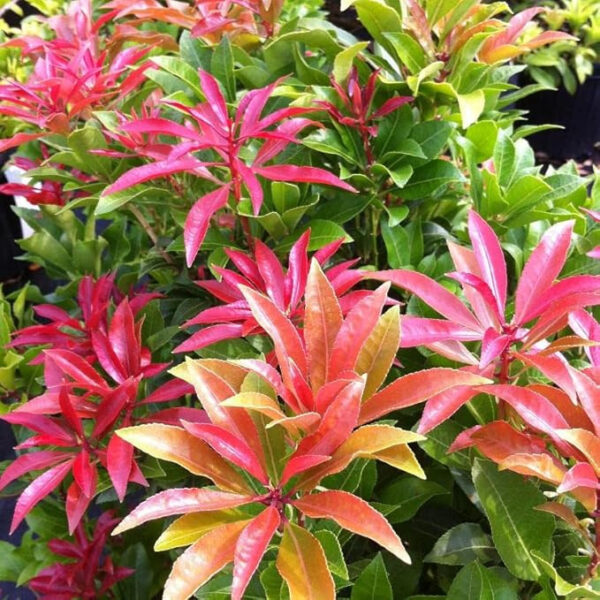
Pieris 'Forest Flame'
£12.99 per plant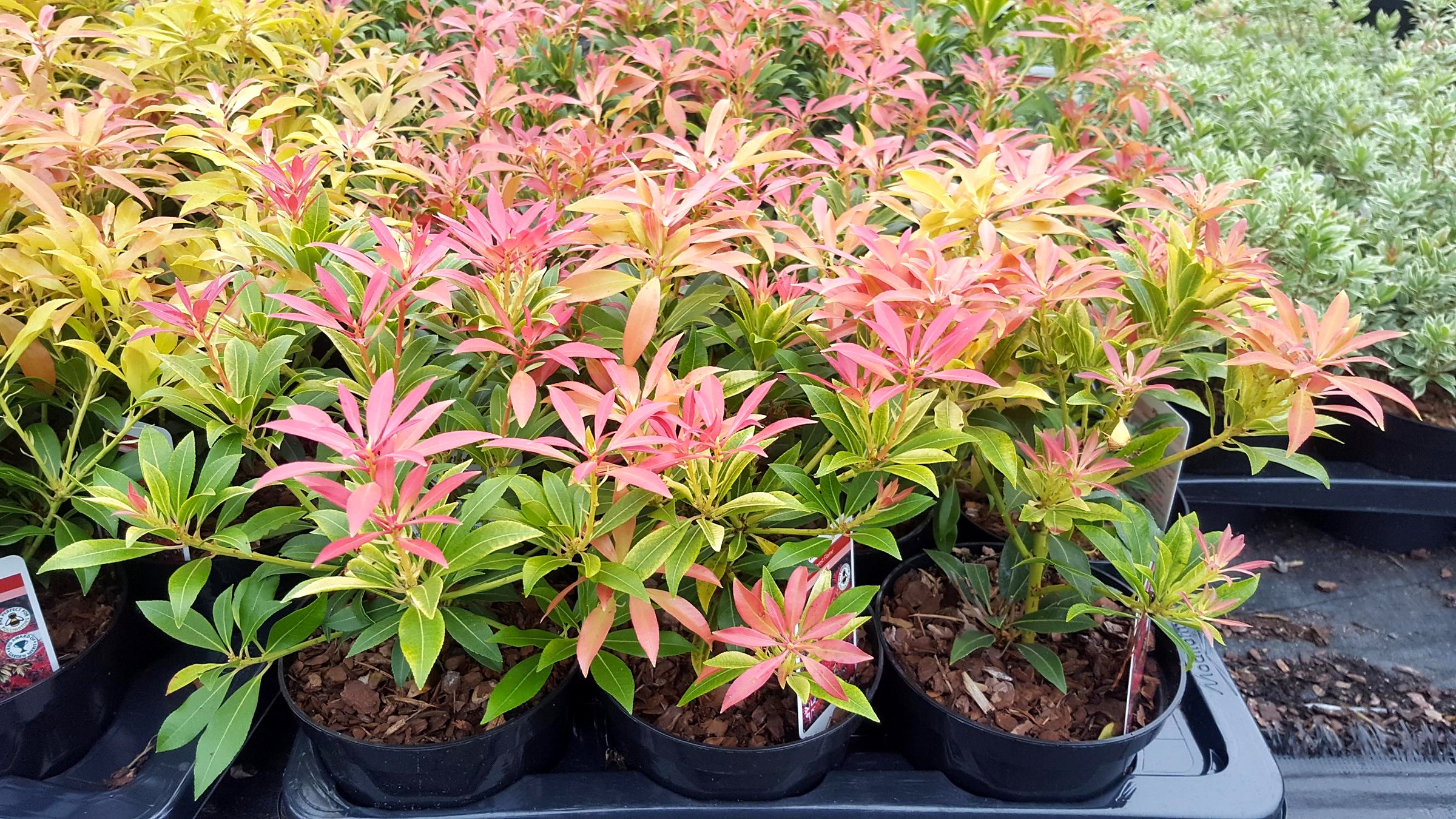
- UK Nursery Grown
- Grow Guarantee
Pieris Forest Flame Shrubs for Sale UK
Pieris 'Forest Flame'
£12.99 per plant
Pieris Forest Flame is an evergreen shrub loved for its cream-white spring flowers and vivid new foliage. Young leaves emerge bright red, pass through pink and cream, then settle to glossy green. It thrives in acidic soil or ericaceous compost, in a sheltered spot with sun or partial shade. Ideal for borders or large patio pots.
- Red young foliage maturing to green
- Cream-white bell-shaped spring flowers
- Evergreen shrub for acidic soil
1. How would you like it supplied?
Grown and sent in a pot, so you can plant it in any month when the soil is not frozen or waterlogged. Ask us a question
Pots, bare root and rootball
- Bare root
- Arrives with bare roots and little soil. Keep them damp and plant while the weather is cool.
- Rootball
- Arrives with soil wrapped around the roots. Lift it by the soil ball rather than the stems and plant as directed.
- Potted
- Comes in a nursery pot. Each option shows the pot size and the height you will receive.
2. Pick your plant
Not sure which shrub to pick?Tell us about your garden and we will help you choose
Position
Sun or partial shade, sheltered from cold winds
Soil
Acidic, moist but well-drained, or ericaceous compost
Supplied size
2 litre pot
Ordering
Order from 1 plant
Description
Pieris Forest Flame Shrubs for Sale UK
What is Pieris Forest Flame?
Pieris Forest Flame is an evergreen shrub that brings two seasons of interest to the garden. In spring, clusters of small cream-white, bell-shaped flowers hang from the branches, while the new leaves open in brilliant red. Those leaves then pass through shades of pink and cream before maturing to a deep, glossy green. The changing foliage extends the spring display over several weeks, with red, pink and cream leaves often visible together.
It belongs to the same acid-loving group as rhododendrons and azaleas, so it needs the right soil to perform well. With a neat, rounded habit, it fits comfortably into mixed borders, woodland-style planting or a large container on a sheltered patio.
Why choose Pieris Forest Flame for your garden?
The fresh red shoots are especially noticeable against the older, glossy green leaves. In spring, the hanging cream-white flowers add another layer of colour, particularly when the shrub is viewed close to a path or seating area. Because it is evergreen, the mature green leaves provide structure all year round, even when the showier colours have faded.
It is also a plant that works hard in smaller spaces. A single specimen in a large pot can anchor a patio display, while a group of three can fill a shady corner in a family garden. If you are unsure whether the soil in a newly built garden is acidic enough, test its pH before planting. A large container of ericaceous compost is a practical alternative where the ground is alkaline.
Eventual height, spread and growth rate
Pieris Forest Flame is a slow to moderate grower, typically adding 10 to 20cm of new growth each year once established. In good conditions, it reaches an eventual height and spread of around 1.5 to 2.5 metres over ten to twenty years. Its naturally rounded growth suits a generous border or large container, although it still needs room for its eventual spread. Light pruning after flowering can remove awkward shoots and help control its shape.
How to use Pieris Forest Flame in your garden
This shrub is versatile enough for several garden roles. Plant it as a standalone specimen where its spring colour can be appreciated from a kitchen window. Use it in a mixed border alongside other acid-lovers like camellias and dwarf rhododendrons, where the foliage contrast adds depth. In a small town garden, a pair in matching large pots either side of a doorway makes a smart, low-maintenance feature.
It also works well in a woodland-edge setting, under the light shade of deciduous trees. The key is to avoid crowded, dry spots and to give the roots consistent moisture. Because it is not a hedging plant, spacing advice is about creating groups or individual features rather than a continuous line.
Choosing a size: Pieris Forest Flame options
Pieris Forest Flame is available as a single plant in a 2 litre pot or as a pack of six plants in 2 litre pots. Packs of 6, 12 and 18 plants are also listed, although their pot or root type is not specified in the available product information. The 2 litre plants suit individual planting and established border groups, while the larger packs are useful when several shrubs are needed for an acidic planting bed. Check the selected option for its stated supply details before ordering.
Compare the pack quantities and confirmed pot sizes before choosing. Supplied heights and root types have been left unspecified where those details are not confirmed.
| Option | Supplied size | Pot or root type | Best for | Plants per pack |
|---|---|---|---|---|
| 2 litre pot | 1 plant | Height not specified | 2 litre pot | Instant impact in a border or large pot | 1 |
| 2 litre pot | 6 plants | 20-30cm (approx.) | 2 litre pot | Filling a larger border or creating a group | 6 |
| 6 plants | Height not specified | Root type not specified | Budget-friendly group planting | 6 |
| 12 plants | 15-25cm (approx.) | Young plant (plug or bare root) | Landscaping a larger acidic bed | 12 |
| 18 plants | 15-25cm (approx.) | Young plant (plug or bare root) | Mass planting in woodland or large gardens | 18 |
Growing and care
Planting and looking after it
When and how to plant Pieris Forest Flame
You can plant pot-grown Pieris at any time of year, as long as the ground is not frozen or waterlogged. Spring and early autumn are ideal, giving roots time to settle before summer heat or winter cold. For the younger multi-pack plants, planting is best done in spring or early autumn too, to help them establish quickly.
Start by watering the plant thoroughly in its pot. Dig a hole twice as wide as the rootball and just as deep. Place the plant so the top of the rootball sits level with the soil surface, backfill with a mix of garden soil and ericaceous compost, and firm gently. Water well and add a 5cm layer of mulch, keeping it away from the stem. For containers, choose a pot at least 40cm wide with drainage holes and use pure ericaceous compost.
Spacing for groups and borders
Pieris Forest Flame is not a hedging plant, so spacing is about creating a natural-looking group or filling a border. For a dense, interlocking drift, space plants about 80cm to 1m apart. For individual specimens that will grow to their full spread without touching, allow 1.5 to 2m between them.
The table below shows how many plants you need to cover a given length of border at a 1m spacing, which is a good middle ground for a continuous display.
| Border length | Plants needed (at 1m spacing) |
|---|---|
| 5 metres | 5 plants |
| 10 metres | 10 plants |
| 20 metres | 20 plants |
Watering and feeding
Consistent moisture is important, especially in the first growing season and during dry spells. Check the soil around the roots regularly: it should feel damp but not soggy. Plants in containers dry out faster and may need watering every day in hot weather. Use rainwater if you live in a hard-water area, as tap water can gradually raise the soil pH.
Feed in early spring with a fertiliser formulated for acid-loving plants, such as those sold for rhododendrons and camellias. A second light feed after flowering can support the next flush of growth. Avoid high-nitrogen lawn feeds, which encourage soft growth at the expense of flowers.
Trimming and care calendar
Pieris Forest Flame needs very little pruning. If you need to tidy the shape or remove any wayward shoots, do it immediately after flowering in late spring. This gives the plant time to produce new growth that will carry next year's display. Remove any dead, damaged or crossing branches at the same time.
Protect young spring growth from late frosts by choosing a sheltered planting spot or by throwing horticultural fleece over the plant on cold nights. If leaves turn yellow between the veins, it often indicates a lack of iron caused by alkaline soil: apply a liquid ericaceous feed and mulch with pine needles or leaf mould. The table below gives a simple month-by-month guide.
| Month | Task |
|---|---|
| March to April | Mulch with ericaceous material; feed with acid-plant fertiliser |
| May to June | Enjoy flowers and new red growth; light prune after flowering if needed |
| July to August | Water regularly, especially containers; check for pests |
| September to October | Plant new shrubs; reduce watering as growth slows |
| November to February | Protect from cold winds; no feeding; minimal watering |
Choose plants for acidic borders Compare pot and collection sizes Watering new shrubs
Our planting guideMore growing help: RHS plant and growing guidance
Sizes and prices
Pieris Forest Flame sizes, prices and minimum orders
| Option | Supplied height | Pot or root | Plants | Price | Minimum order | Availability |
|---|---|---|---|---|---|---|
| 2 litre pot | 1 plant | – | 2 litre pot | 1 | £12.99 per plant | None | Available |
| 2 litre pot | 6 plants | – | 2 litre pot | 6 | £35.99 per pack | None | Available |
| 6 plants | – | Potted | 6 | £18.99 per pack | None | Available |
| 12 plants | – | Potted | 12 | £25.99 per pack | None | Available |
| 18 plants | – | Potted | 18 | £38.99 per pack | None | Available |
Prices are for the option you select. Pack size is the number of plants you receive, and the minimum order is the smallest number we can send.
How sizes and quantities workDelivery
Delivery for your plant order
You will see delivery options and any charge in your basket before you pay.
Your plants are alive when they reach you, so open the box on the day, water if the compost feels dry and stand them somewhere sheltered until planting.
Delivery informationPlant questions
Good to know
Does Pieris Forest Flame prefer sun or shade?
Pieris Forest Flame grows best in partial shade or full sun, as long as its roots stay moist. In a very sunny spot, the new red foliage can be even more intense, but you must keep on top of watering. In deeper shade, the leaf colour may be less vivid and flowering can be reduced. A position with morning sun and afternoon shade, or dappled light under deciduous trees, is ideal. The most important factor is shelter from cold, drying winds, which can scorch the soft young leaves in spring.
How to look after Pieris Forest Flame?
Looking after Pieris Forest Flame is straightforward once it is in the right spot. Water regularly during dry spells, especially for the first two years and for plants in pots. Feed each spring with an ericaceous plant food and top up the mulch to keep roots cool and moist. After flowering, snip off any dead or untidy growth, but avoid heavy pruning. Watch out for leaves turning yellow: this often means the soil is too alkaline, so treat with a liquid iron feed and use rainwater for watering.
What are some common problems with Pieris 'Forest Flame' plants?
The most common problems are linked to soil and position. Yellowing leaves with green veins (lime-induced chlorosis) happen when the soil is too alkaline, locking up iron. Fix this with an ericaceous feed and a mulch of acidic material. Leaf spot, a fungal disease, can cause brown patches on foliage: remove affected leaves and improve air circulation. Pieris lacebug is a sap-sucking insect that leaves pale mottling on the upper surfaces of leaves, often with dark spotting underneath. Check affected foliage carefully and encourage natural predators. If treatment is necessary, use a product specifically approved for the pest and plant, following the label instructions. Frost damage to new shoots is another risk, so always plant in a sheltered spot.
When should I cut back my Forest Flame?
Cut back Pieris Forest Flame lightly in late spring, just after the flowers have faded. This timing allows the plant to produce new growth over the summer, which will then mature and set flower buds for the following year. Focus on removing dead, damaged or crossing stems, and trim back any shoots that spoil the shrub's shape. Avoid cutting into old, bare wood, as it may not regrow. Hard, regular clipping is not suitable for this plant and will spoil its natural, graceful form.
Can I grow Pieris Forest Flame in a pot?
Yes, Pieris Forest Flame grows well in a large container, which is a great solution if you have alkaline garden soil. Choose a pot at least 40cm wide with plenty of drainage holes, and fill it with ericaceous compost. Place the pot in a sheltered spot with sun or partial shade. Potted plants need more frequent watering than those in the ground, and they benefit from a liquid ericaceous feed every two weeks during the growing season. Repot into a slightly larger container every two to three years, refreshing the compost each time.
Is Pieris Forest Flame poisonous?
Yes, all parts of Pieris plants contain substances called grayanotoxins, which are poisonous if eaten. The leaves, flowers and nectar are toxic to people, pets and livestock. While serious poisoning is rare because the plant is not attractive to eat, it is wise to plant it away from areas where pets or young children might nibble at it. Wear gloves when handling or pruning, and wash your hands afterwards. If you suspect ingestion, seek medical or veterinary advice promptly.
Ask us about this plantGoes well with