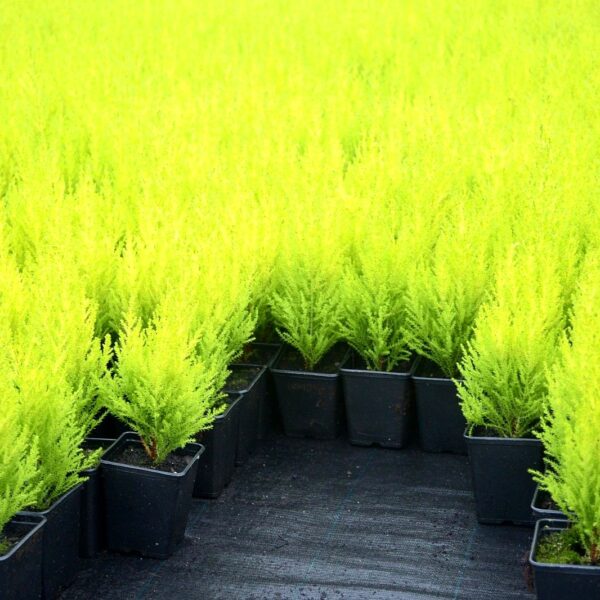
Mixed dwarf conifers
£18.99 per pack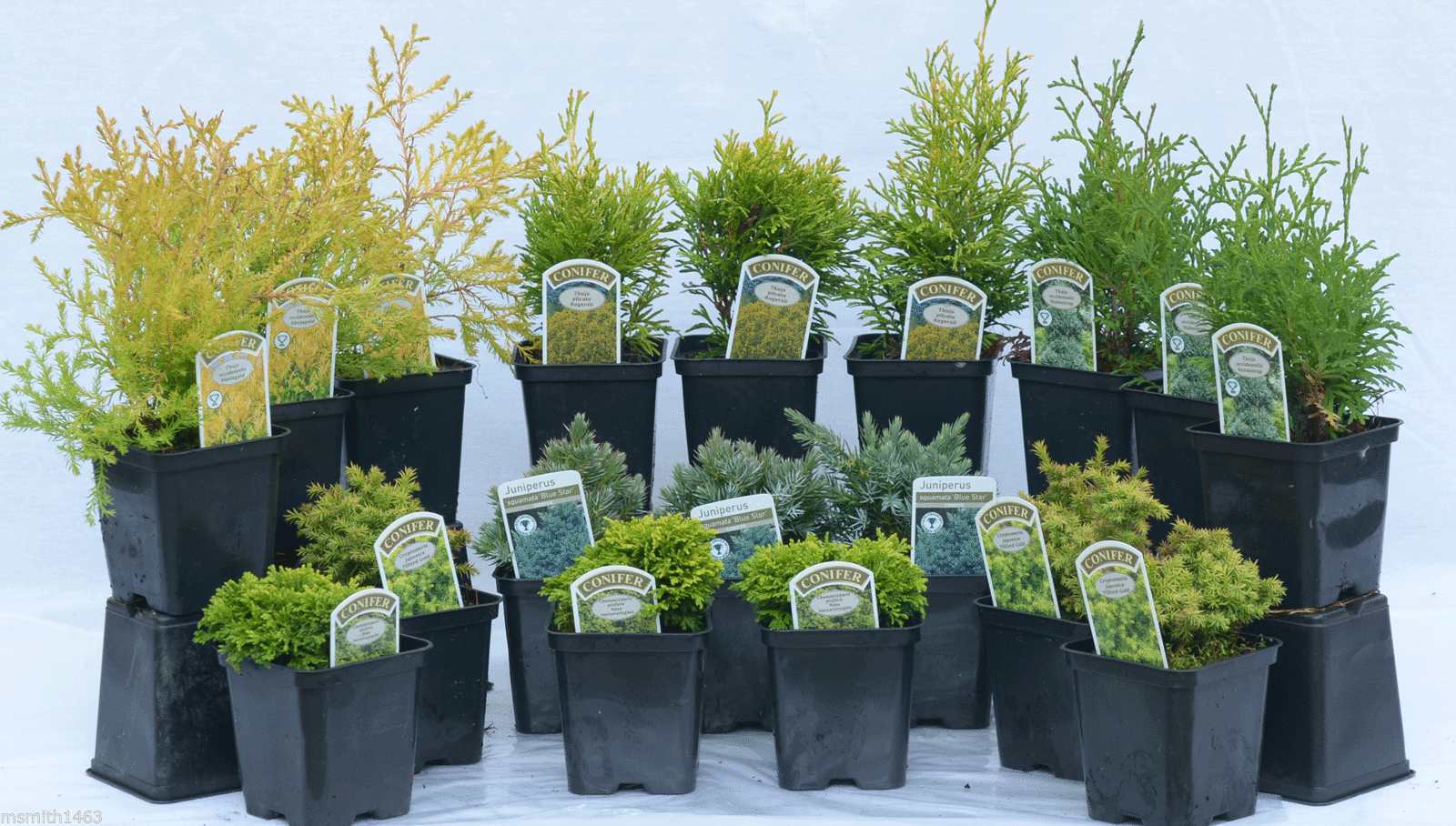
- UK Nursery Grown
- Grow Guarantee
Mixed Miniature Conifers for Pots, Borders & Rock Gardens
Mixed dwarf conifers
£18.99 per pack
A mixed collection of miniature conifers that brings year-round evergreen colour and contrasting shapes to small gardens, patio pots and rockeries. Each pack contains a varied mix of slow-growing plants with different foliage shades and habits. Use them as a group, or split them up to add structure among lower planting. They grow slowly rather than staying tiny, so leave room for each one to develop its natural outline.
- Mixed evergreen colours and forms
- Slow-growing, ideal for containers
- Supplied in pots, ready to plant
1. How would you like it supplied?
Grown and sent in a pot, so you can plant it in any month when the soil is not frozen or waterlogged. Ask us a question
Pots, bare root and rootball
- Bare root
- Arrives with bare roots and little soil. Keep them damp and plant while the weather is cool.
- Rootball
- Arrives with soil wrapped around the roots. Lift it by the soil ball rather than the stems and plant as directed.
- Potted
- Comes in a nursery pot. Each option shows the pot size and the height you will receive.
2. Pick your plant
Not sure which shrub to pick?Tell us about your garden and we will help you choose
Position
Sun or partial shade
Soil
Well-drained soil
Supplied size
9cm pot
Ordering
Order from 1 pack
Description
Mixed Miniature Conifers for Pots, Borders & Rock Gardens
What are miniature conifers?
Miniature conifers are slow-growing evergreens valued for their varied foliage and naturally defined shapes. Some form rounded cushions, while others grow upright or spread close to the ground. The mixed collection is useful for building a rockery, arranging evergreen pots or adding small structural plants among perennials. Their foliage remains through winter, when surrounding herbaceous plants have died back.
Most need only occasional removal of dead or damaged growth, although their eventual sizes vary. A spreading conifer may gradually cover nearby stones or encroach on a path, while an upright form can become a substantial feature over time. Check its mature spread before planting and leave enough space for the branches to develop.
Why choose a mixed pack of small conifer plants?
The mix can include green, golden and blue-grey foliage, with shapes ranging from rounded mounds to spreading or upright forms. Arrange the plants before digging so you can balance the different heights and textures, leaving the taller specimens towards the back of a border. You can plant them together as a feature group in a border, or split the pack and use a single plant to anchor a container on its own.
Six mixed conifers can be arranged across separate patio containers or planted together in a border with room to mature. Try setting a narrow upright plant behind lower rounded varieties, with gravel or low-growing perennials between them. For a larger area, repeat similar foliage colours through the planting so the group feels connected without requiring matching varieties.
How big do miniature conifers grow?
Mature height and spread depend on the individual conifers supplied. Many dwarf forms grow only a few centimetres each year, while others can gain around 15cm annually and eventually exceed 1.5m. Their growth is usually gradual, but the term miniature does not mean they will remain the size at which they arrive. Check the individual plant labels when your pack arrives, as each one will give you specific guidance for that variety.
Remember that 'dwarf' or 'miniature' describes the rate of growth rather than a fixed final size. A plant that stays knee-high for a decade may eventually reach waist height. Give each conifer enough room for its natural shape to develop. A spreading form placed beside a path will need more width than a slim upright one, even if both start in similar-sized pots.
How to use miniature conifers in your garden
If you are planting several in the ground, space them according to the spread given on each label. As a rough guide, allow 30cm to 60cm between plants so they can touch lightly when mature without crowding.
Choosing a size: which pack is right for you?
We supply miniature conifers in several pack sizes and pot options, so you can pick the one that matches your project. Compare the listed pot formats and quantities below. Approximate plant heights are indicative rather than guaranteed supplied measurements.
| Option | Supplied size | Pot or root type | Best for | Plants per pack |
|---|---|---|---|---|
| 9cm pot | 4 plants | Young plant, approx 10-15cm | 9cm pot | Filling a few small pots or starting a rockery | 4 |
| Potted | 6 plants | Young plant, approx 10-20cm | Potted | A mixed patio display or a new border group | 6 |
| Potted | 12 plants | Young plant, approx 10-20cm | Potted | Larger borders or a collection of containers | 12 |
| Potted | 18 plants | Young plant, approx 10-20cm | Potted | Extensive ground cover or a long border edge | 18 |
| 2 litre pot | 6 plants | More established, approx 20-30cm | 2 litre pot | Instant impact in pots or prominent border spots | 6 |
Mixed miniature conifers: what the pack contains
The plants are supplied as a mixed collection, so the exact varieties vary. You can expect a selection of different foliage colours (greens, golds and blue-greys) and shapes (upright, rounded and spreading). Identify each variety before deciding on its permanent position, particularly where mature height, spread or winter hardiness could affect the planting.
If you need every plant to match in height and colour, for a formal avenue or a symmetrical pair of pots, choose a named variety instead. This mixed pack is designed for gardeners who want a natural-looking assortment.
Can you keep miniature conifers in pots permanently?
Yes, miniature conifers are some of the best small conifer plants for long-term container growing. Choose a pot with good drainage holes and use a loam-based compost such as John Innes No. 2 or No. 3. This holds moisture and nutrients better than multi-purpose compost, which matters because your conifer may stay in the same pot for several years.
Check the compost regularly in summer and water when the top couple of centimetres feel dry. In winter, evergreen foliage can still lose moisture, especially in windy weather, so don’t forget to check pots even when it’s cold. Stand containers on pot feet in winter to keep drainage holes clear. Every two or three years in spring, gently remove the plant, trim back any circling roots and repot into a slightly larger container with fresh compost.
Growing and care
Planting and looking after it
When and how to plant miniature conifers
You can plant pot-grown miniature conifers at any time of year, as long as the ground isnu2019t frozen or waterlogged. Spring and early autumn are ideal, giving roots time to settle before the extremes of summer heat or winter cold.
Water each pot thoroughly before planting. Dig a hole slightly wider than the rootball and set the plant at the same depth it was in the pot. Backfill with soil, firm gently and water well. For containers, choose pots with unobstructed drainage holes. Add compost, position the rootball at its original depth and fill around it, leaving a 2cm to 3cm gap below the rim for watering. A gravel layer beneath the compost is unnecessary and will not improve drainage.
Spacing: how many plants do I need?
Spacing depends on the mature spread of the varieties you receive, but as a general guide for a mixed group in the ground, allow 30cm to 60cm between plants. The table below gives you a starting point for common planting lengths.
| Planting length | Plants needed at 30cm spacing | Plants needed at 45cm spacing | Plants needed at 60cm spacing |
|---|---|---|---|
| 5 metres | 17 | 11 | 8 |
| 10 metres | 34 | 22 | 17 |
| 20 metres | 67 | 44 | 34 |
Watering and feeding
Keep the soil or compost evenly moist for the first growing season while the roots establish. After that, miniature conifers in the ground rarely need extra watering except during long dry spells. Plants in pots need more attention: check them every few days in summer and water thoroughly, letting the excess drain away.
Feed lightly in spring with a general-purpose granular fertiliser, or use a liquid feed for container plants. Avoid high-nitrogen feeds, which can encourage soft, straggly growth. A mulch of bark or gravel around the base helps keep moisture in and weeds down.
Trimming and shaping
One of the joys of miniature conifers is that they need very little pruning. Let each plant develop its natural shape and only trim to remove dead, damaged or wayward shoots. Most conifers will not regrow if you cut back into old, bare wood, so never give them a hard chop. If a plant does outgrow its spot, itu2019s usually better to move it to a larger space than to try to reduce it drastically.
The best time for light trimming is late spring or early summer, after the new growth has started to extend. Use clean, sharp secateurs and step back often to check the shape as you go.
Growing and maintaining conifers Understand pot sizes and plant quantities Care for newly planted stock
Our planting guideMore growing help: RHS plant and growing guidance
Sizes and prices
Mixed dwarf conifers sizes, prices and minimum orders
| Option | Supplied height | Pot or root | Plants | Price | Minimum order | Availability |
|---|---|---|---|---|---|---|
| 9cm pot | 4 plants | – | 9cm pot | 4 | £18.99 per pack | None | Available |
| Potted | 6 plants | – | Potted | 6 | £22.99 per pack | None | Available |
| Potted | 12 plants | – | Potted | 12 | £26.99 per pack | None | Available |
| Potted | 18 plants | – | Potted | 18 | £35.99 per pack | None | Available |
| 2 litre pot | 6 plants | – | 2 litre pot | 6 | £36.99 per pack | None | Available |
Prices are for the option you select. Pack size is the number of plants you receive, and the minimum order is the smallest number we can send.
How sizes and quantities workDelivery
Delivery for your plant order
You will see delivery options and any charge in your basket before you pay.
Your plants are alive when they reach you, so open the box on the day, water if the compost feels dry and stand them somewhere sheltered until planting.
Delivery informationPlant questions
Good to know
Which varieties are in the mixed pack?
The pack contains a changing mix of miniature conifer varieties, chosen to give you a range of foliage colours and shapes. You might receive plants with golden, blue-grey or dark green needles, and habits from neat globes to narrow uprights. Each plant arrives with its own label, so you can look up the specific variety and its growing needs as you arrange your display.
How much ground or how many pots will a pack of 4 cover?
A pack of 4 young plants in 9cm pots will fill four small patio pots, or cover roughly 1.2m to 2.4m of border if spaced 30cm to 60cm apart. Itu2019s a good starter pack for a rockery or a few containers. For a larger group, choose the 6, 12 or 18-plant packs.
What is the best dwarf conifer?
There isnu2019t a single u2018bestu2019 variety, because it depends on the look you want. Our mixed pack gives you a selection of shapes and colours so you can see which ones suit your garden. For a matching pair or a formal planting, a single named variety would give a more consistent result. This collection is intended for mixed shapes and colours, so individual plants should not be expected to match.
What happens if I cut the top off a conifer?
Most conifers will not regrow from bare wood, so cutting the top out of an upright variety usually ruins its shape permanently. The plant may produce a few weak side shoots, but it wonu2019t form a new leader. Itu2019s far better to choose a conifer whose natural height fits your space, and to limit pruning to light trimming of the tips.
Are miniature conifers poisonous to pets or people?
Some conifers can cause mild stomach upset if eaten, and the foliage may irritate skin. If you have a dog or cat that likes to nibble plants, place the pots out of reach or choose a pet-safe alternative. Wash your hands after handling the plants, and keep the labels so you can check any variety-specific warnings.
Will miniature conifers survive a cold winter in pots?
Yes, most are fully hardy in the UK. The main risk in pots is not cold but wet: waterlogged compost can freeze and damage roots. Stand containers on pot feet, use well-drained compost and move them to a sheltered spot if very harsh weather is forecast. In prolonged cold, wrapping the pot with bubble wrap gives extra protection.
Ask us about this plantGoes well with