Eucalyptus gunnii
£10.99 per plant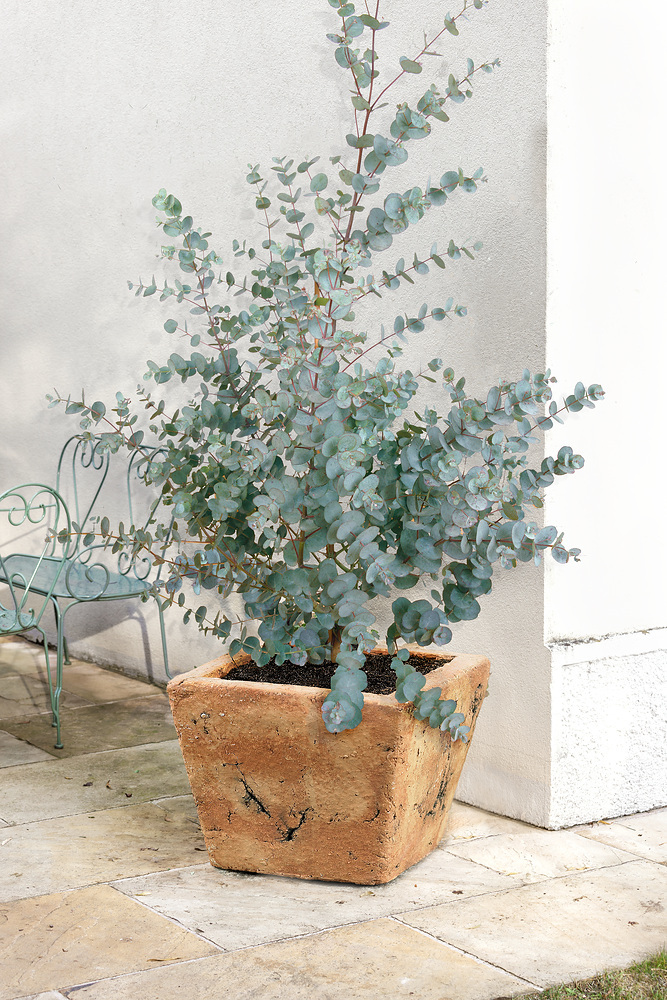
- UK Nursery Grown
- Grow Guarantee
Eucalyptus gunnii: Cider Gum Shrub in a 9cm Pot
Eucalyptus gunnii
£10.99 per plant
Eucalyptus gunnii, or cider gum, starts with rounded silver-blue leaves that release an aromatic scent when crushed. Its young foliage is often cut for flower arrangements, while established trees develop longer leaves and peeling bark. Left unpruned it becomes a large tree, so plan its position carefully. Supplied as a young plant in a 9cm pot, 20-30cm tall, ready to plant in a sunny, sheltered spot.
- Rounded silver-blue juvenile leaves
- Aromatic evergreen foliage
- Large tree if left unpruned
1. How would you like it supplied?
Grown and sent in a pot, so you can plant it in any month when the soil is not frozen or waterlogged. Ask us a question
Pots, bare root and rootball
- Bare root
- Arrives with bare roots and little soil. Keep them damp and plant while the weather is cool.
- Rootball
- Arrives with soil wrapped around the roots. Lift it by the soil ball rather than the stems and plant as directed.
- Potted
- Comes in a nursery pot. Each option shows the pot size and the height you will receive.
2. Pick your plant
Not sure which shrub to pick?Tell us about your garden and we will help you choose
Position
Full sun, sheltered from strong winds
Soil
Moist but well-drained soil
Supplied size
20-30cm, 9cm pot
Ordering
Order from 1 plant
Description
Eucalyptus gunnii: Cider Gum Shrub in a 9cm Pot
What is Eucalyptus gunnii?
Eucalyptus gunnii, often called cider gum, is an evergreen tree with distinctive rounded silver-blue leaves when young. As the plant matures the leaves become longer and narrower, and the bark peels to show cream and brown patches. It is grown for its aromatic foliage, which is popular for cutting, and for its fast, upright habit.
Although sold as a young plant, Eucalyptus gunnii develops into a substantial tree if left unpruned. It is best suited to gardens with enough space for mature growth, or to a planned coppicing or pollarding regime that begins once the plant is established.
Why choose a Eucalyptus gunnii plant?
The rounded juvenile leaves are useful for cutting and arranging with flowers. Once the tree has established, coppicing encourages new stems carrying this silver-blue foliage. Left to develop naturally, the tree forms a tall crown, with narrow mature leaves and bark that peels in patches as it ages. It is evergreen, so it provides interest through winter, and the peeling bark adds texture as the tree ages.
In a larger garden, several trees can provide tall screening, although their eventual height, root spread and need for ongoing management should be considered before planting.
How big will Eucalyptus gunnii grow?
Left unpruned, Eucalyptus gunnii can reach 15 to 25 metres tall with a spread of 8 to 15 metres over many years. Growth is fast when young, often 1 to 1.5 metres per year in good conditions. The size it reaches in your garden depends on how you prune it.
Regular coppicing or pollarding can maintain a much smaller plant, often around 2 to 3 metres between pruning cycles, while encouraging rounded juvenile leaves. The actual height depends on the frequency and severity of pruning and the growing conditions. You need to start that pruning regime once the plant is established, not wait until it is already a large tree.
Where is the best place to plant Eucalyptus gunnii?
Choose a spot in full sun with shelter from strong winds, especially while the plant is young. Eucalyptus gunnii needs moist but well-drained soil and does not like sitting in waterlogged ground. Allow plenty of space for its mature size, or plan for regular pruning if space is limited.
Avoid planting too close to buildings, boundaries or underground pipes, as a large tree can cause problems later. A sunny position away from buildings and narrow boundaries is preferable, with shelter from strong winds while the young tree establishes.
What are the disadvantages of the eucalyptus tree?
The main disadvantage is its eventual size. In a small town garden or a new-build plot with limited space, an unpruned eucalyptus will quickly outgrow its position. It can cast dense shade and its roots may compete with nearby plants.
It is also not suitable for exposed, windy sites, and young plants need watering during dry spells until established. The leaves contain oils that can be toxic to pets if eaten in large quantities, so place it where cats and dogs are not likely to chew it.
Choosing a size
Eucalyptus gunnii is supplied as one young plant, 20-30cm tall, in a 9cm pot. This starting size allows you to establish the plant in its intended position and begin planning its future shape. If you want a coppiced specimen, give it time to establish a healthy root system before starting regular hard pruning.
There is one available size, suitable for growing into a tree or establishing a plant for future coppicing.
| Option | Supplied size | Pot or root | Best for |
|---|---|---|---|
| 20-30cm | 9cm pot | 1 plant | 20-30cm | 9cm pot | Starting a new tree or coppice stool |
Growing and care
Planting and looking after it
When and how should I plant Eucalyptus gunnii?
Plant in spring or early summer so the young roots can settle before winter. Water the pot thoroughly before planting. Dig a hole twice as wide as the pot and the same depth, set the plant at the original soil level, backfill and firm gently. Water well after planting.
Keep the area around the base free of grass and weeds. A mulch of bark or compost helps retain moisture, but keep it clear of the stem to prevent rot.
Spacing for a Eucalyptus gunnii hedge
Eucalyptus gunnii is not typically grown as a formal hedge, but it can be used as a tall, informal screen. Space plants 2 to 3 metres apart in a single row. For a denser screen on a larger property, plant a double row with 3 metres between rows and 2.5 to 3 metres between plants.
The table below gives the number of plants needed for different lengths of single-row screening.
| Length of screen | Plants needed (single row, 2.5m spacing) |
|---|---|
| 5 metres | 2 plants |
| 10 metres | 4 plants |
| 20 metres | 8 plants |
Watering, feeding and mulching
Water regularly during the first growing season, especially in dry weather. Check the rootball as well as the surrounding soil: it can dry out faster than the ground around it. Once established, Eucalyptus gunnii is fairly drought-tolerant.
Feed in spring with a general-purpose granular fertiliser or a slow-release shrub feed. Renew the mulch each year to keep moisture in and weeds down.
Trimming and pruning calendar
Pruning depends on how you want to grow your eucalyptus. For a large tree, remove dead or crossing branches in late winter or early spring. To keep it small and encourage juvenile foliage, coppice established plants in early spring, cutting all stems back to 15-30cm above ground level.
You can also pollard by cutting back to a framework of branches at 1.5 to 2 metres. Do not prune in autumn, as soft new growth can be damaged by frost. Always use clean, sharp tools.
| Month | Pruning task |
|---|---|
| March to April | Coppice or pollard established plants for juvenile foliage |
| March to April | Remove dead or damaged branches on trees |
| June to August | Lightly trim new shoots if needed for shape |
| September to February | Avoid pruning; frost can damage cuts |
Choose plants for the space available Prepare and plant young stock Watering newly planted roots
Our planting guideMore growing help: RHS plant and growing guidance
Sizes and prices
Eucalyptus gunnii sizes, prices and minimum orders
| Option | Supplied height | Pot or root | Plants | Price | Minimum order | Availability |
|---|---|---|---|---|---|---|
| 20-30cm | 9cm pot | 1 plant | 20-30cm | 9cm pot | 1 | £10.99 per plant | None | Available |
Prices are for the option you select. Pack size is the number of plants you receive, and the minimum order is the smallest number we can send.
How sizes and quantities workDelivery
Delivery for your plant order
You will see delivery options and any charge in your basket before you pay.
Your plants are alive when they reach you, so open the box on the day, water if the compost feels dry and stand them somewhere sheltered until planting.
Delivery informationPlant questions
Good to know
How big will a Eucalyptus gunnii grow?
If left unpruned it can reach 15 to 25 metres tall and 8 to 15 metres wide. Growth is fast, often 1 to 1.5 metres a year. Regular coppicing or pollarding keeps it to around 2 to 3 metres and encourages the rounded juvenile leaves.
Where is the best place to plant Eucalyptus gunnii?
Plant in full sun with shelter from strong winds, especially when young. It needs moist but well-drained soil and plenty of space for its mature size, or a commitment to regular pruning if space is tight. Avoid waterlogged ground and positions too close to buildings.
Can you keep Eucalyptus gunnii small?
Yes, by coppicing or pollarding an established plant. Coppicing means cutting all stems back to 15-30cm above ground in early spring. Pollarding involves cutting back to a trunk or framework at 1.5 to 2 metres. Both methods produce fresh juvenile foliage each year.
What are the disadvantages of the eucalyptus tree?
Its large eventual size makes it unsuitable for small gardens unless pruned hard every year. It can cast dense shade, compete with nearby plants, and young trees need shelter and watering. The leaves contain oils that can be toxic to pets if eaten in quantity.
Is Eucalyptus gunnii suitable for a pot on a patio?
A young plant can be grown in a large pot for a year or two, but it will quickly outgrow the container. For a permanent patio display, choose a naturally compact shrub instead. If you do try a pot, use soil-based compost and water and feed regularly.
Will the leaves stay round and blue?
Young shoots carry the rounded silver-blue leaves. As the plant matures, the leaves become longer and narrower. To keep the juvenile foliage, coppice or pollard the plant every year or two once it is established.
Ask us about this plant