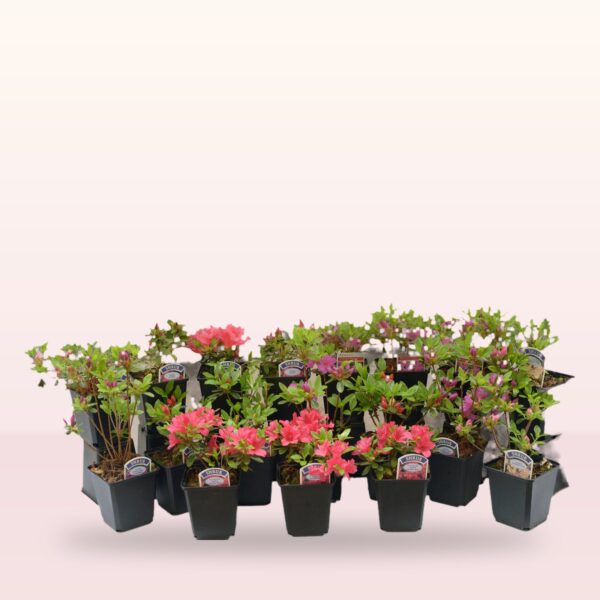
Rhododendron, evergreen azalea group
£12.99 per plant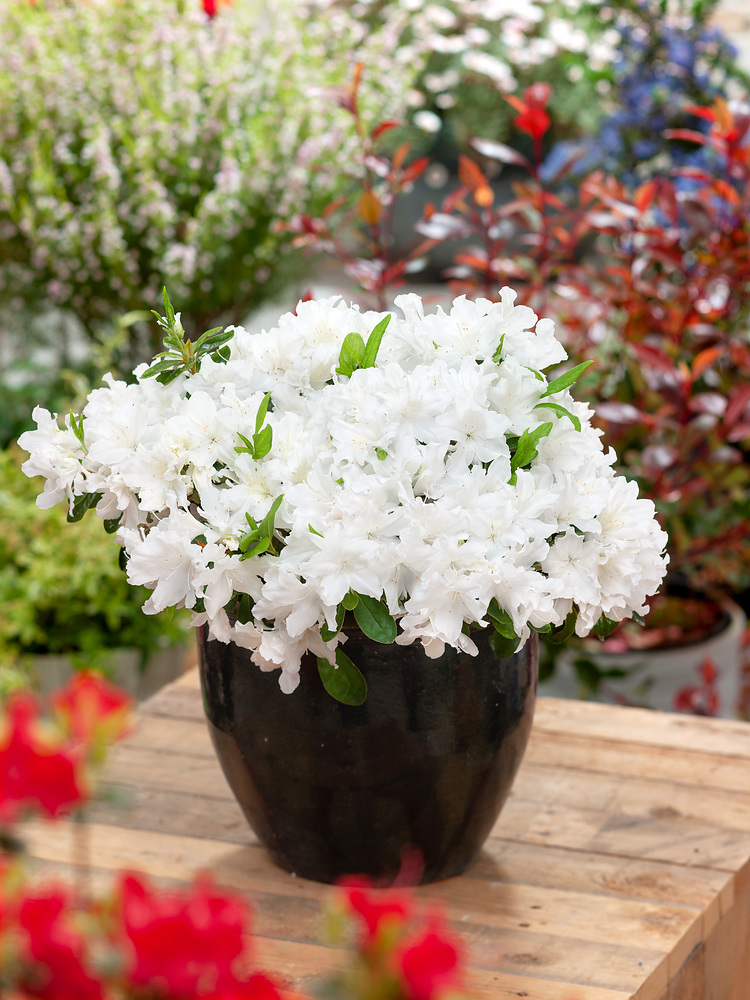
- UK Nursery Grown
- Grow Guarantee
Dwarf Azalea: Evergreen Spring Flowering Shrubs
Rhododendron, evergreen azalea group
£12.99 per plant
Dwarf azalea is a compact evergreen shrub for acidic soil or containers. It produces clusters of colourful spring flowers above small, glossy evergreen leaves. Flower colour depends on the single-colour option selected. Use it to edge a sheltered border, brighten a patio pot or add lasting colour beside a path. Needs ericaceous compost on chalky ground.
- Pink spring flowers
- Compact evergreen shrub
- Needs acidic soil or ericaceous compost
1. How would you like it supplied?
Grown and sent in a pot, so you can plant it in any month when the soil is not frozen or waterlogged. Ask us a question
Pots, bare root and rootball
- Bare root
- Arrives with bare roots and little soil. Keep them damp and plant while the weather is cool.
- Rootball
- Arrives with soil wrapped around the roots. Lift it by the soil ball rather than the stems and plant as directed.
- Potted
- Comes in a nursery pot. Each option shows the pot size and the height you will receive.
2. Pick your plant
Not sure which shrub to pick?Tell us about your garden and we will help you choose
Position
Sheltered dappled shade
Soil
Acidic, moist but well-drained soil or ericaceous compost
Supplied size
2 litre pot
Ordering
Order from 1 plant
Description
Dwarf Azalea: Evergreen Spring Flowering Shrubs
What is a dwarf azalea?
A dwarf azalea is a low, spreading evergreen shrub that belongs to the Rhododendron family. In April and May, funnel-shaped flowers open among the small, dark green leaves, often covering much of the shrub. The flowering colour depends on the option chosen. Dwarf forms are well suited to the front of an acidic border, sheltered courtyard planting or a generous patio container.
These azaleas are offered as individual colour selections rather than a mixed pack. The exact cultivar, mature size and flower shade may vary between options, so allow for differences in growth when planting several together. The small evergreen leaves provide structure outside the main spring flowering season.
Why choose a dwarf azalea?
Dwarf azaleas combine vivid spring flowers with low evergreen foliage. Their spreading, rounded habit suits the front of borders, provided enough room is left between mature branches and paths. Several plants repeated along an acidic bed can create a continuous band of spring colour, while a single shrub works well as the centrepiece of a wide patio pot.
The small evergreen leaves remain through much of winter, although some foliage may bronze or drop in severe cold. Their shallow roots make container growing practical, particularly where garden soil is alkaline. Move pots carefully and avoid repeatedly disturbing established roots.
Eventual height, spread and growth rate
Most dwarf evergreen azaleas reach 40 to 80cm tall and 60 to 90cm wide after 10 years. They are slow growing, typically adding 5 to 10cm of new growth each season. This steady pace makes them easy to keep within a designated spot without heavy pruning.
The exact mature size depends on the particular variety in the batch, but all stay compact enough for a large pot or the front half of a border.
Where to use dwarf azaleas
Plant a single dwarf azalea in a 30 to 40cm container filled with ericaceous compost and place it by the front door. In a border, set three or five in a staggered group through the front of a mixed shrub bed. They also line a shady paved path well, where the low evergreen mounds soften the hard edges without blocking the walkway.
On alkaline or chalky soil, always use a pot. Digging a pocket of ericaceous compost into the ground works for a season or two, but as the roots spread they will reach the surrounding lime and the leaves will start to yellow. A container keeps the root zone reliably acidic.
Choosing a size
All our dwarf azaleas are supplied in 2 litre pots, which means a well-rooted plant that is ready to go straight into the garden or a display pot. There is no minimum order, so you can buy one plant for a single container or several to repeat through a border.
The table below shows what is available on this page.
| Option | Supplied size | Pot or root | Best for | Plants per metre |
|---|---|---|---|---|
| 2 litre pot | 1 plant | 2 litre pot | Pot-grown | Single container or one border plant | 1 plant covers roughly 60 to 90cm width at maturity |
Growing and care
Planting and looking after it
When and how to plant
Pot-grown azaleas can be planted at any time the ground is workable, but early autumn or mid-spring gives the roots a chance to settle before summer heat or winter cold. Water the rootball thoroughly while it is still in its pot. Dig a hole the same depth as the pot and twice as wide. Set the plant so the top of the rootball is level with the soil surface; azaleas hate being planted deep.
Backfill with the soil you removed if it is naturally acidic. If the soil is only slightly acidic, use an ericaceous mulch and check the pH rather than relying on a small amount of compost to change the surrounding soil permanently. Firm gently, water well and add a mulch of leaf mould or composted bark, keeping it clear of the stems.
Spacing for a border
When planting several dwarf azaleas as a loose group or low hedge, space them about 50 to 60cm apart. This allows each plant to grow into its neighbour over time without crowding. Use the table below to work out how many you need for common border lengths.
| Border length | Plants needed (spaced 50 to 60cm) |
|---|---|
| 5 metres | 9 to 10 plants |
| 10 metres | 17 to 20 plants |
| 20 metres | 34 to 40 plants |
Watering and feeding
Keep the root zone evenly moist through the first growing season. In dry spells, soak the ground rather than giving a light sprinkle; a good soak once a week is better than daily dribbles. Containers dry out faster, so check them every few days in warm weather and water until it runs from the drainage holes.
Rainwater is ideal, especially in hard-water areas where tap water can gradually raise the soil pH. Feed with a liquid ericaceous plant food in early spring as the buds swell, and again after flowering if growth looks pale. Stop feeding by late summer so any soft new shoots harden before winter.
Trimming calendar
Dwarf azaleas rarely need much cutting back. If you need to tidy the shape or remove a stray branch, do it immediately after the flowers fade, usually in late May or early June. This gives the plant all summer to form next year's flower buds.
Avoid trimming after midsummer. Late cuts remove the developing buds and you will lose the following spring's display. Simply snap off spent flower heads with your fingers if you want to keep the shrub looking neat.
Winter care
Many evergreen dwarf azaleas are hardy in sheltered UK gardens, although cold tolerance varies between cultivars. Protect container roots during prolonged freezing weather and avoid exposed positions where drying winds can damage the leaves. Their shallow roots can be lifted by frost if the soil is loose, so a mulch over the root area helps. In containers, raise the pot on feet to keep the drainage holes clear and wrap the pot with bubble wrap or hessian during prolonged freezing weather to protect the roots. The top growth does not need covering.
Choose plants for your soil and light Understand pot sizes Watering and establishment
Our planting guideMore growing help: RHS plant and growing guidance
Sizes and prices
Dwarf evergreen azalea (single colours) sizes, prices and minimum orders
| Option | Supplied height | Pot or root | Plants | Price | Minimum order | Availability |
|---|---|---|---|---|---|---|
| White | 2 litre pot | 1 plant | – | 2 litre pot | 1 | £12.99 per plant | None | Available |
| Orange | 2 litre pot | 1 plant | – | 2 litre pot | 1 | £12.99 per plant | None | Available |
| Red | 2 litre pot | 1 plant | – | 2 litre pot | 1 | £12.99 per plant | None | Available |
| Pink | 2 litre pot | 1 plant | – | 2 litre pot | 1 | £12.99 per plant | None | Available |
Prices are for the option you select. Pack size is the number of plants you receive, and the minimum order is the smallest number we can send.
How sizes and quantities workDelivery
Delivery for your plant order
You will see delivery options and any charge in your basket before you pay.
Your plants are alive when they reach you, so open the box on the day, water if the compost feels dry and stand them somewhere sheltered until planting.
Delivery informationPlant questions
Good to know
Where is the best place to plant azaleas?
Choose a spot in dappled shade, such as under a light tree canopy or on the east side of a house. Shelter from cold, drying winds is important because the evergreen leaves lose moisture in winter. A position that gets morning sun and afternoon shade works well. Avoid deep shade, which reduces flowering, and hot, dry south-facing walls where the soil dries out quickly.
Are azaleas better in pots or ground?
It depends on your soil. On naturally acidic, moisture-retentive soil that drains well, the ground is ideal and the roots can spread. On chalky or alkaline soil, a pot filled with ericaceous compost is much better. Containers also let you move the plant into a prominent spot when it flowers. Use a pot at least 30cm wide and check the drainage holes are clear.
Do azaleas come back next year?
Yes. Dwarf evergreen azaleas are hardy perennial shrubs. They keep their leaves through winter and produce new flowers each spring. With the right acidic soil or compost, steady moisture and a light trim after flowering when needed, they will live for many years and gradually increase in size.
Can azaleas stay outside in winter?
Dwarf evergreen azaleas can generally remain outdoors through winter in suitable UK conditions. Cold tolerance depends on the cultivar and exposure. Mulch shallow roots, protect containers during prolonged hard frost and shelter the foliage from strong, drying winds. Flower buds form during the previous growing season, so good summer care matters more than exposure to severe winter cold.
What if my azalea leaves turn yellow?
Yellow leaves with green veins usually indicate lime-induced chlorosis, where the soil pH is too high and the plant cannot take up iron. This is common on chalky ground. The fix is to move the plant into a container of fresh ericaceous compost. Yellowing can also be caused by waterlogged roots or drought, so check the drainage and watering routine first.
Do I need to deadhead an azalea?
It is not essential, but removing the spent flower heads keeps the shrub looking tidy and stops it putting energy into seed production. Pinch off the old flowers with your fingers, being careful not to damage the new shoots that appear just behind them. Do this soon after the petals drop.
Ask us about this plantGoes well with