Rhododendron, dwarf mixed collection
£19.99 per pack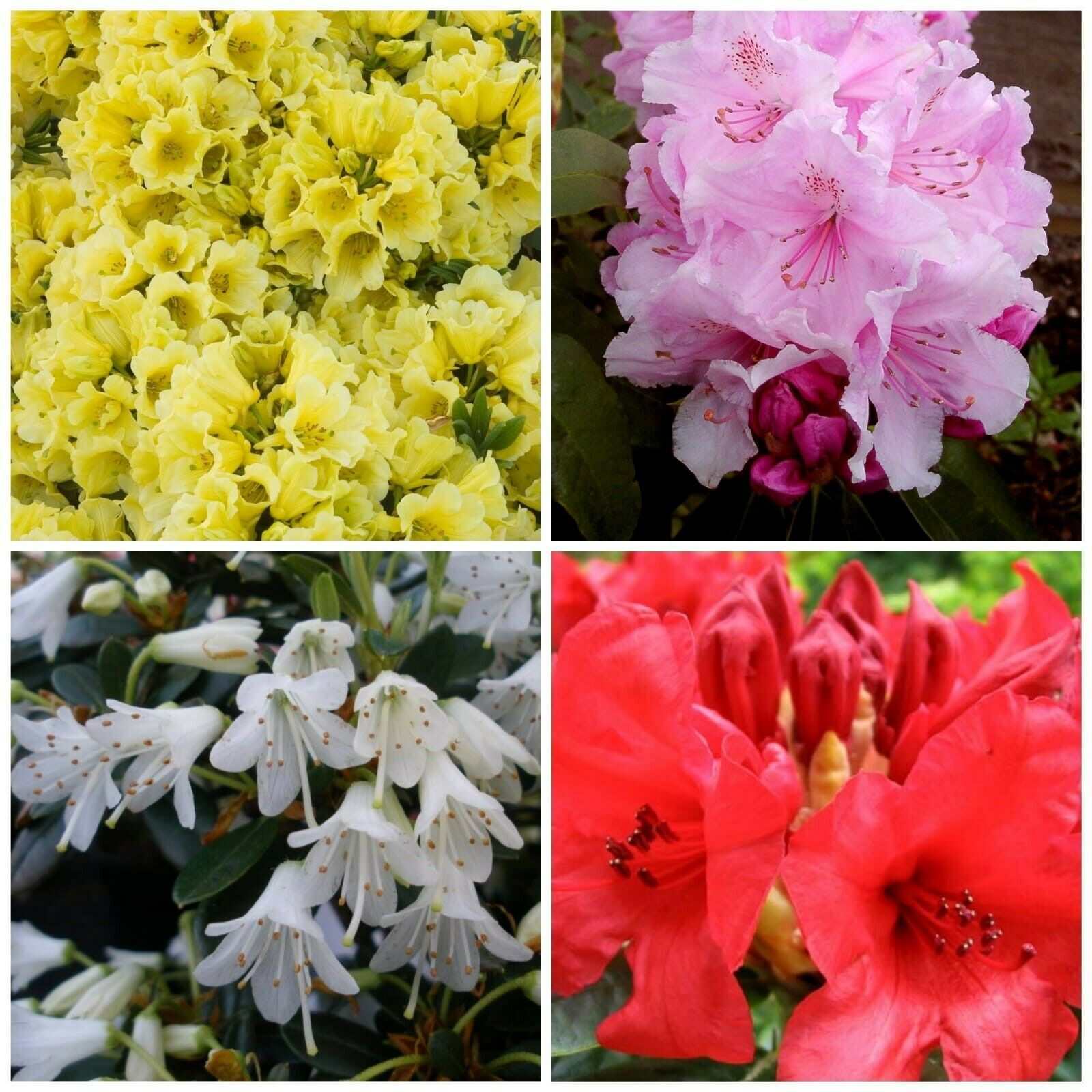
- UK Nursery Grown
- Grow Guarantee
Mixed Dwarf Rhododendrons (Compact Spring Colour Collection)
Rhododendron, dwarf mixed collection
£19.99 per pack
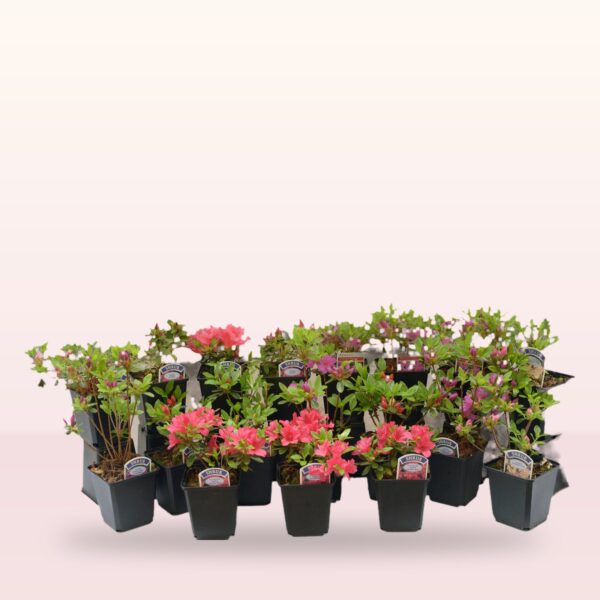
A mixed collection of dwarf rhododendrons that brings vivid spring flowers to smaller gardens, acidic borders and patio pots. These compact shrubs give you the classic rhododendron look without the space demands of larger woodland types. Colours and varieties are mixed, so you get a natural, varied display. Plant in ericaceous compost or acidic soil for the best results.
- Mixed colours for a varied spring display
- Compact habit, ideal for pots and small borders
- Thrives in ericaceous compost or acidic soil
1. How would you like it supplied?
Grown and sent in a pot, so you can plant it in any month when the soil is not frozen or waterlogged. Ask us a question
Pots, bare root and rootball
- Bare root
- Arrives with bare roots and little soil. Keep them damp and plant while the weather is cool.
- Rootball
- Arrives with soil wrapped around the roots. Lift it by the soil ball rather than the stems and plant as directed.
- Potted
- Comes in a nursery pot. Each option shows the pot size and the height you will receive.
2. Pick your plant
Not sure which shrub to pick?Tell us about your garden and we will help you choose
Position
Sheltered spot with dappled shade
Soil
Acidic, moist but well-drained or ericaceous compost
Supplied size
9cm pot
Ordering
Order from 1 pack
Description
Mixed Dwarf Rhododendrons (Compact Spring Colour Collection)
What are mixed dwarf rhododendrons?
Dwarf rhododendrons are compact shrubs that produce clusters of trumpet-shaped flowers in spring, typically April to June. Their relatively low, spreading growth suits the front of an acidic border or a generous patio container, although some varieties become broader than expected as they mature. The collection contains mixed dwarf forms, with flower colours and flowering periods depending on the plants selected for each pack.
The plants are supplied in 9cm or 2 litre pots, according to the option chosen. Flower colours may include pink, purple, red, white or softer shades, but the exact combination is not specified. Allow for some variation in growth habit and flowering time across the collection. The plants share similar growing needs, so you can treat the whole collection as one planting project.
Why choose a mixed dwarf rhododendron collection?
A group of dwarf rhododendrons can bring several spring flower colours into one acidic border. Place lower, spreading plants towards the front and leave enough room for neighbouring shrubs to develop. In gardens with chalky soil, individual containers filled with ericaceous compost allow the plants to grow without their roots reaching unsuitable ground.
These shrubs also work well as low, informal flowering hedges or as evergreen structure along a path. The mixed flower colours create a less uniform display than a single named cultivar. Most dwarf rhododendrons also carry leathery evergreen leaves, although their size, shade and winter appearance vary between varieties.
How big do dwarf rhododendrons get and how fast do they grow?
Most dwarf rhododendrons in this collection reach an eventual height and spread of around 60 to 100cm, though some varieties may stay a little smaller or push slightly taller. They are slow to moderate growers, typically adding 5 to 15cm of new growth each year once settled in. This steady pace makes them easy to manage in borders and containers.
Because the collection mixes different varieties, mature sizes will vary. Check the label on each plant for its expected dimensions and space them accordingly. In general, planting 60 to 80cm apart gives each shrub room to fill out naturally without crowding.
Where can I use dwarf rhododendrons?
Dwarf rhododendrons suit sheltered positions where their shallow roots can remain cool and moist through summer. Use them in an acidic border alongside heathers, pieris and compact conifers for a layered, year-round display. Plant them in groups of three or five through a front garden for a welcoming burst of spring colour. They also make excellent container plants, provided you use ericaceous compost and a pot with good drainage holes.
In a family garden, place them where children can see the flowers up close, but keep in mind that all parts of rhododendrons are toxic if eaten, so avoid areas where pets or toddlers might nibble. A raised bed filled with ericaceous compost is another good option if your garden soil is alkaline. The shallow roots appreciate a cool, moist root run, so a mulch of pine bark or leaf mould helps enormously.
Choosing a size: which pot and pack suits you?
We supply mixed dwarf rhododendrons in two pot sizes, each available in different pack quantities. The 9cm pot plants are younger and smaller, making them a budget-friendly choice for filling a larger area or starting a new border from scratch. The 2 litre pot plants are more established, with a bigger root system and more top growth, so they make a quicker impact in pots or key border positions.
Choose the 9cm plants for a border that can develop gradually, or the 2 litre plants where more initial top growth is wanted. Compare the six listed pot and pack combinations below, and prepare an acidic, well-drained planting area before they arrive.
| Option | Supplied size | Pot or root | Best for | Plants per metre (hedge) |
|---|---|---|---|---|
| 9cm pot | 6 plants | Young plant, approx 10-20cm | 9cm pot | Starting a new border on a budget, filling gaps | 3 to 4 plants per metre |
| 9cm pot | 12 plants | Young plant, approx 10-20cm | 9cm pot | Larger border projects, mass planting | 3 to 4 plants per metre |
| 9cm pot | 18 plants | Young plant, approx 10-20cm | 9cm pot | Long hedge runs, extensive ground cover | 3 to 4 plants per metre |
| 2 litre pot | 3 plants | Established plant, approx 20-40cm | 2 litre pot | Instant impact in pots or front of border | 2 to 3 plants per metre |
| 2 litre pot | 4 plants | Established plant, approx 20-40cm | 2 litre pot | Small groups and container displays | 2 to 3 plants per metre |
| 2 litre pot | 6 plants | Established plant, approx 20-40cm | 2 litre pot | Ready-made border or hedge section | 2 to 3 plants per metre |
Growing and care
Planting and looking after it
When and how should I plant dwarf rhododendrons?
You can plant pot-grown dwarf rhododendrons at any time of year, as long as the ground is not frozen or waterlogged. Spring and early autumn are ideal, giving the roots time to settle before summer heat or winter cold. Start by watering the pots thoroughly. Dig a hole twice as wide as the rootball and just deep enough so the top of the rootball sits level with the soil surface.
Rhododendrons have shallow, fibrous roots that hate being buried deeply. If the ground is heavy clay or stays wet, improve the planting area more widely or use a raised bed with suitable acidic soil. Adding a little sand and compost to an individual hole can leave water collecting around the roots rather than solving the drainage problem. In containers, use fresh ericaceous compost and make sure the pot has drainage holes. After planting, water well and add a 5cm layer of mulch, keeping it away from the stems.
Spacing dwarf rhododendrons
If you are planting a group or border, space the shrubs 60 to 80cm apart to allow each plant to develop its natural shape. For a low, informal hedge, plant 30 to 40cm apart in a single row. The table below shows how many plants you need for common hedge lengths.
When using a mixed collection, remember that individual varieties may reach slightly different sizes. Spacing them a little further apart than the minimum gives you flexibility and avoids a cramped look later on.
| Hedge length | Plants needed (at 30cm spacing) | Plants needed (at 40cm spacing) |
|---|---|---|
| 5 metres | 17 plants | 13 plants |
| 10 metres | 34 plants | 25 plants |
| 20 metres | 67 plants | 50 plants |
Watering, feeding and mulching
Keep the soil consistently moist, especially during the first growing season and in dry spells. Rainwater is better than hard tap water, which can raise the soil pH over time. Check containers regularly, as they dry out faster than garden soil. A mulch of pine bark, leaf mould or ericaceous compost helps lock in moisture and keeps the shallow roots cool.
Feed in early spring with a fertiliser formulated for ericaceous plants. Avoid high-nitrogen lawn feed and heavy applications of general-purpose fertiliser. Rhododendrons have shallow, fine roots that can be damaged by excessive feeding, so use a suitable ericaceous fertiliser at the recommended rate. If leaves start to yellow between the veins, it is often a sign that the soil is too alkaline, making iron unavailable. A liquid ericaceous feed can help in the short term, but long-term health depends on the right soil conditions.
Trimming and deadheading dwarf rhododendrons
Dwarf rhododendrons need very little pruning. After flowering, snap off the spent flower heads by hand, taking care not to damage the new leaf buds that sit just below the old flowers. This tidies the plant and stops it putting energy into seed production.
If you need to shape the plant or remove a wayward branch, do it right after flowering. Avoid cutting back into old, leafless wood, as rhododendrons do not always regrow from bare stems. A light trim to keep the shrub compact is fine, but heavy clipping will reduce next year's flowers and spoil the natural shape.
Choose shrubs for the soil available Compare packs and pot sizes Watering and plant establishment
Our planting guideMore growing help: RHS plant and growing guidance
Sizes and prices
Mixed dwarf rhododendrons sizes, prices and minimum orders
| Option | Supplied height | Pot or root | Plants | Price | Minimum order | Availability |
|---|---|---|---|---|---|---|
| 2 litre pot | 3 plants | – | 2 litre pot | 3 | £26.99 per pack | None | Available |
| 2 litre pot | 4 plants | – | 2 litre pot | 4 | £28.99 per pack | None | Available |
| 2 litre pot | 6 plants | – | 2 litre pot | 6 | £39.99 per pack | None | Available |
| 9cm pot | 6 plants | – | 9cm pot | 6 | £19.99 per pack | None | Available |
| 9cm pot | 12 plants | – | 9cm pot | 12 | £32.99 per pack | None | Available |
| 9cm pot | 18 plants | – | 9cm pot | 18 | £42.99 per pack | None | Available |
Prices are for the option you select. Pack size is the number of plants you receive, and the minimum order is the smallest number we can send.
How sizes and quantities workDelivery
Delivery for your plant order
You will see delivery options and any charge in your basket before you pay.
Your plants are alive when they reach you, so open the box on the day, water if the compost feels dry and stand them somewhere sheltered until planting.
Delivery informationPlant questions
Good to know
How much ground or how many pots will a pack of 3 cover?
Three plants in 2 litre pots can form a small border group, with roughly 60 to 80cm between their centres and enough surrounding space for mature growth. A planting area of approximately 1.5 to 2 square metres gives them room to develop. For containers, use a separate 30 to 40cm pot for each plant rather than crowding all three into one 50cm pot.
How big does a dwarf rhododendron get?
Most varieties in this collection reach 60 to 100cm in height and spread over 10 to 15 years. Some may stay smaller around 40 to 50cm, while a few could stretch to 120cm. Check the label on each plant for its expected mature size and space accordingly.
Where not to plant a rhododendron?
Avoid planting rhododendrons in alkaline or chalky soil, as they need acidic conditions to thrive. Do not put them in full, hot sun all day or in deep, dry shade under large trees. Steer clear of frost pockets and exposed, windy spots, which can scorch the leaves and damage flower buds.
What is the best dwarf rhododendron?
There is no single best variety, as it depends on your colour preference and space. The collection contains a mixture of dwarf rhododendrons, but specific cultivars are not guaranteed. Flower colour, mature spread and flowering time may vary, so choose the mixed pack for a varied display rather than expecting particular named varieties.
How do I care for a dwarf rhododendron?
Grow it in acidic, moist but well-drained soil or ericaceous compost in a pot. Water with rainwater where possible, mulch each spring, and feed with an ericaceous plant food. Snip off dead flowers after blooming and protect the shallow roots from drying out. Little pruning is needed beyond removing dead or damaged wood.
How do you deadhead a rhododendron?
Wait until the flowers have faded and the petals start to drop. Grip the old flower head between your thumb and forefinger and snap it off with a sideways push. Be careful not to damage the small, pointed leaf buds that sit just below the flower. Deadheading keeps the plant tidy and directs energy into new growth rather than seeds.
Ask us about this plant