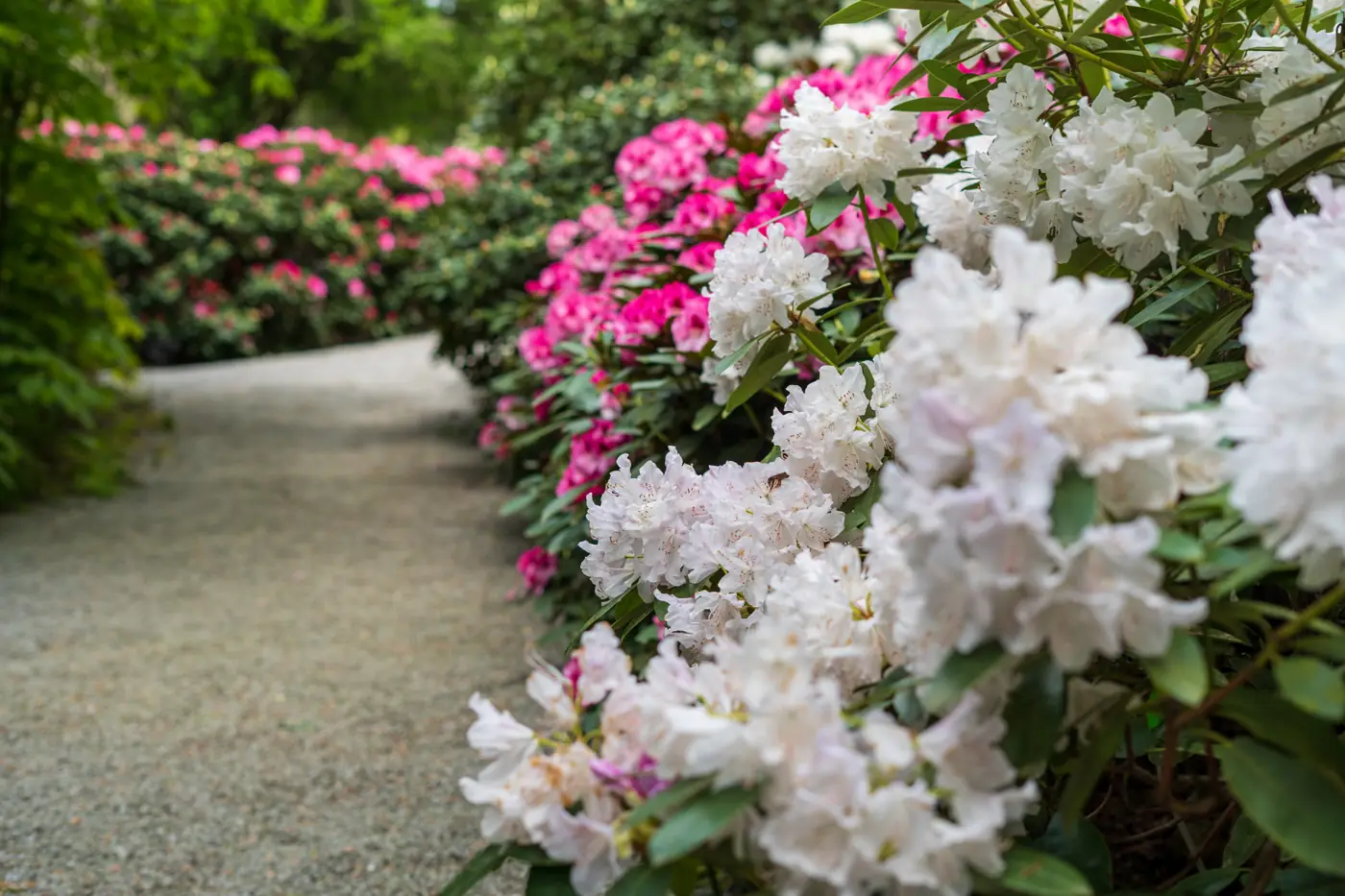
What is a rhododendron and which types suit UK gardens?
Rhododendrons range from low, spreading shrubs to small trees several metres tall. Their spring flowers grow in rounded clusters, often covering much of the foliage at their peak. In UK gardens, compact dwarf varieties work well in patio containers and small borders, while larger forms need space to develop their broad, woody framework. The flowers come in shades of pink, purple, red, white, yellow and orange, often with striking markings in the throat.
Most garden rhododendrons are evergreen, holding their leathery leaves all year, which makes them excellent for structure and privacy. A few, like the deciduous azaleas (which botanically are rhododendrons too), lose their leaves in winter but light up the garden with fiery autumn colour before they drop.
When you are browsing for a rhododendron plant, you will see names like ‘rhododendron bush’, ‘rhododendron shrub’ or even ‘rhododendron tree’ used loosely. In practice, the size and habit vary hugely. Many dwarf rhododendrons reach around 40 cm to 1 m in height and spread, although mature dimensions depend on the variety. Their compact growth suits rock gardens, containers and the front of borders. Medium shrubs commonly reach 1.5 to 2.5 metres, while larger hybrids and species may grow 3 to 5 metres tall or more. Check the expected mature spread before choosing a planting position.
One type you need to know about is rhododendron ponticum. This vigorous, purple-flowered species has escaped from gardens and become invasive in UK woodlands, particularly in the west and north. It spreads readily by seed and by layering, forming dense thickets that shade out native plants. It also carries Phytophthora ramorum and Phytophthora kernoviae, diseases that can affect trees and other shrubs. The law around rhododendron ponticum is covered later in this guide, but for now, the key point is: do not plant it in your garden, and if you inherit it, manage it carefully.
- Large hybrid rhododendrons for woodland gardens
- Dwarf rhododendrons for pots and small borders
- Evergreen azaleas for low, spreading ground cover
- Deciduous azaleas for scent and autumn colour
| Type | Typical height and spread | Best use |
|---|---|---|
| Dwarf rhododendron | 40 cm to 1 m | Pots, rock gardens, front of border |
| Medium evergreen rhododendron | 1.5 to 2.5 m | Mixed borders, specimen shrubs |
| Large rhododendron / tree rhododendron | 3 to 5 m plus | Woodland edge, back of large border |
| Evergreen azalea | 30 cm to 1.2 m | Ground cover, low hedging, pots |
| Deciduous azalea | 1.2 to 2.5 m | Scented flowers, autumn colour |
Where is the best place to plant rhododendron?
The short answer is: a spot with dappled shade and lime-free, moisture-retentive soil. Rhododendrons are woodland plants at heart, so they like the light that filters through tree canopies, or a position that gets morning sun but is shaded from the hottest afternoon rays. Too much deep shade and they will grow leggy and flower poorly. Too much fierce sun, especially on light sandy soil, and the leaves can scorch, the buds may dry out and the shallow roots will struggle.
In a typical UK garden, a bed on the north or east side of the house often works well. A border under a high, open canopy of deciduous trees is ideal because the rhododendron gets full light in winter and early spring, then gentle shade as the tree leaves expand. Avoid planting directly under dense evergreens or in a frost pocket where cold air settles, because late frosts can damage emerging flower buds.
In a sunny new-build garden, smaller-leaved dwarf rhododendrons and evergreen azaleas are often more suitable than large-leaved varieties. Keep their roots moist and protected with an organic mulch. Where afternoon sun is particularly strong, a pergola or a lightly branched tree such as Amelanchier can provide useful shade as the garden develops.
- Dappled shade or morning sun, afternoon shade
- Shelter from strong, drying winds
- Avoid frost pockets and waterlogged hollows
- Open, humus-rich, acid soil (pH 4.5 to 6)
Do rhododendrons like sun or shade?
This is one of the most common questions, and the honest answer is ‘it depends on the type and your soil’. As a rule, rhododendrons prefer light shade, but many will grow in full sun if the soil stays reliably moist and the roots are kept cool. In cooler, wetter parts of the UK, such as western Scotland, Wales and the Lake District, you will see large rhododendron bushes thriving in open, sunny positions. In drier eastern counties, full sun is riskier and afternoon shade becomes much more important.
If you want to plant rhododendron shrubs in a sunny spot, choose compact varieties with smaller, thicker leaves, which are more tolerant of sun and wind. Mulching heavily with bark or leaf mould helps keep the roots cool and damp. In pots, move the container to a shadier position during heatwaves, and stand it on pot feet so excess water drains away.
| Light level | What to expect |
|---|---|
| Full shade (less than 3 hours direct sun) | Sparse flowering, leggy growth |
| Dappled shade | Ideal: healthy growth, abundant flowers |
| Morning sun, afternoon shade | Excellent for most varieties |
| Full sun (6 plus hours) | Possible if soil stays moist; risk of scorch |
Shop the plants in this guide
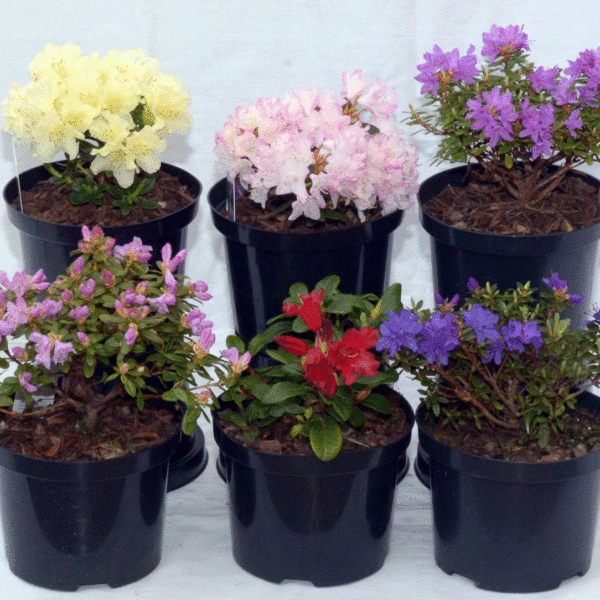
Mixed dwarf rhododendrons are available in 9cm pots in packs of 6, 12 or 18 plants, or in 2 litre pots in packs of 3, 4 or 6 plants. These compact evergreen shrubs suit patio containers, rockeries and the front of sheltered borders. Plant them in ericaceous compost or naturally acidic, free-draining garden soil.
What soil do rhododendrons need and how do you prepare it?
Rhododendrons must have acid soil. In pH terms, aim for 4.5 to 6.0. If your garden soil is neutral or alkaline, the leaves will turn yellow between the veins (lime-induced chlorosis) and the plant will slowly decline. You can test your soil with a simple DIY kit from a garden centre. If you are on chalk, limestone or heavy clay, growing rhododendrons in the ground is difficult and you are far better off planting them in pots of ericaceous compost.
Even on naturally acid soil, preparation matters. Rhododendrons have shallow, fibrous roots that spread wide rather than deep. They hate heavy, waterlogged ground and compacted clay. Before planting, dig in plenty of organic matter such as leaf mould, composted pine bark or well-rotted sawdust. This opens up the soil, improves drainage and mimics the leaf-litter floor of their native woodland habitat. Do not use mushroom compost or manure, as these are often alkaline.
If you garden on clay, consider planting your rhododendron bush on a slight mound or raised bed to keep the root crown above the wettest zone. In very sandy soils, dig in organic matter to hold moisture, and be prepared to water more often.
- Check soil pH before planting
- Dig in leaf mould or composted bark
- Avoid lime, mushroom compost and fresh manure
- On clay, plant on a raised mound
How to plant a rhododendron: step by step
Planting rhododendron bushes is straightforward, but getting the depth and spacing right makes all the difference. The best time to plant is autumn or early spring, when the soil is moist and the roots can settle in before summer heat or winter cold. Container-grown plants can go in at any time if you keep them well watered.
Rhododendrons are surface-rooting, so they must never be planted deep. The top of the root ball should be level with the soil surface, or even slightly proud. Planting too deep is the quickest way to kill a new rhododendron shrub.
- Soak the root ball in a bucket of rainwater for 20 to 30 minutes before planting.
- Dig a hole twice as wide as the pot but no deeper than the root ball.
- Loosen the sides and base of the hole with a fork, but do not add compost to the bottom.
- Place the plant in the hole so the top of the root ball sits level with the surrounding soil.
- Backfill with a mix of the excavated soil and ericaceous compost or leaf mould.
- Firm gently with your hands, not your boots, to avoid compacting the roots.
- Water thoroughly with rainwater and apply a 5 to 8 cm mulch of bark or leaf mould, keeping it away from the stem.
Rhododendron spacing and sizing: how much room does a bush rhododendron need?
Allow for the mature spread before planting. Dwarf rhododendrons may occupy less than a metre, while large hybrids can eventually extend several metres across. In borders and woodland-edge plantings, check the expected width as carefully as the height. Crowded shrubs compete for moisture and are harder to maintain.
If you are planting a group or drift of rhododendrons, space them so the canopies will just touch at maturity, creating a natural, flowing look. For a more formal block or hedge effect, you can plant a little closer, but avoid cramming them in, which leads to poor air circulation and fungal problems.
| Rhododendron type | Planting distance between plants | Expected spread at 10 years |
|---|---|---|
| Dwarf rhododendron | 60 to 80 cm | 80 cm to 1 m |
| Medium evergreen rhododendron | 1.5 to 2 m | 1.5 to 2.5 m |
| Large rhododendron | 2.5 to 4 m | 3 to 5 m |
| Evergreen azalea | 50 to 80 cm | 60 cm to 1.2 m |
Watering and feeding rhododendrons for healthy growth and flowers
Rhododendrons have shallow, fibrous roots, so the upper soil must remain moist without becoming waterlogged. Dry conditions can affect both current growth and the development of next year's flower buds. Use rainwater where possible, particularly in hard-water areas where repeated watering with alkaline tap water can raise the pH of container compost. During dry weather, soak the root area thoroughly once or twice a week, adjusting for rainfall and soil conditions. A layer of bark or leaf mould helps reduce evaporation.
Feeding is simple. Use a fertiliser formulated for ericaceous plants, such as liquid or granular rhododendron feed. Apply it in early spring as new growth starts, and again lightly after flowering if the plant looks tired. Avoid high-nitrogen lawn feeds or general border fertilisers, which can force soft, sappy growth that attracts aphids and is easily damaged by frost. Do not feed after midsummer, because late, soft growth is vulnerable to winter cold.
- Water with rainwater, not hard tap water
- Soak deeply once or twice a week in dry weather
- Mulch annually with bark or leaf mould
- Feed with ericaceous fertiliser in early spring
When does the rhododendron bloom and how do you get more flowers?
In most UK gardens, the main rhododendron bloom period runs from April to June, with the exact timing depending on the variety and your local climate. Early-flowering dwarf rhododendrons and some species can start in March in mild areas, while late-season hybrids carry the show into July. A well-planned collection can give you rhododendron flowers for three months or more.
To get the best display, pay attention to three things: light, water and deadheading. A plant in deep shade will produce leaves but few flower buds. One that dries out in late summer may abort the following year’s buds. Removing spent flower heads prevents unnecessary seed development and keeps the shrub tidy. On young or compact plants, carefully snapping off the old trusses after flowering may help direct resources towards new growth. Avoid damaging the developing shoots immediately below each flower head.
| Flowering time | Examples |
|---|---|
| March to April | Rhododendron dauricum, early dwarf hybrids |
| April to May | Most evergreen rhododendrons and azaleas |
| May to June | Rhododendron ponticum, many large hybrids |
| June to July | Late-season hybrids, deciduous azaleas |
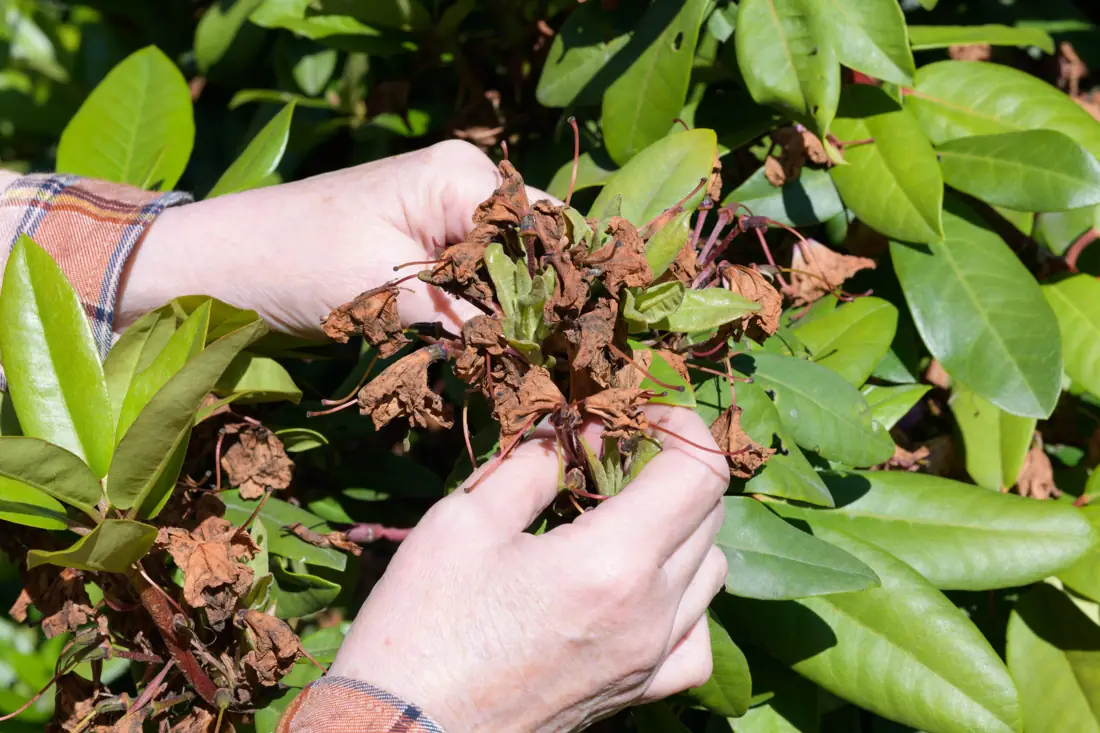
How to deadhead a rhododendron without damaging next year’s buds
Once the flowers have faded, remove the old trusses carefully, particularly on young shrubs and dwarf varieties. Small new growth buds sit immediately beneath the spent flower heads and must remain intact. These buds are small, pointed and often covered by the dying flower truss. Use your thumb and forefinger to snap the old flower stem sideways. If the stem is tough, use clean secateurs, but keep the blades well away from those new shoots.
Do this as soon as the flowers fade and before the seed capsules swell. On large rhododendron bushes, you do not have to deadhead every single truss, but doing the ones you can reach easily keeps the shrub looking tidy and channels energy into growth and next year’s rhododendron blooms. On young plants and dwarf rhododendrons in pots, deadheading is especially worthwhile because you want all the vigour going into the plant, not into seed.
- Wait until the flowers fade and petals drop.
- Locate the new leaf buds just below the old flower head.
- Snap or cut the old flower stem cleanly above those buds.
- Do not pull or twist, which can tear the bark.
How to prune a rhododendron: when to cut and how to trim for shape and size
Rhododendrons do not need routine pruning in the way a rose or a hedge does. For most established plants, pruning is limited to removing dead, damaged or crossing branches, and occasionally reducing the size of a shrub that has outgrown its space. The golden rule is to prune immediately after flowering, because next year’s flower buds form on the current season’s growth from midsummer onwards. Prune in autumn or winter and you will cut off the buds.
If you need to cut back a rhododendron hard, perhaps because it has become leggy or too tall for its spot, do it in stages over two or three years. Cut one or two of the oldest stems right back to a low sideshoot or even to the main trunk in early summer. The plant will usually respond with strong new shoots from dormant buds under the bark. Feed and water well after hard pruning to support recovery.
Light trimming to shape a rhododendron shrub is straightforward. After flowering, use secateurs to shorten over-long shoots back to a leaf joint or a sideshoot. Step back often to check the shape. For dwarf rhododendrons in pots, a light trim after flowering keeps them compact and bushy.
| Month | Pruning task |
|---|---|
| April to June | Deadhead spent flowers as they fade |
| June to early July | Light shaping trim, remove dead or damaged wood |
| July to August | Hard pruning of old stems if needed (do not prune later) |
| September to March | No pruning: you would remove next year’s flower buds |
Rhododendron in pots: how to grow dwarf rhododendrons on a patio or balcony
Growing rhododendrons in pots is a brilliant solution if you have alkaline soil, a small garden or just a sunny patio. Dwarf rhododendrons and compact evergreen azaleas are the best choices. They stay naturally small, flower generously and look good all year.
The container matters. Pick a pot that is wider than it is deep, because rhododendron roots spread sideways. Terracotta looks lovely but dries out fast; glazed ceramic or plastic retains moisture better. Whatever you choose, make sure it has plenty of drainage holes. Stand the pot on feet so water never sits in the base.
Fill the pot with ericaceous compost, and never be tempted to use garden soil or multi-purpose compost, which are usually too alkaline. Repot every two to three years in spring, moving up one pot size and teasing out the roots gently. Top-dress with fresh compost and slow-release ericaceous feed each spring. Watering is the biggest job: pots dry out quickly, so check them every day in summer and always use rainwater if you can.
- Choose a dwarf rhododendron or compact azalea
- Use a wide pot with good drainage holes
- Fill with ericaceous compost only
- Water with rainwater, feed with ericaceous fertiliser
- Repot every 2 to 3 years in spring
Common rhododendron problems and how to fix them
Rhododendrons are generally tough once established, but a few problems crop up regularly in UK gardens. Most are linked to soil, water or position, so they are usually fixable.
Yellow leaves with green veins are the classic sign of lime-induced chlorosis. The soil pH is too high, so the plant cannot take up iron. In pots, repot into fresh ericaceous compost. In the ground, apply chelated iron and mulch with pine needles or bracken, but accept that on chalky soil, pots are the long-term answer.
Bud blast is a fungal disease where flower buds turn brown and fail to open. You will often see tiny black bristles on the affected buds. Pick off and bin every infected bud as soon as you spot it. The disease is spread by leafhoppers, so keeping the plant healthy and well mulched helps it shrug off the problem.
Rhododendron lace bug is a sap-sucking insect that causes a pale, stippled, silvery appearance on the upper leaf surface, with dark spots of excrement underneath. It is most active on plants in sunny, dry positions. Spraying the undersides of the leaves with a contact insecticide or fatty-acid spray in late spring can help, but improving shade and moisture is the longer-term fix.
Powdery mildew can appear as a white coating on leaves in late summer, especially on dwarf rhododendrons in dry soil. Water the roots, not the leaves, and thin out surrounding growth to improve airflow.
| Problem | Likely cause | What to do |
|---|---|---|
| Yellow leaves, green veins | Lime-induced chlorosis | Test pH, use ericaceous compost or chelated iron |
| Brown, unopened flower buds | Bud blast (fungal) | Remove affected buds, improve air flow |
| Silvery, stippled leaves | Lace bug | Spray undersides in spring, increase shade and mulch |
| White coating on leaves | Powdery mildew | Water roots, improve air circulation |
Is it illegal to plant rhododendron in the UK? Understanding the law on rhododendron ponticum
It is not illegal to plant most rhododendrons in your garden. The vast majority of garden varieties, including all the dwarf rhododendrons, hybrids and azaleas you find in garden centres, are perfectly legal to grow. The law applies specifically to rhododendron ponticum.
Rhododendron ponticum is listed under Schedule 9 of the Wildlife and Countryside Act 1981. This makes it an offence to plant or otherwise cause this species to grow in the wild. ‘In the wild’ includes woodlands, hedgerows, heathland and other semi-natural habitats. You are not breaking the law by having an existing ponticum in your garden, but you must not plant it out into the wider landscape, and you should take care to stop it spreading beyond your boundary.
Because ponticum is such a problem for native wildlife and plant health, many gardeners choose to remove it entirely. If you do, cut the stems to ground level and treat the stumps with a glyphosate-based stump killer, or dig out the roots. Bag and dispose of the material responsibly, and never dump it in the countryside, where it can re-root.
- Rhododendron ponticum is invasive and listed under Schedule 9
- It is an offence to plant it or cause it to grow in the wild
- Garden hybrids, azaleas and dwarf rhododendrons are legal to plant
- Control ponticum by cutting and treating stumps
Are rhododendrons poisonous to people and pets?
Yes, all parts of the rhododendron plant are toxic if eaten. The leaves, flowers and nectar contain grayanotoxins, which can cause nausea, vomiting, abdominal pain and, in severe cases, heart rhythm problems. The risk to people is low because the plant is not tempting to eat, but small children who might put leaves or flowers in their mouths should be supervised. Honey made from rhododendron nectar can also be toxic, but this is extremely rare in the UK.
For dogs, cats and horses, rhododendron poisoning is more of a concern. Even a few leaves can cause drooling, vomiting and weakness. If you have pets that chew plants, it is safest to fence off rhododendrons or grow them in pots out of reach. If you suspect your pet has eaten any part of a rhododendron, contact your vet straight away.
Design ideas: using rhododendrons in UK gardens
Rhododendrons are generous plants that earn their keep in so many ways. A single large rhododendron shrub in a front garden makes a stunning spring focal point, underplanted with spring bulbs and ferns. In a small town garden, a group of three dwarf rhododendrons in glazed pots on a patio gives you weeks of colour and evergreen structure through winter.
For a woodland-style border, plant rhododendrons in drifts with other acid-lovers such as pieris, camellia, heather and Japanese maples. The different leaf shapes and textures look good long after the flowers fade. If you have a new-build garden with a bare fence, a line of evergreen azaleas planted 60 cm apart makes a low, informal flowering hedge that needs almost no clipping.
Rhododendrons also work beautifully in a mixed hedge. Combine them with holly, yew or laurel for a tapestry effect, but remember the whole area needs acid soil, or you will need to prepare a wide trench of ericaceous compost for the rhododendrons. For a wildlife-friendly garden, the flowers provide nectar for bumblebees, and the dense evergreen cover offers shelter for birds.
- Single specimen in a front garden
- Drifts in a woodland border with pieris and ferns
- Dwarf rhododendrons in pots on a patio
- Evergreen azaleas as a low flowering hedge
Common questions
Why is rhododendron a problem?
The species rhododendron ponticum is a problem because it is highly invasive in UK woodlands and heathland. It forms dense thickets that shade out native plants, and it carries diseases such as Phytophthora ramorum that can kill trees. Garden hybrids and dwarf rhododendrons are not invasive and do not cause these problems.
Where is the best place to plant rhododendron?
The best place is a spot with dappled shade or morning sun and afternoon shade, sheltered from strong winds. The soil must be acid (pH 4.5 to 6), well drained but moisture-retentive, and rich in organic matter like leaf mould or composted bark.
Is it illegal to plant rhododendron in the UK?
It is illegal to plant rhododendron ponticum in the wild under Schedule 9 of the Wildlife and Countryside Act 1981. Planting garden hybrid rhododendrons, dwarf rhododendrons and azaleas in your garden is perfectly legal.
Do rhododendrons like sun or shade?
Rhododendrons generally prefer dappled shade or morning sun with afternoon shade. In cooler, wetter parts of the UK, many varieties will grow in full sun if the soil stays consistently moist. Deep shade leads to poor flowering.
When does the rhododendron bloom?
In the UK, rhododendrons bloom mainly from April to June. Early types can start in March, and late-flowering varieties can carry the display into July. The exact timing depends on the variety and your local climate.
How do I prune a rhododendron?
Prune lightly straight after flowering, removing dead or damaged wood and shortening over-long shoots. For hard pruning, cut back old stems in stages over two or three years in early summer. Never prune after midsummer, or you will remove next year’s flower buds.
How do you deadhead a rhododendron?
Deadhead by snapping or cutting off the spent flower head just above the new leaf buds that sit below it. Do this as soon as the flowers fade, before seed capsules form. Take care not to damage the new growth buds, which carry next year’s flowers.
Does rhododendron like shade?
Yes, rhododendrons like shade, but specifically dappled or partial shade. Too much deep shade results in leggy growth and few flowers. A position under a high canopy of deciduous trees is ideal.
How to cut back a rhododendron?
To cut back a rhododendron, prune immediately after flowering. For a light trim, shorten shoots to a leaf joint. For an overgrown shrub, cut one or two thick stems back to a low sideshoot or the main trunk each year, feeding and watering well afterwards to encourage regrowth.
When to cut rhododendron?
The best time to cut a rhododendron is in late spring or early summer, straight after the flowers fade. This allows the plant to produce new growth that will carry the following year’s flower buds. Avoid cutting between late summer and early spring.