× Cuprocyparis leylandii 'Castlewellan'
£2.49 per plant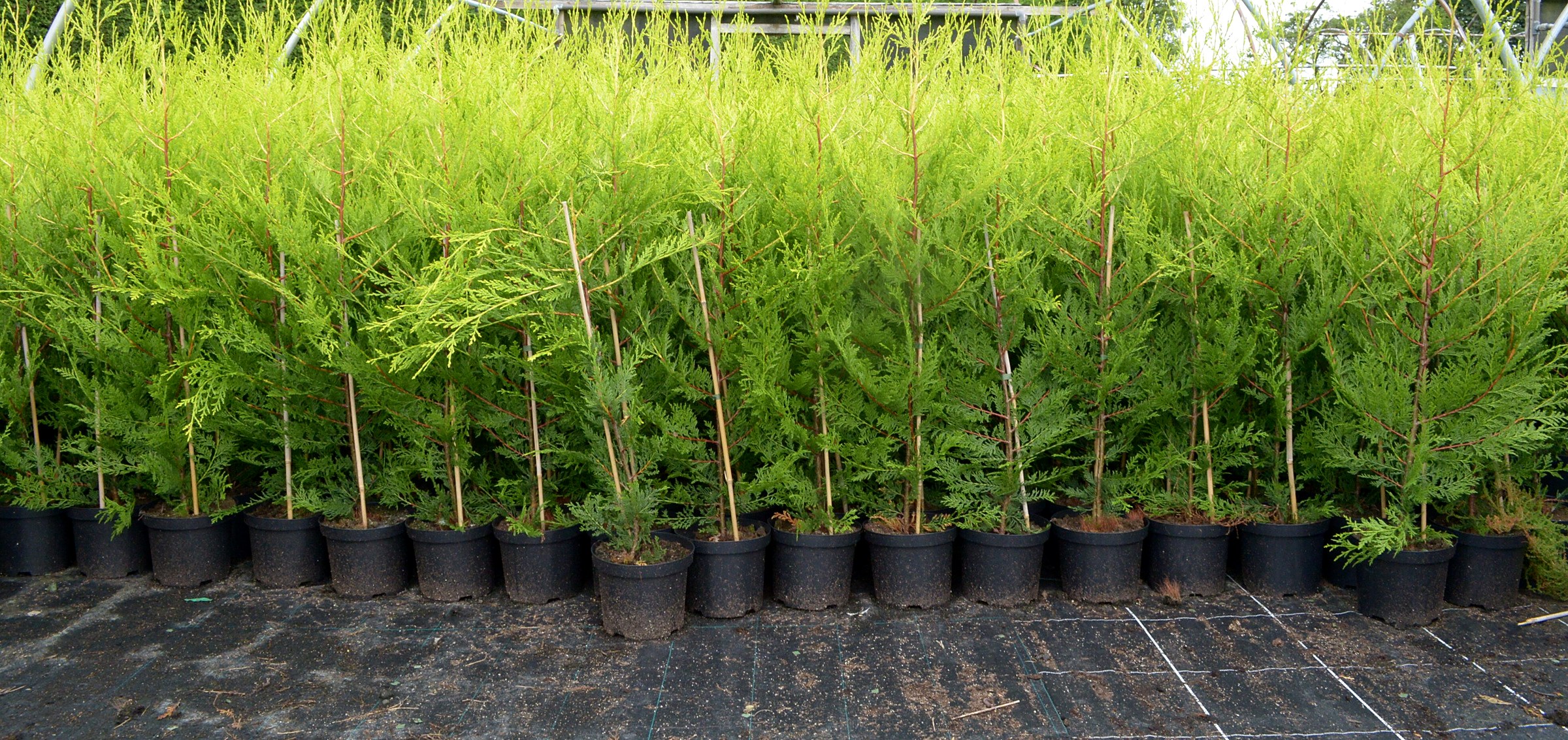
- UK Nursery Grown
- Grow Guarantee
Castlewellan Gold (Golden Leylandii) Hedge Plants
× Cuprocyparis leylandii 'Castlewellan'
£2.49 per plant
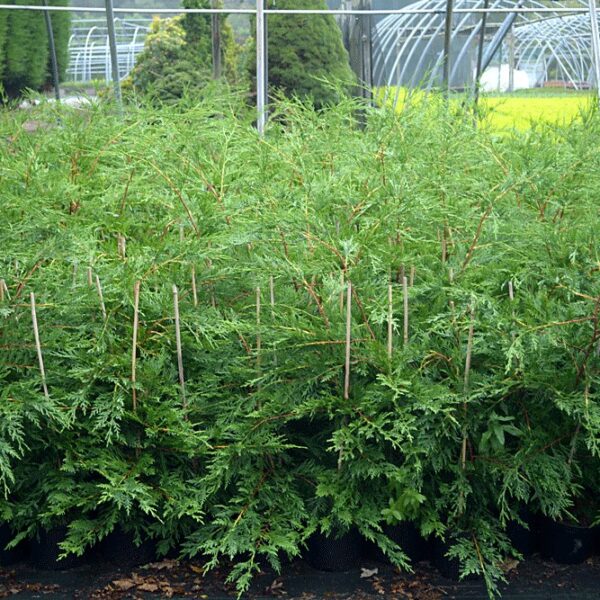
Castlewellan Gold has fine, golden-yellow foliage that is brightest in good light. Its upright stems grow quickly into an evergreen boundary hedge, with regular clipping needed to keep the sides dense and the height under control. Like green Leylandii it is vigorous, so it suits a planned trimming routine and a position with room to reach both sides comfortably.
- Golden-yellow evergreen foliage year-round
- Fast-growing, dense screening conifer
- For sunny to partly shaded boundaries
1. How would you like it supplied?
Grown and sent in a pot, so you can plant it in any month when the soil is not frozen or waterlogged. Ask us a question
Pots, bare root and rootball
- Bare root
- Arrives with bare roots and little soil. Keep them damp and plant while the weather is cool.
- Rootball
- Arrives with soil wrapped around the roots. Lift it by the soil ball rather than the stems and plant as directed.
- Potted
- Comes in a nursery pot. Each option shows the pot size and the height you will receive.
2. Pick your plant
Not sure which shrub to pick?Tell us about your garden and we will help you choose
Position
Sun or partial shade
Soil
Well-drained soil
Supplied size
30-60cm, 9cm pot
Ordering
Minimum order 10
Description
Castlewellan Gold (Golden Leylandii) Hedge Plants
What is golden Leylandii?
Castlewellan Gold is a golden-leaved form of Leyland cypress, with upright growth and fine, feathery sprays of foliage. Its yellow-gold colour holds through the year, taking on subtle bronze tones in colder months without the hedge ever becoming bare. The yellow foliage is particularly noticeable beside dark fencing, deep green shrubs or the purple leaves of ornamental plants. It also brings a lighter colour to a long boundary where green Leylandii would appear much darker.
Left unclipped it will grow into a large tree, but as a hedge it responds well to regular light trimming. The key is to decide on a finished height and width early and keep on top of the growth. In a small town garden it will quickly outgrow the space unless you commit to two or three cuts a year, while in a family garden with a long boundary it can create a solid screen surprisingly fast.
Why choose Castlewellan Gold over green Leylandii?
The main reason is colour. Castlewellan Gold gives a boundary a noticeably different colour from the usual dark green conifers. Against a timber fence, the golden shoots stand out even in winter. Purple-leaved shrubs and silver-grey foliage make useful planting companions, provided they are set far enough from the hedge to receive light and moisture.
Growth rate and care are very similar to green Leylandii. Castlewellan Gold is sometimes described as slightly less vigorous, but in good soil and full sun it still puts on 60 to 90cm of growth a year. The same trimming rules apply: cut within green growth, never back into bare brown wood, and keep the top narrower than the base so light reaches the lower branches.
How tall and wide does a golden Leylandii hedge grow?
As a maintained hedge, Castlewellan Gold is usually kept between 2m and 4m tall. It can be held lower with frequent clipping, but below about 1.5m the golden colour may be less intense because you are constantly removing the brightest young growth. Eventual width as a clipped hedge is typically 1m to 1.5m, depending on the height you keep it at.
If left untrimmed it can reach 15m or more and spread several metres wide, so it is not a plant for a small border or a narrow side return. Although a young plant can grow in a sufficiently large container for a time, Castlewellan Gold is better suited to open ground for long-term hedging. Its eventual size and watering needs make permanent container growing impractical. Growth rate in the first few years after planting is around 60 to 90cm per year once the roots are established.
Best uses for Castlewellan Gold
This is a boundary hedge for gardens where you want a tall screen and can reach it for trimming. It suits larger family gardens, rural plots and situations where a green hedge would feel too dark. Its closely packed foliage can slow wind across an exposed garden once the hedge fills out. Established branches can also provide nesting cover, so check carefully for active nests before trimming.
Because the golden colour is strongest in good light, avoid planting it in deep shade where it will turn greener and grow more thinly. A north-facing boundary that still gets overhead light can work, but a hedge tucked under overhanging trees will disappoint. For a mixed native hedge it is too vigorous and would swamp slower species, so keep it as a single-species screen.
Choosing a size
Smaller plants establish quickly and let you shape the hedge from the start, which is useful if you want a lower finished height. The 90-120cm plants provide more height immediately than the 30-60cm option, although neighbouring shoots still need time to meet. Check watering throughout the first growing season while the roots spread into the surrounding soil. All our Castlewellan Gold plants are pot-grown, so you can plant them at any time of year when the ground is workable.
The table below compares the three sizes we offer. Each of the three options contains one plant. The table shows its supplied height, pot size and suggested spacing. For a continuous hedge, plant in a single row at the spacing given; for a thicker screen, use a double row with plants staggered.
| Option | Supplied size | Pot type | Best for | Plants per metre |
|---|---|---|---|---|
| 30-60cm | 30-60cm | 9cm pot | Long hedge runs, shaping from the start | 2 to 3 |
| 60-90cm | 60-90cm | 2 litre pot | Good balance of height and value | 2 to 3 |
| 90-120cm | 90-120cm | 2 litre pot | 90-120cm starting height for earlier screening | 2 |
Growing and care
Planting and looking after it
When and how to plant a golden Leylandii hedge
Pot-grown Castlewellan Gold can be planted all year round as long as the soil is not frozen or waterlogged. The ideal windows are early autumn and mid-spring, when the soil is warm and rainfall helps establishment. Summer planting is fine if you keep on top of watering.
Prepare a planting strip at least 60cm wide, removing all weeds and working in some well-rotted organic matter if the soil is poor. Water each pot thoroughly before planting. Set the rootball at the same depth it was in the pot, backfill with soil, firm gently and water in. A mulch of bark or compost after planting helps hold moisture and suppress weeds, but keep it clear of the stems.
Spacing and how many plants you need
For a single-row hedge, space plants 50cm apart (2 per metre) for the 90-120cm size, or 33 to 50cm apart (2 to 3 per metre) for the smaller sizes. A double staggered row gives a denser screen more quickly: space rows 40 to 50cm apart with plants offset. Use the table below to work out quantities for common hedge lengths.
| Hedge length | Plants needed (2 per metre) | Plants needed (3 per metre) |
|---|---|---|
| 5 metres | 10 | 15 |
| 10 metres | 20 | 30 |
| 20 metres | 40 | 60 |
Watering and feeding
Keep the root zone moist through the first full growing season. Check the soil regularly rather than watering on a fixed schedule: dig a small hole beside the rootball to see if it is dry a few centimetres down. A long soak twice a week in dry weather is better than a daily sprinkle. Even in winter, check during dry, windy spells, especially on sandy soils.
Feed in early spring with a general-purpose granular fertiliser such as Growmore or fish, blood and bone, scattered along the root zone and watered in. A second light feed in early summer can help young hedges put on strong growth. Avoid high-nitrogen feeds late in the season, which produce soft growth that may suffer in frost.
Trimming calendar
Trim Castlewellan Gold between April and the end of August. The first cut is usually in late spring once the new growth has extended, with a second cut in mid to late summer. On vigorous hedges a light third trim in August keeps the shape crisp through winter. Aim to finish routine trimming by the end of August, giving any fresh growth time to mature before colder weather arrives.
Always cut within the green foliage. If you cut back into bare brown stems, those branches will not regrow and you will be left with permanent gaps. Keep the sides slightly tapered so the base is wider than the top: this lets light reach the lower branches and prevents the hedge going thin at the bottom. Check for nesting birds before every cut.
| Month | Action |
|---|---|
| March | Apply spring feed |
| April to May | First trim of the season |
| June to July | Second trim, light feed if needed |
| August | Final trim (optional, before month end) |
| September to February | No trimming; check ties and mulch |
Compare green and golden conifers Keep a conifer hedge in shape Planting a new hedge
Our planting guideMore growing help: RHS plant and growing guidance
Sizes and prices
Castlewellan Gold (golden Leylandii) sizes, prices and minimum orders
| Option | Supplied height | Pot or root | Plants | Price | Minimum order | Availability |
|---|---|---|---|---|---|---|
| 30-60cm | 9cm pot | 1 plant | 30-60cm | 9cm pot | 1 | £2.49 per plant | 10 | Available |
| 60-90cm | 2 litre pot | 1 plant | 60-90cm | 2 litre pot | 1 | £7.50 per plant | 5 | Available |
| 90-120cm | 2 litre pot | 1 plant | 90-120cm | 2 litre pot | 1 | £8.50 per plant | 5 | Available |
Prices are for the option you select. Pack size is the number of plants you receive, and the minimum order is the smallest number we can send.
How sizes and quantities workDelivery
Delivery for your plant order
You will see delivery options and any charge in your basket before you pay.
Your plants are alive when they reach you, so open the box on the day, water if the compost feels dry and stand them somewhere sheltered until planting.
Delivery informationPlant questions
Good to know
How many 30-60cm Castlewellan Gold plants do I need per metre?
For the 30-60cm size, plant 2 to 3 per metre in a single row. Use 2 per metre if you are happy for the hedge to fill in over an extra season, or 3 per metre for quicker coverage. In a double staggered row, use 4 to 5 plants per metre of hedge length, with the rows about 40cm apart.
What are the disadvantages of Leylandii?
Leylandii hedges grow very fast and can quickly become too tall or wide if trimming is missed. They cannot be cut back into old brown wood, so a neglected hedge is hard to restore. They also cast dense shade and dry the soil around them, which can affect nearby planting. In a small garden, the maintenance commitment is significant, and neighbours may be concerned about height and light loss.
Do Leylandii ever stop growing?
No, Leylandii continue to grow in height and width throughout their life. Regular trimming keeps a hedge at the size you want, but if you stop cutting it will resume upward growth. An unclipped Leylandii can eventually reach 30m or more, so a hedge needs lifelong management to stay at a chosen height.
Is it illegal to plant a Leylandii hedge?
Planting Leylandii is legal. In England and Wales, the Anti-social Behaviour Act 2003 allows councils to consider complaints about qualifying high evergreen hedges over 2m where they adversely affect a neighbour's reasonable enjoyment of their property. Different legislation applies in Scotland and Northern Ireland. A hedge over 2m is not automatically unlawful. Discussing the planned height and position with neighbours before planting can help prevent disputes.
Is Castlewellan Gold slower than green Leylandii?
Castlewellan Gold is sometimes described as slightly less vigorous than the green form, but in practice it still grows 60 to 90cm a year in good conditions. In partial shade the growth rate may be a little slower and the golden colour less intense. For most gardeners, the difference is small enough that the same trimming routine works for both.
Does golden Leylandii keep its colour in shade?
The golden colour is strongest in full sun. In partial shade the foliage becomes more lime-green, and in deep shade it can turn almost green and grow more thinly. For the brightest gold hedge, choose a sunny or lightly shaded position. A north-facing boundary that still gets overhead light will hold some gold, but a hedge under tree cover will lose most of its colour.
Ask us about this plant