Prunus laurocerasus
£2.50 per plant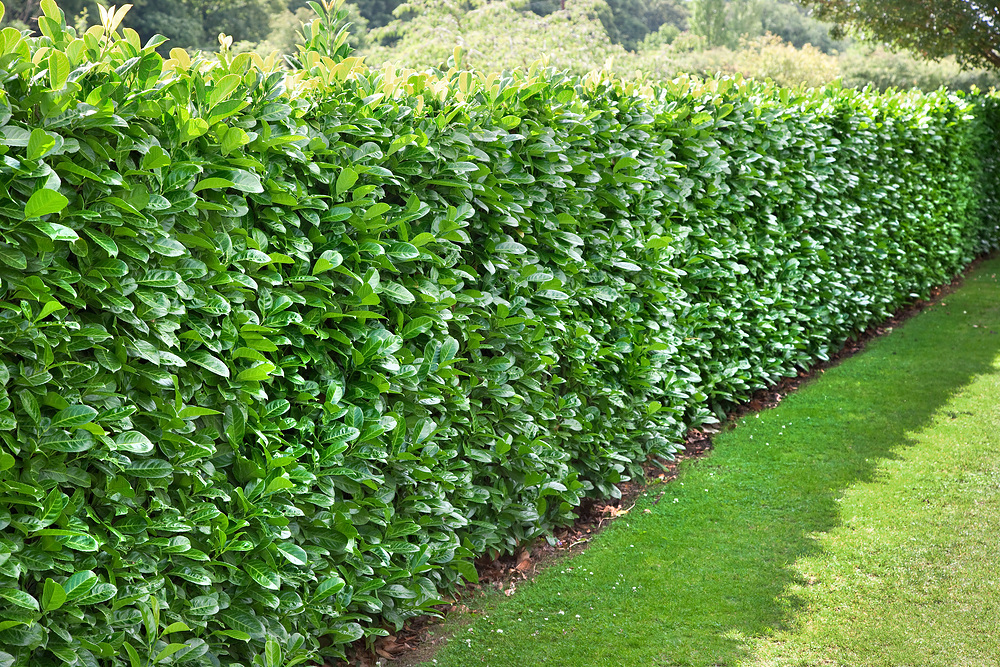
- UK Nursery Grown
- Grow Guarantee
Cherry Laurel Hedge Plants (Prunus laurocerasus)
Prunus laurocerasus
£2.50 per plant
Cherry laurel hedge plants form a dense evergreen screen, with broad, glossy leaves that provide privacy throughout the year. Their vigorous growth makes them particularly useful along garden boundaries, where a thick hedge can soften the view of neighbouring properties. Choose from three potted sizes, ranging from 40-60cm to 90-120cm, depending on your planting budget and how much height you want from the start.
- Glossy evergreen leaves all year
- Fast, dense screening for boundaries
- Thrives in sun or partial shade
1. How would you like it supplied?
Grown and sent in a pot, so you can plant it in any month when the soil is not frozen or waterlogged. Ask us a question
Pots, bare root and rootball
- Bare root
- Arrives with bare roots and little soil. Keep them damp and plant while the weather is cool.
- Rootball
- Arrives with soil wrapped around the roots. Lift it by the soil ball rather than the stems and plant as directed.
- Potted
- Comes in a nursery pot. Each option shows the pot size and the height you will receive.
2. Pick your plant
Not sure which shrub to pick?Tell us about your garden and we will help you choose
Position
Sun or partial shade
Soil
Moist but well-drained soil
Supplied size
40-60cm, 9cm pot
Ordering
Minimum order 10
Description
Cherry Laurel Hedge Plants (Prunus laurocerasus)
What is a cherry laurel hedge?
Cherry laurel, Prunus laurocerasus, is a large-leaved evergreen shrub that forms a thick, leafy hedge when planted in a row. Its broad, glossy leaves remain green through winter, keeping the boundary screened even when deciduous hedges are bare. Left unclipped, plants produce upright spikes of small white flowers in spring, followed by dark fruits. Regular trimming keeps the growth dense and leafy, and it reduces flowers and fruit.
Cherry laurel works particularly well around family gardens and along boundaries where a thick green backdrop is needed throughout the year. It grows wider than a conifer hedge, so allow room for its spread and for access to trim both sides.
Why choose a cherry laurel hedge?
Cherry laurel grows quickly into a substantial evergreen hedge, with large, glossy leaves that make a leafy alternative to fencing. Its broad foliage suits traditional borders and more contemporary garden layouts alike. It grows in sun or partial shade and is hardy in most UK gardens, although exposed, cold sites can damage the foliage.
Once the branches fill out, the thick foliage helps soften some garden noise and screens neighbouring views at eye level. Cherry laurel also responds well to clipping, so its height can be controlled in smaller town gardens, provided there is enough room for the hedge's width.
How quickly does a cherry laurel hedge grow, and how tall will it get?
Once established, cherry laurel can put on around 30 to 60cm of growth a year in favourable conditions, particularly where the soil stays moist during dry spells. Without pruning, it can eventually reach 5 to 8 metres tall. Most garden hedges are kept at around 1.5 to 3 metres through regular trimming.
An untrimmed cherry laurel can also spread 4 to 6 metres across, making it important to plan for the hedge's eventual width. With regular pruning, a width of around 1 to 1.5 metres is manageable, although older, established plants may need more substantial cutting to stay within those limits.
How to use cherry laurel in your garden
A cherry laurel hedge works well as a boundary screen, a windbreak, or a green backdrop for a mixed border. In a new-build garden with little privacy, planting the available 90-120cm size gives the boundary some height straight away, with further screening developing as the plants grow and branch out. In a larger family garden, it can divide a play area from a quiet seating spot.
The 40-60cm plants in 9cm pots are a practical choice for longer hedge runs where initial cost matters. The 60-90cm and 90-120cm plants come in 2 litre pots and provide extra height from planting, particularly useful beside a patio or seating area.
Choosing a size
Cherry laurel is available in three potted sizes: 40-60cm in a 9cm pot, and 60-90cm or 90-120cm in 2 litre pots. All three can be planted when the ground is workable and conditions are suitable. Smaller plants help keep the initial cost down over a long boundary, while the taller options provide more height straight away. The table shows the available sizes and suggested planting densities.
table
Growing and care
Planting and looking after it
When and how to plant a cherry laurel hedge
Potted cherry laurel can be planted at any time of year, as long as the ground is not frozen or waterlogged. Autumn and spring are ideal because the soil is naturally moist and warm enough for roots to settle. Prepare a planting strip at least 60cm wide. Remove weeds, grass and large stones, then dig in some well-rotted organic matter.
Water each rootball well before planting. Dig a trench or individual holes deep enough to set the plant at the same soil level it was in the pot. Backfill with soil, firm gently around the roots, and water thoroughly. A mulch of bark or compost after planting helps hold moisture, but keep it clear of the stems.
Spacing: how many cherry laurel plants do I need?
Planting distance affects how soon neighbouring cherry laurels grow together into a continuous hedge. Use the plants-per-metre figures above for a single row, allowing enough room for each plant to develop. Where space permits, a staggered double row can create a thicker screen, although it requires more plants and a wider planting strip.
For a single-row hedge, the table gives approximate plant quantities for boundaries measuring 5, 10 or 20 metres. The figures are based on the suggested spacing for each available size, so you can calculate how many plants to order.
table
Watering and feeding
New cherry laurel hedges need consistent watering during their first growing season. Check the soil around the roots regularly. Water slowly and deeply when the top few centimetres feel dry, rather than giving a light sprinkle. Rain on the leaves does not always wet the rootball underneath.
In spring, apply a general-purpose granular fertiliser or a mulch of well-rotted compost around the base of the plants. This helps maintain healthy foliage and steady new growth as the hedge establishes. Avoid feeding late in the season, as soft new growth can be caught by early frosts.
Trimming calendar
Trim your cherry laurel hedge once or twice a year to keep it dense and within bounds. Trim in late spring or early summer, once the first flush of new growth has developed. If needed, follow with a lighter cut in late summer to tidy stray shoots, avoiding pruning so late that fresh growth has insufficient time to harden before frost.
Use secateurs for the neatest finish, as they cut cleanly without slicing the large leaves. Hedge shears are quicker on a long run but leave some torn foliage. Always check for active bird nests before you cut. Keep the base slightly wider than the top so light reaches the lower branches.
Compare cherry and Portuguese laurel Choose hedge sizes and quantities Plant a garden hedge Care for a new hedge
Our planting guideMore growing help: RHS plant and growing guidance
Sizes and prices
Cherry laurel sizes, prices and minimum orders
| Option | Supplied height | Pot or root | Plants | Price | Minimum order | Availability |
|---|---|---|---|---|---|---|
| 40-60cm | 9cm pot | 1 plant | 40-60cm | 9cm pot | 1 | £2.50 per plant | 10 | Available |
| 60-90cm | 2 litre pot | 1 plant | 60-90cm | 2 litre pot | 1 | £7.99 per plant | 10 | Available |
| 90-120cm | 2 litre pot | 1 plant | 90-120cm | 2 litre pot | 1 | £8.99 per plant | 10 | Unavailable |
| 80-100cm | 2 litre pot | 1 plant | 80-100cm | 2 litre pot | 1 | £6.99 per plant | 10 | Unavailable |
| 120-150cm | 5 litre pot | 1 plant | 120-150cm | 5 litre pot | 1 | £26.99 per plant | None | Unavailable |
Prices are for the option you select. Pack size is the number of plants you receive, and the minimum order is the smallest number we can send.
How sizes and quantities workDelivery
Delivery for your plant order
You will see delivery options and any charge in your basket before you pay.
Your plants are alive when they reach you, so open the box on the day, water if the compost feels dry and stand them somewhere sheltered until planting.
Delivery informationPlant questions
Good to know
Is cherry laurel a good hedge?
Yes, cherry laurel makes a dense evergreen hedge for screening boundaries and neighbouring views. Its large, glossy leaves provide cover throughout winter, while vigorous new growth helps fill gaps between plants. It grows in full sun or partial shade and responds well to regular trimming. Allow plenty of room for its mature width, particularly in smaller gardens, and expect to prune it once or twice a year to maintain a tidy shape.
How many cherry laurel plants do I need per metre?
For 40-60cm cherry laurel plants in 9cm pots, allow approximately 3 to 4 plants per metre in a single row. The 60-90cm plants in 2 litre pots can be spaced at around 2.5 to 3 per metre, while the larger 90-120cm plants generally need 2 to 2.5 per metre. For a thicker boundary hedge, you can plant two staggered rows, keeping the suggested spacing along each row and allowing extra room between them.
How quickly does a cherry laurel hedge grow?
Established cherry laurel can grow around 30 to 60cm a year in favourable conditions. Growth depends on soil quality, moisture, light and how well the roots establish after planting. Starting with 60-90cm plants, a hedge may reach approximately 1.5 to 2 metres within 2 to 3 growing seasons where conditions are good. Regular watering during dry periods helps young plants establish, although growth and screening times will vary.
What is the disadvantage of cherry laurel?
Cherry laurel grows vigorously, so it needs regular pruning to prevent it becoming too tall or spreading into paths and borders. Its broad leaves can develop brown, ragged edges when cut through with hedge shears, making secateurs useful for a neater finish. All parts of the plant are poisonous if eaten, so take particular care near livestock, pets and children. Fallen leaves also decompose slowly and can cover smaller plants growing beneath the hedge.
Is cherry laurel poisonous?
Yes. All parts of cherry laurel are poisonous if eaten, including the leaves, stems, seeds and berries. The plant contains cyanogenic compounds that can release cyanide when the tissues are chewed or crushed. This makes it unsuitable where livestock can browse the hedge, and care is needed around children, dogs and cats. Collect pruning waste promptly, keep clippings away from animals, and wash your hands after handling cut branches. Seek urgent medical or veterinary advice if any part is swallowed.
Ask us about this plant