When should I trim my Leylandii hedge?
Trim Leylandii during the growing season, usually from April to August, when the new green shoots can be shortened without exposing the older brown branches. Two or three light cuts each year will usually keep a formal hedge under control. Avoid taking too much growth off at once, and plan the maintained height before the hedge becomes difficult to reach safely. Check for active birds' nests before every cut.
Leylandii put on most of their growth from late spring through summer. Trimming in this window lets the cuts heal quickly and encourages fresh green shoots. Avoid cutting in autumn or winter: the soft new growth that follows can be hit by frost, leaving you with brown tips.
| Month | Can I trim? | Notes |
|---|---|---|
| January | No | Dormant season. Frost risk is high. |
| February | No | Still too cold. Wait for warmer weather. |
| March | Rarely | Only a very light tidy in mild areas, but it is safer to wait. |
| April | Yes | First trim of the year. Growth is speeding up. |
| May | Yes | Ideal month. Cut back new green shoots. |
| June | Yes | Second trim if needed. Peak growing period. |
| July | Yes | Good for a mid-summer trim to keep shape. |
| August | Yes | Last safe trim. Do it early in the month. |
| September | Rarely | Only a very light snip in warm spells. Risk of frost damage. |
| October | No | Too late. New growth will not harden off. |
| November | No | Hedge is dormant. Wait until spring. |
| December | No | Deep winter. No trimming. |
How often should I cut my Leylandii hedge?
For a neat, manageable hedge, cut Leylandii two or three times between April and August. Once-a-year trimming rarely works: the hedge rockets up and you end up having to cut into old wood, which does not grow back. A light trim every six to eight weeks in the growing season is much easier on you and the plant.
Use sharp shears or a hedge trimmer. Take off about one-third of the new pale green growth each time. This encourages side shoots to fill in any gaps, giving you a solid screen that works well for privacy on a busy road or between neighbours.
- First trim: late April to early May, as new growth is soft and green.
- Second trim: mid-June to early July, when growth is at its fastest.
- Third trim (optional): early to mid-August, to tidy up before autumn.
Will Leylandii grow back after cutting into brown wood?
Leylandii generally do not regenerate from old, leafless brown wood. Unlike English yew, they lack the ability to produce reliable new green shoots from heavily cut, bare stems. If you trim beyond the green foliage, the exposed brown area is unlikely to recover. Keep routine cuts within the current green growth, particularly along the sides where bare patches are difficult to hide.
If a Leylandii hedge has become too wide, cutting deeply into the sides may leave permanent brown gaps. Reducing the top is sometimes possible, although the cut surface itself will not produce new foliage in the same way as the green side shoots. Depending on the hedge's condition, you may need to accept a smaller amount of screening, conceal bare areas with suitable planting or replace badly damaged sections.
How tall do Leylandii grow and how fast do they grow?
Leylandii are famously fast. In good soil with some sun, expect 60 to 90cm of growth a year. Left unclipped, a Leylandii hedge can reach 30 metres or more, though in a typical garden you will keep it between 2 and 4 metres. That is plenty for privacy without shading the whole plot.
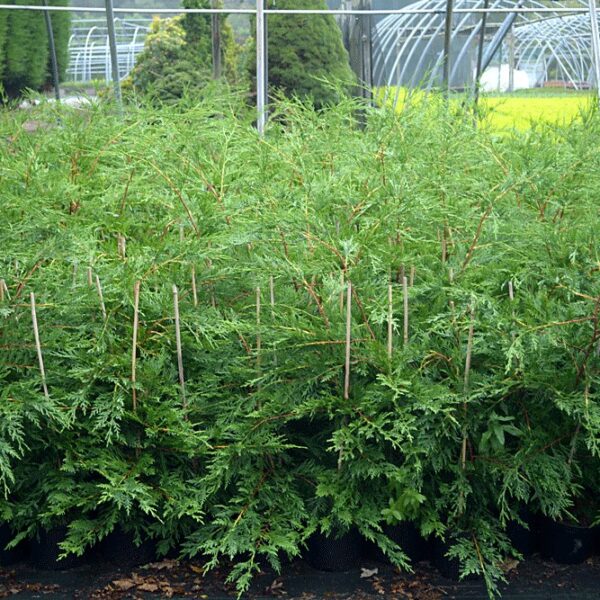
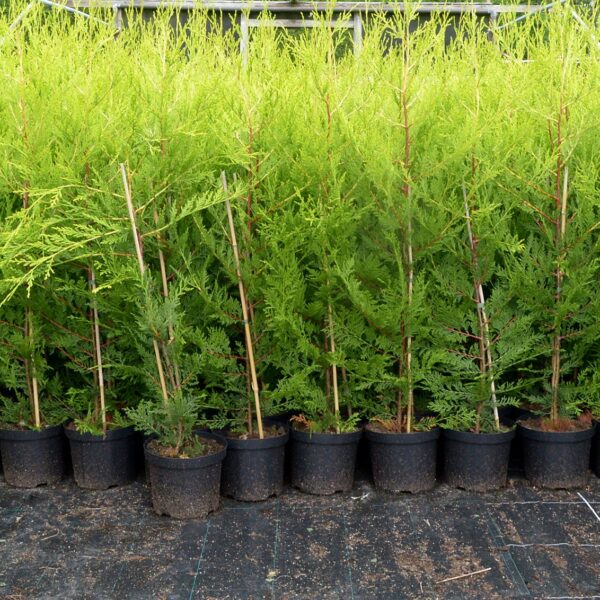
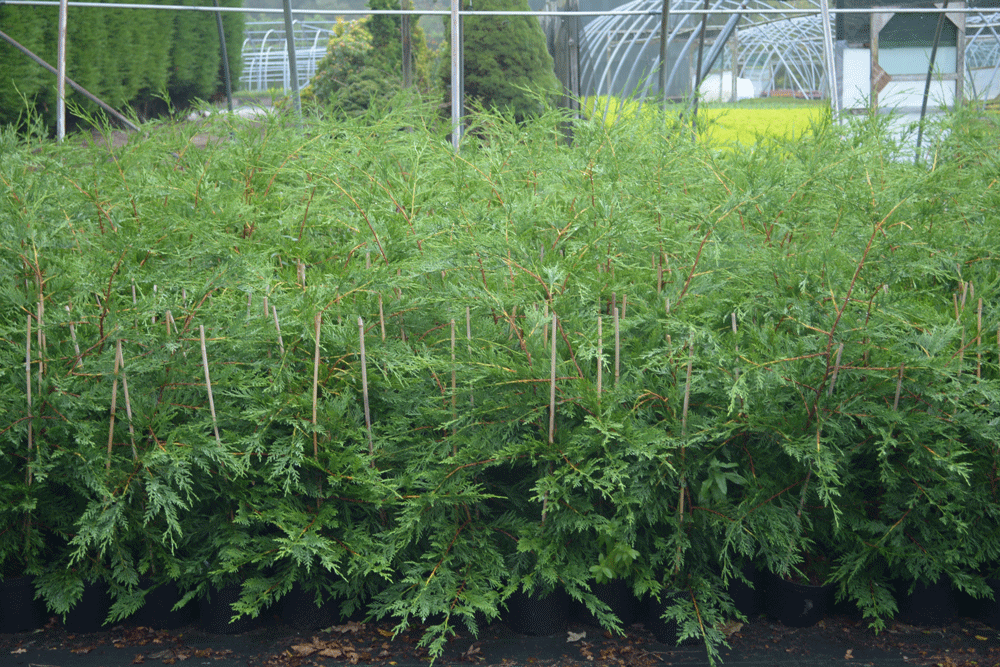
If you want a hedge that screens quickly, Leylandii is hard to beat. Our green Leylandii range includes individual 60 to 90cm bare root plants for dormant-season planting. Growth in the first year can be slower while the roots establish, so a metre of new height should not be assumed. Regular watering during dry spells and light formative trimming will help the plants develop a fuller hedge over time.
| Hedge height you want | Approximate time to reach it from a 60cm plant |
|---|---|
| 1.5 metres | 12 to 18 months |
| 2 metres | 18 to 24 months |
| 3 metres | 2 to 3 years |
| 4 metres | 3 to 4 years |
What causes brown patches on a Leylandii hedge?
Brown patches on Leylandii usually come from one of three things: cutting into old wood, a fungal disease, or stress at the roots. The most common is simply trimming too hard and exposing the dead inner branches. That brown will not green up.
Cypress aphids are insects rather than a fungal disease, and their feeding can cause brown patches that become more noticeable later. Phytophthora root rot is a separate problem associated with poorly drained, persistently wet soil. Check stems for aphids and look for signs of waterlogging around affected plants. Treatment depends on the cause: use an appropriate, currently approved control only where necessary, and improve drainage if the roots are suffering from excess moisture.
- Cutting into brown wood: bare patches stay bare.
- Cypress aphid: look for sooty mould and tiny insects. Treat with a suitable insecticide or winter wash.
- Root rot: yellowing then browning. Improve drainage, do not overwater.
- Drought stress: long dry spells can cause browning. Water young hedges well in their first two summers.
- Winter cold: frost can nip new growth if you trim too late in the year.
Do Leylandii roots damage house foundations?
Leylandii roots are not known for breaking into sound foundations, but they are wide-spreading and thirsty. On shrinkable clay soils, common in parts of the UK, a large Leylandii hedge close to a house can draw so much water from the ground that the soil shrinks, potentially causing subsidence. This is more of a risk with tall, unclipped trees than a regularly trimmed hedge.
There is no single planting distance that guarantees a Leylandii hedge will not affect foundations. Risk depends on the soil's shrinkage potential, the size and water demand of the trees, nearby structures and local conditions. On shrinkable clay, seek advice from a suitably qualified professional before planting tall conifers close to a building. Regular height management may help limit future growth, but a root barrier or a 2 to 3 metre setback should not be presented as a universal safeguard.
How do I keep my Leylandii hedge neighbour friendly?
Leylandii can cause boundary disputes when their height and width are allowed to increase unchecked. Trim regularly, keep the sides within your property where possible, and agree a manageable height with neighbours before the hedge becomes difficult to maintain. Two metres is not a universal legal maximum, although certain high evergreen hedges above that height can be subject to council complaints. A hedge kept at 2 metres can still spread sideways or compete for soil moisture.
If you inherit an overgrown hedge, do not cut it back into brown wood in one go. Assess how much green growth remains before reducing the hedge. Height reduction may be possible with careful cutting, but old bare stems will not regenerate reliably and the top may remain visibly cut. Reducing the sides beyond their green foliage is especially risky. For very tall or unstable hedges, use a qualified tree surgeon rather than attempting major cutting yourself. For a hedge on a boundary, chat to your neighbour before any big trim: a little goodwill goes a long way.
How many Leylandii plants do I need for a thick hedge?
For a dense screen, space Leylandii 60 to 90cm apart in a single row. If you want a really thick hedge quickly, plant a staggered double row with 75cm between plants and 60cm between rows. The table below gives a rough guide for common hedge lengths.
| Hedge length | Single row (plants at 75cm spacing) | Double row (plants at 75cm spacing) |
|---|---|---|
| 5 metres | 7 plants | 14 plants |
| 10 metres | 14 plants | 28 plants |
| 20 metres | 27 plants | 54 plants |
What feeding and watering do Leylandii need?
Leylandii are not fussy feeders, but a little care goes a long way. In early spring, sprinkle a general-purpose granular fertiliser, such as fish, blood and bone, around the base. Water it in well. A mulch of compost or bark after feeding helps lock in moisture and keep weeds down.
Water young hedges regularly in their first two growing seasons, especially in dry spells. A good soak once a week is better than a daily sprinkle. Mature hedges rarely need watering except in prolonged drought. If you see the inner needles yellowing and dropping in late summer, that is normal needle shed and nothing to worry about.
Should I buy pot-grown or bare root Leylandii?
Pot-grown Leylandii can be planted all year round as long as the ground is not frozen or waterlogged. They come in a range of sizes, from 40 to 60cm young plants in 9cm pots up to 150cm specimens in 5 litre pots. Bare root Leylandii are generally planted during the dormant season, roughly November to March, and can offer a lower-cost option for longer hedges. Our bare root range includes individual plants at 40 to 60cm, 60 to 90cm and 3-4ft, plus grade B plants at 80 to 100cm. Plant promptly after receipt, prevent the roots from drying out and water thoroughly after planting.
For a long hedge on a budget, bare root is a smart choice. For instant impact in a small town garden or a patio screen, a taller pot-grown plant gives you height from day one. Both types need the same trimming routine once they are in the ground.
What are the most common mistakes with Leylandii hedges?
The biggest mistake is planting without a plan for trimming. A Leylandii hedge is a long-term commitment to regular cutting. If you cannot commit to two or three trims a year, pick a slower hedge like yew or holly. Other common slip-ups include planting too close to a fence or wall, letting the hedge get too tall to trim safely, and cutting into brown wood in an attempt to reduce size quickly.
Avoid planting in deep shade or boggy ground. Leylandii need some sun and free-draining soil to thrive. And never dump grass clippings or garden waste at the base: it can smother the roots and encourage rot.
What can I plant instead of Leylandii?
Portuguese laurel is worth considering if you want an evergreen hedge with smaller, glossy leaves and a more restrained growth habit than Leylandii. It generally tolerates renovation pruning better, although it grows more slowly. Cherry laurel is another vigorous evergreen choice, with larger leaves and a spreading habit suited to wider boundaries. English yew grows more steadily, forms a dense, dark green hedge and can regenerate from older wood, making it particularly useful where a hedge may need substantial reshaping later.
In a small garden, mixed dwarf conifers or Euonymus Emerald ‘n’ Gold give year-round colour without the height. For a sunny spot, French lavender Bandera Purple makes a low, fragrant hedge that bees love.
Common questions
When should I trim Leylandii for the first time after planting?
Let your new Leylandii hedge settle in for a full growing season before you trim it. If you planted bare root plants in November, wait until the following April or May to make the first light cut. For pot-grown plants put in during spring, you can give them a very light tip prune in mid to late summer, but only if they have put on good growth. The goal in year one is to let the roots establish strongly.
How many times a year should I cut my Leylandii hedge?
Two to three times a year is ideal. A trim in late spring, another in mid-summer, and an optional tidy-up in early August keeps the hedge dense and stops it getting out of hand. Cutting just once a year often means you have to take off too much growth, which risks cutting into brown wood. Little and often is the secret to a healthy green hedge.
Can I cut the top off a Leylandii hedge to reduce its height?
You can, but only if you do not cut below the green needles. If you cut the top back into old brown wood, it will not regrow and you will be left with a bare, flat top. To reduce height safely, cut the top back to just above where the green growth starts, then trim the sides lightly. Repeat this over two or three years to bring the hedge down gradually without killing it.
What is the legal height for a Leylandii hedge in the UK?
There is no set legal height for a hedge, but under the Anti-Social Behaviour Act 2003, a neighbour can complain to the local council if a Leylandii hedge is over 2 metres tall and blocks light to their house or garden. The council can issue a notice to reduce the height. Keeping your hedge trimmed to around 2 metres is a good way to stay on the right side of the law and your neighbours.
Why is my Leylandii hedge going brown at the bottom?
Brown lower branches are often caused by the top of the hedge shading out the base. Leylandii need light all the way down to stay green. Trim the hedge so it is slightly narrower at the top than the bottom, a shape called a batter, which lets sunlight reach the lower branches. If the bottom is already bare, it will not regrow, so you may need to plant low shrubs in front to hide the brown stems.
Are Leylandii poisonous to dogs or cats?
Leylandii are not considered highly toxic to pets, but the foliage can cause mild stomach upset if eaten in large amounts. The sap may also irritate skin. If your dog or cat likes to chew plants, it is sensible to keep them away from freshly cut clippings, which can be sharp and unpleasant to swallow. For a pet-safe alternative, consider a non-toxic hedge like common hawthorn.