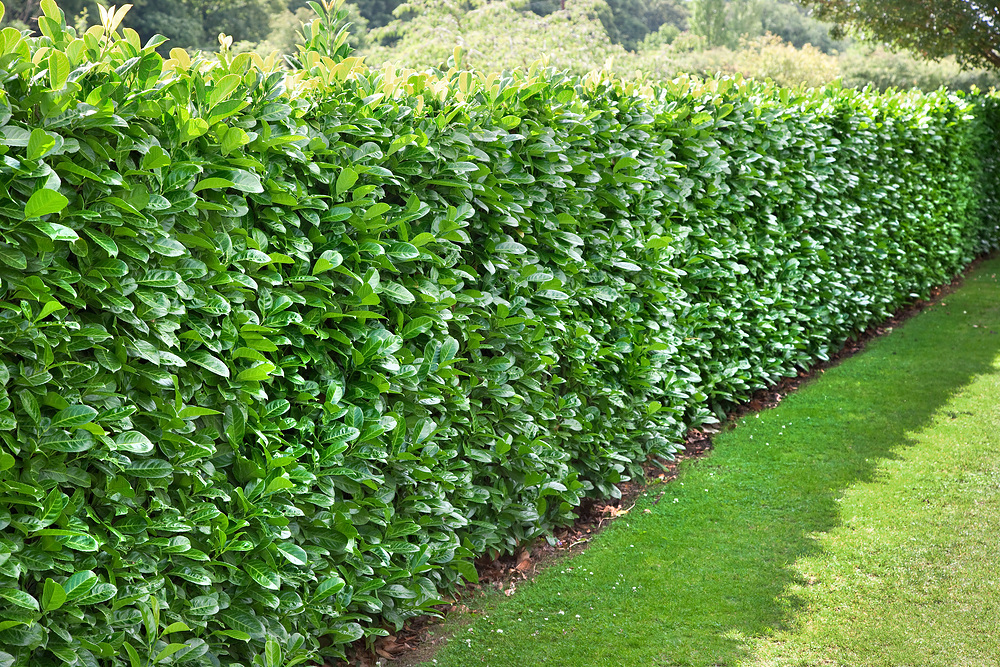
Is laurel poisonous? The short answer
Yes, all parts of cherry laurel (Prunus laurocerasus) and Portuguese laurel (Prunus lusitanica) are poisonous because they contain cyanogenic glycosides, mainly prunasin. When leaves, berries or seeds are chewed, crushed or wilted, these compounds can release hydrogen cyanide inside the body. The severity of poisoning depends on the amount eaten, the part of the plant involved and whether the material was chewed. Children and animals may be particularly vulnerable, and it is unsafe to assume that a small amount cannot cause harm. Keep leaves, berries and prunings out of reach and seek urgent professional advice if ingestion is suspected.
- Cherry laurel and Portuguese laurel are the hedging types most UK gardeners ask about.
- Cyanogenic glycosides are present in leaves, stems, berries and especially the seed inside the fruit.
- Poisoning depends on the amount swallowed and how thoroughly the plant material is chewed. Do not assume that a few berries or part of a leaf are harmless; seek medical or veterinary advice if ingestion is suspected.
- Wilted or damaged leaves contain higher levels of free cyanide, so clippings and fallen branches need careful disposal.
Which parts of laurel are poisonous: berries, leaves and seeds
Every part of a laurel hedge contains the same cyanogenic compounds, but the concentration varies. The seed inside the berry has the highest level, followed by wilted leaves. Fresh, undamaged leaves are less risky because the glycosides are locked inside the plant cells until the leaf is chewed or crushed.
The small black berries appear in late summer and autumn. They look a bit like cherries, which is how the plant gets its common name. The fleshy outer part is less toxic than the stone inside, but both are harmful if eaten. Birds can eat the berries without harm because they swallow them whole and the hard seed passes through undigested. A child or dog chewing the berry and cracking the seed is a different story.
Laurel leaves smell of almonds when crushed, a scent that comes from the same cyanide chemistry. That almond smell is a useful warning sign when you are cutting a hedge or clearing fallen branches.
| Plant part | Toxicity level | When risk is highest |
|---|---|---|
| Seed (inside berry) | Highest | If chewed or cracked open |
| Wilted or damaged leaves | High | After pruning, in fallen clippings |
| Fresh undamaged leaves | Moderate | If chewed thoroughly |
| Berry flesh | Lower | If eaten in quantity |
| Wood and stems | Low to moderate | If chewed (dogs with sticks) |
Are laurel berries and leaves poisonous to dogs, cats, horses and livestock?
Dogs are the animals most likely to be affected in a home garden. Puppies and young dogs that chew sticks, fallen leaves or berries are at the highest risk. Symptoms of laurel poisoning in dogs can appear within 30 minutes to a few hours and include drooling, vomiting, diarrhoea, rapid or difficulty breathing, bright red gums and collapse. If you suspect your dog has eaten laurel, contact your vet straight away and tell them what the plant was.
Cats may chew leaves or investigate freshly cut branches, although reported poisoning is less common than in grazing animals. There is no need to assume that simply brushing against healthy foliage causes cyanide contamination. Keep fallen berries and prunings away from cats, and contact a vet promptly if you suspect they have eaten any part of the plant.
Horses, cattle, sheep and goats are much more vulnerable because they eat large amounts of vegetation. Never plant laurel hedges where livestock can reach them, and do not dump clippings in fields or near grazing. Even wilted leaves in hay can be fatal. For horses in particular, a relatively small amount of laurel can cause serious poisoning or death.
If you keep chickens, the risk is lower because they tend to peck at the ground rather than strip leaves from a hedge, but it is still good practice to fence off laurel hedges from any animal enclosures.
- Dogs: chewing berries, sticks or wilted leaves is the main danger.
- Cats: low risk but keep clippings away.
- Horses and livestock: high risk, never plant or feed laurel near them.
- Birds: wild birds eat berries safely because they swallow the seed whole.
Is laurel safe in gardens with children?
Laurel is a popular hedging plant in family gardens, and with a few simple precautions the risk to children is very low. Toddlers and young children explore with their mouths, so the main concern is berries that look like edible fruit. The dark berries can attract young children because they resemble small edible fruits. Their taste is not a reliable safeguard, and chewing or cracking the seeds increases the risk of poisoning. Treat any suspected ingestion seriously rather than assuming that swallowing a berry whole is harmless.
To keep a family garden safe, teach children not to eat anything from the garden without asking an adult. Trim laurel hedges before they set fruit if you have very young children, or choose a flowering hedge that does not produce berries. Clear fallen leaves and prunings straight away, and store clippings in a bin with a lid until they can be disposed of. If a child eats laurel berries or leaves, remove any remaining plant material from their mouth and do not try to make them vomit. Seek urgent medical advice through NHS 111 and have the plant name ready. Call 999 immediately if the child has difficulty breathing, collapses, has a seizure or becomes unresponsive.
Can you compost or burn laurel clippings?
Laurel clippings can be composted, but they break down slowly because the leaves are thick and leathery. The cyanogenic compounds degrade during composting and the finished compost is safe to use. To speed things up, shred the clippings first and mix them with plenty of soft green material and browns like cardboard. Do not put fresh laurel clippings on a compost heap that dogs or animals can access.
Burning laurel wood and leaves is not recommended. Burning fresh laurel creates smoke and can expose people to harmful combustion products, particularly where ventilation is poor. Cyanogenic compounds in the plant are another reason to avoid inhaling fumes from burning fresh material. Wet leaves and green wood also burn poorly and can produce irritating smoke. If you need to get rid of a large amount of laurel, take it to your local green waste recycling centre or chop it finely and compost it over a full season.
Never burn laurel on a wood burner or indoor fire. The cyanide risk is higher in a confined space, and the high sap content can cause troublesome tar deposits in the flue.
- Composting: safe once fully broken down; shred and mix with other materials.
- Burning: avoid burning fresh laurel outdoors and never burn it indoors.
- Green waste: the safest disposal for large quantities is a council green waste collection or tip run.
Safer non-toxic hedging alternatives
If you want to avoid laurel, consider the different risks associated with alternative hedging plants. Green beech retains some copper-brown foliage through winter and is generally a lower-risk choice, although fallen nuts should not be encouraged as pet food. Common hawthorn supports wildlife with spring blossom and autumn haws, but its sharp thorns need consideration around children and animals. Privet offers dense, often semi-evergreen growth, but its leaves and berries are harmful if eaten, so it should not be recommended as a non-toxic substitute.
English holly provides evergreen screening, but its berries are harmful if eaten and the spiny leaves can cause injury, so it is not a non-toxic alternative. English yew also makes a dense evergreen hedge, but its foliage and seeds are highly poisonous and particularly dangerous to livestock. Neither should be described as completely safe around children or pets.
Mixed hebes, dwarf conifers and compact Euonymus varieties such as Emerald Gaiety and Emerald 'n' Gold can provide low evergreen structure around a patio or garden path. Plant toxicity varies between species, and Euonymus should not be treated as safe to eat. Check the risks of individual plants before choosing them for areas used by children or pets.
| Hedge plant | Evergreen? | Toxic to pets and children? | Good for |
|---|---|---|---|
| Green beech | No (holds leaves in winter) | No | Family gardens, exposed sites |
| Common hawthorn | No | No | Wildlife, boundary hedges |
| English holly | Yes | No (spines are a physical hazard) | Evergreen screening, security |
| Privet | Semi-evergreen | No | Town gardens, fast screens |
| Cherry laurel | Yes | Yes (cyanogenic glycosides) | Large hedges, screening |
| Portuguese laurel | Yes | Yes (cyanogenic glycosides) | Formal hedges, coastal gardens |
Common questions
How poisonous is laurel to humans?
Laurel contains cyanogenic glycosides that can release cyanide if leaves or berries are chewed and swallowed. A small amount usually causes stomach upset, nausea or vomiting. Serious poisoning is rare in adults because the bitter taste and tough leaves discourage eating enough to cause harm. The greatest risk is to young children who might eat several berries and crack the seeds. If someone eats laurel, seek medical advice rather than waiting for symptoms.
Are laurel berries poisonous to dogs?
Yes, laurel berries are poisonous to dogs. The seed inside the berry contains the highest concentration of cyanogenic glycosides. A dog that chews and swallows several berries may show symptoms including drooling, vomiting, diarrhoea, rapid breathing and bright red gums. Contact your vet immediately if you think your dog has eaten laurel berries. The faster treatment begins, the better the outcome.
Can you burn laurel wood in a log burner?
No, you should never burn laurel wood in a log burner, wood stove or open fire indoors. Burning laurel can release hydrogen cyanide gas, which is highly dangerous in a confined space. The wood is also full of sap and produces thick, tar-forming smoke that can block flues. Dispose of laurel branches through green waste recycling or composting instead.
What are the symptoms of laurel poisoning in dogs?
Symptoms of laurel poisoning in dogs can appear within 30 minutes to a few hours of eating the plant. Watch for drooling, vomiting, diarrhoea, panting or difficulty breathing, bright red gums, dilated pupils and collapse. The severity depends on how much was eaten and the size of the dog. This is a veterinary emergency: call your vet straight away and tell them your dog may have eaten laurel.
Is Portuguese laurel as poisonous as cherry laurel?
Portuguese laurel (Prunus lusitanica) contains the same cyanogenic glycosides as cherry laurel (Prunus laurocerasus) and is equally poisonous. The leaves, berries and seeds all pose a risk if chewed or eaten. Portuguese laurel has smaller, darker leaves and red stems, but the toxic chemistry is the same. Handle both types with the same care around pets, children and livestock.
Can you put laurel leaves in compost?
Yes, you can compost laurel leaves and clippings. The cyanogenic compounds break down during the composting process, and the finished compost is safe to use on garden beds. Shred the leaves first to speed up decomposition, and mix them with soft green waste and brown materials. Keep fresh clippings in a covered bin so pets cannot get at them before they start to rot down.