What is the best alternative to box hedge?
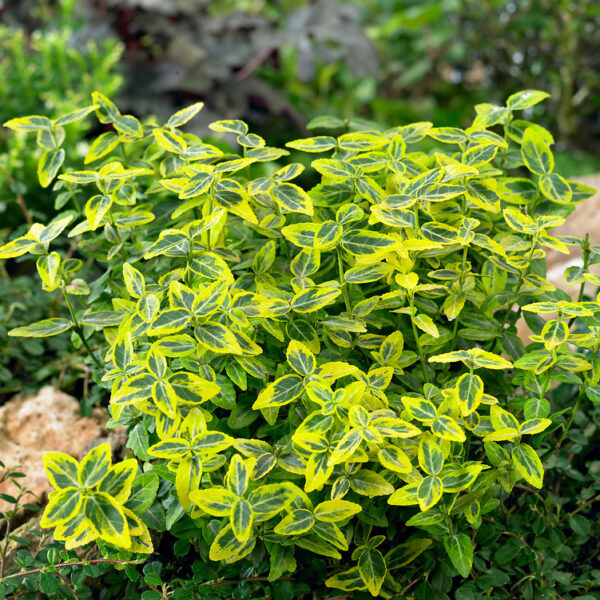
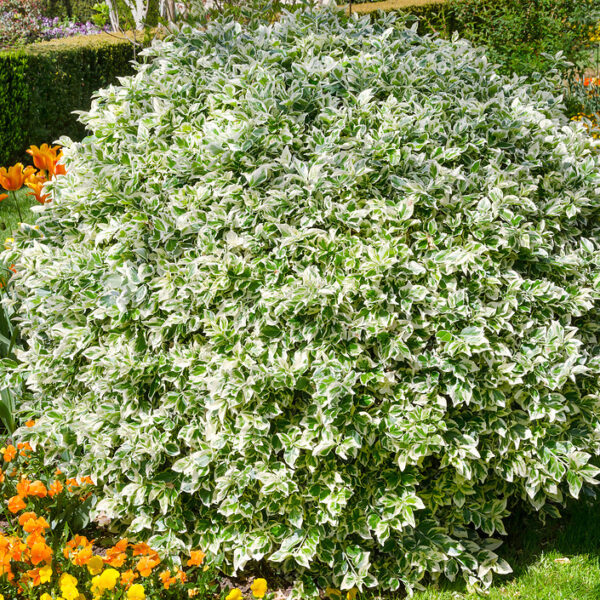
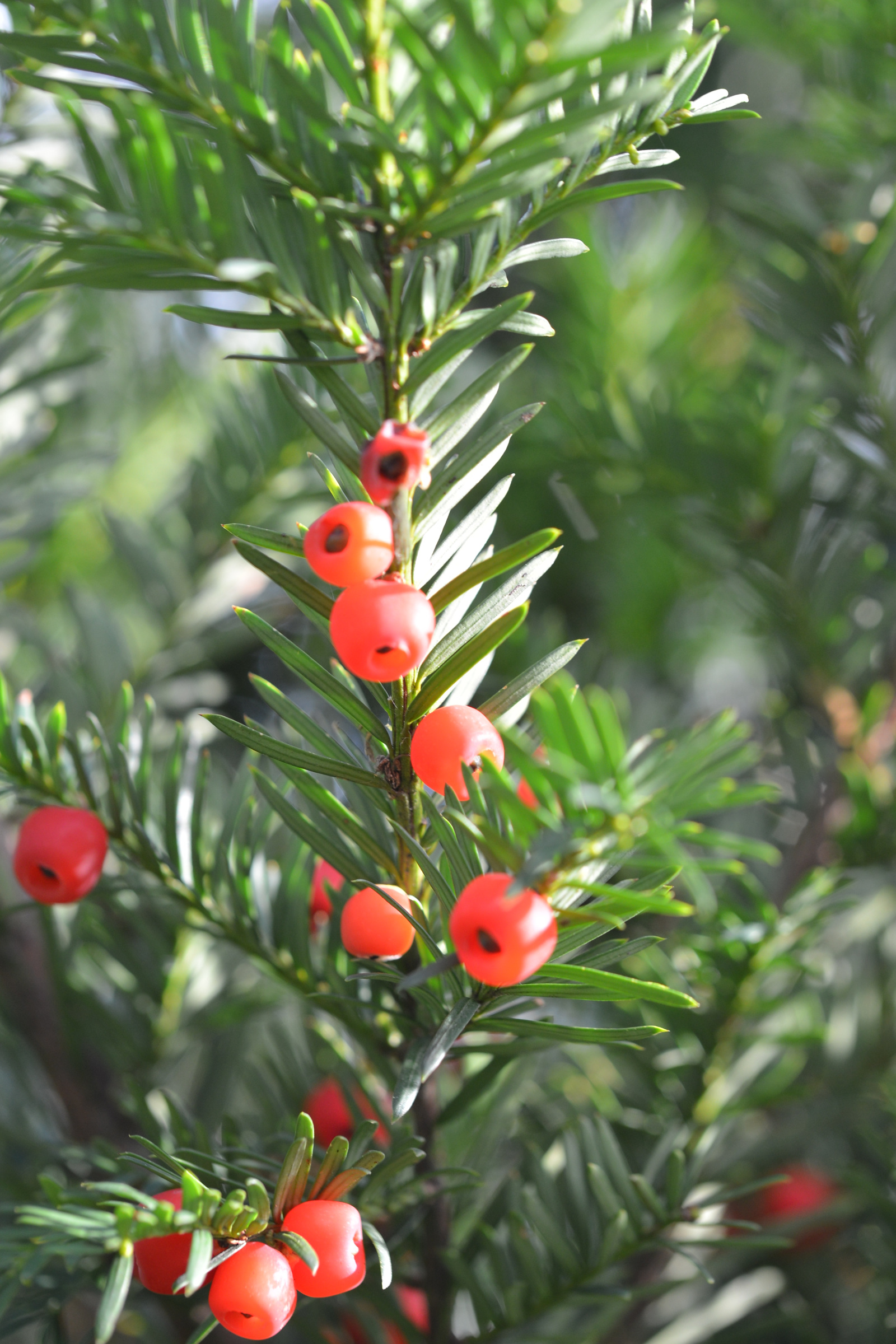
English yew is one of the strongest alternatives to box for a clipped, dark green hedge. It tolerates shade, responds well to trimming and can be kept low or allowed to grow into a taller screen. Japanese holly (Ilex crenata) has small leaves that resemble box, although it is not part of our catalogue. For informal edging, Euonymus Emerald 'n' Gold, Emerald Gaiety and Hebe Red Edge offer different leaf colours and generally need lighter trimming than a formal box hedge.
Box (Buxus sempervirens) has been the backbone of formal British gardens for centuries, but two serious problems now make it a risky investment. Box blight (a fungal disease) causes bare patches and dieback, and box tree caterpillar can strip a plant of leaves in days. Many gardeners are tired of spraying and replacing plants, so they are switching to healthier evergreens that give the same neat structure without the constant worry.
When you choose an alternative, think about the height you want, how much clipping you are happy to do, and whether you need year-round green. The table below compares the main options side by side so you can see which suits your garden best.
| Plant | Evergreen | Typical hedge height | Growth rate | Spacing per metre | Best for |
|---|---|---|---|---|---|
| English yew (Taxus baccata) | Yes | 0.6 to 4m | Slow (20 to 30cm per year) | 3 to 4 plants | Formal hedging, topiary, shade |
| Japanese holly (Ilex crenata) | Yes | 0.3 to 1.5m | Slow to medium | 4 to 5 plants | Box-like look, low hedges, containers |
| Euonymus Emerald 'n' Gold / Emerald Gaiety | Yes | 0.3 to 1m | Medium (20 to 40cm per year) | 4 to 5 plants | Low edging, bright colour, easy care |
| Hebe Red Edge / mixed hebes | Yes | 0.3 to 0.6m | Medium | 4 to 5 plants | Coastal gardens, low edging, flowers |
| Dwarf English holly (Ilex aquifolium) | Yes | 0.5 to 2m | Slow | 3 to 4 plants | Security, formal hedging, berries |
| Privet (Ligustrum ovalifolium) | Semi-evergreen | 1 to 3m | Fast (30 to 60cm per year) | 4 to 5 plants | Budget hedging, fast screens |
Why are people replacing box hedges?
Box blight and box tree caterpillar are two common reasons gardeners replace established box hedges. Both can cause severe damage, although the symptoms and management differ. Check which problem is present before removing plants, as early intervention may help retain an otherwise healthy hedge. Box blight (Cylindrocladium buxicola) thrives in warm, wet summers and causes leaves to turn brown and fall, leaving ugly bare stems. Box tree caterpillar (Cydalima perspectalis) is a relatively new pest in the UK, first recorded in 2007, and its greenish-yellow caterpillars with black heads can completely defoliate a plant within a week during the growing season.
Managing these problems may involve removing infected material, improving airflow, monitoring for caterpillars and using appropriate treatments when necessary. Not every affected hedge needs replacing, but repeated outbreaks can make another species a more practical choice, especially for long stretches of low formal edging. Many gardeners with small town gardens or family plots simply want a low-maintenance edge that stays healthy without chemical intervention. That is why the search for a reliable box hedge alternative has become so common.
If you already have a box hedge that is still healthy, you can help it along by clearing fallen leaves from the top, watering at the base rather than overhead, and trimming only on dry days. But if you are starting a new hedge or replacing dead plants, it makes sense to look at tougher evergreens.
- Box blight: fungal disease causing leaf loss and bare patches, worst in humid weather.
- Box caterpillar: feeds on leaves and can strip plants rapidly from spring to autumn.
- Repeated treatment is needed to keep box looking good in affected areas.
Can yew replace a box hedge?
English yew (Taxus baccata) is the classic substitute for anyone who wants a formal, dark green hedge that clips as crisply as box. It is slow growing, adding roughly 20 to 30cm a year once established, which means you get a dense, fine-textured surface without the frantic trimming that faster plants demand. Yew is incredibly long lived and will regrow from old wood, so even a neglected hedge can be renovated with hard pruning.
For a low box-style hedge, yew can be maintained at around 40 to 60cm, although it is capable of growing much taller. Plant three to four plants per metre for a close hedge. Our English yew options include bare root plants at 40-60cm, rootball plants at 60-80cm and 80-100cm, and potted plants at 20-40cm. Bare root and rootball plants are normally planted during the dormant season, roughly November to March, while potted plants offer a wider planting window. Yew is poisonous if eaten, including its seeds and foliage, so avoid planting it where grazing animals can reach it and take care in gardens used by young children.
Yew thrives in full sun or deep shade, and on most soils except waterlogged ground. That makes it far more versatile than box, which tends to struggle in heavy shade. If you are replacing a box hedge in a shady front garden, yew is often the best long-term answer.
Which holly and dwarf evergreens work as box alternatives?
Japanese holly (Ilex crenata) is often used in place of box because its small, rounded green leaves can be clipped into similarly neat shapes. It is not currently in our catalogue, and it needs suitable soil conditions, particularly good drainage and a pH that is not strongly alkaline. It can also suffer from root problems, so it should not be described as disease-free. English holly (Ilex aquifolium), which we do sell for hedging, has firmer, often prickly leaves and makes a more defensive boundary. Female plants may produce red berries when pollinated, but berries should not be assumed on every plant.
For something a little different, dwarf evergreen azaleas and mixed dwarf conifers can create low, structured planting in a border or along a path. Azaleas give a burst of spring flower on top of glossy evergreen leaves, while dwarf conifers like Wilma Goldcrest bring a bright lime-green, lemon-scented accent. These are not traditional clipped hedging plants, but in a small new-build plot or a pot on a patio they can define edges beautifully without any clipping at all.
Japanese holly is commonly spaced at four to five plants per metre for low hedging, although it is not stocked in our range. Our English holly hedging is available as individual plants in 9cm pots, with height options of 30-40cm, 40-60cm and 60-80cm. Allow around three to four plants per metre for a close hedge, adjusting spacing to the size supplied. English holly tolerates sun or partial shade and prefers fertile, well-drained soil.
Are euonymus and hebe good low edging plants?
Euonymus and hebe are two of the easiest, most colourful box hedge alternatives for low edging. Euonymus fortunei 'Emerald 'n' Gold' and 'Emerald Gaiety' are compact evergreen shrubs with small, variegated leaves that catch the light all year. They grow to about 30cm to 1m tall and can be clipped lightly once or twice a year to keep a neat, rounded profile. Their gold or silver-edged foliage brightens up a shady path or a front garden border where plain green box would look dull.
Hebes, particularly Hebe Red Edge and mixed hebe collections, are another excellent choice. Red Edge has grey-green leaves with a thin red margin that intensifies in cold weather, and it produces pale lilac flowers in summer. Mixed hebes give you a blend of leaf colours and flower spikes, which makes a low hedge feel more relaxed and cottage-garden in style. Both euonymus and hebe are happy in coastal gardens and need little more than a sunny spot and well-drained soil.
For low edging, allow around four to five euonymus or hebe plants per metre, adjusting the spacing to the mature width you want. Euonymus Emerald Gaiety is sold as a single plant in a 2 litre pot, while Emerald 'n' Gold is available individually in either a 9cm or 2 litre pot. Hebe Red Edge comes in 9cm pots in packs of 2, 3, 4 or 6 plants. The time it takes for plants to meet depends on their starting size, growing conditions and pruning, so allow more than two seasons if growth is slow. Trim lightly after flowering to keep the shape tight.
How many plants do I need for a low hedge?
Getting the spacing right is the difference between a hedge that knits together quickly and one that stays gappy for years. For most low, formal alternatives to box, 4 to 5 plants per metre in a single row is the sweet spot. If you want a thicker hedge faster, plant a double staggered row with the same spacing between plants but offsetting the second row so the plants sit in the gaps of the first.
The table below shows the recommended spacing for each box alternative, plus how many plants you would need for common garden lengths. Use it to work out your order before you start digging.
| Plant | Plants per metre (single row) | Plants for 5m | Plants for 10m | Plants for 20m |
|---|---|---|---|---|
| English yew | 3 to 4 | 15 to 20 | 30 to 40 | 60 to 80 |
| Japanese holly | 4 to 5 | 20 to 25 | 40 to 50 | 80 to 100 |
| Euonymus Emerald 'n' Gold / Gaiety | 4 to 5 | 20 to 25 | 40 to 50 | 80 to 100 |
| Hebe Red Edge / mixed hebes | 4 to 5 | 20 to 25 | 40 to 50 | 80 to 100 |
| Dwarf English holly | 3 to 4 | 15 to 20 | 30 to 40 | 60 to 80 |
| Privet | 4 to 5 | 20 to 25 | 40 to 50 | 80 to 100 |
When should you trim a box hedge?
Even if you are moving away from box, you may still have an existing hedge that needs care while you decide on a replacement. The traditional time to trim box is on Derby Day, around early June, after the first flush of growth has hardened off. A second, lighter trim can be done in early September to tidy the hedge before winter, but avoid cutting after the end of September as soft regrowth can be caught by frost.
Always trim on a dry, overcast day to reduce the risk of fungal spores entering the cuts. Use sharp, clean shears or a hedge trimmer, and brush off the clippings afterwards so they do not sit on top of the hedge and trap moisture. If you spot box caterpillar, pick off the caterpillars by hand or use a biological control; trimming alone will not solve the problem.
For the alternatives, the trimming regime is often simpler. Yew and holly need one clip in late summer or early autumn. Euonymus and hebe can have a light trim in spring to shape them, and perhaps a tidy-up after flowering. Privet, being faster, may need two or three cuts between May and September to keep it looking smart.
- Box: trim early June, with a second light trim in early September if needed.
- Yew and holly: one trim in late summer or early autumn.
- Euonymus and hebe: light trim in spring, tidy after flowering.
- Privet: two to three cuts between May and September.
How do I plant and care for a new box alternative hedge?
Planting a new low hedge is straightforward, but a little preparation pays off. Start by clearing the strip of all weeds, especially perennial roots like bindweed and couch grass. Dig over the soil to a spade's depth and mix in well-rotted garden compost or leaf mould. For bare root plants (available roughly November to March), soak the roots in a bucket of water for an hour before planting. For pot-grown plants, water the pots thoroughly the night before.
Set a string line to keep the row straight. Dig a trench rather than individual holes: it is quicker and gives roots a consistent run of loosened soil. Space plants according to the table above, firm them in gently, and water well. If using RHS Rootgrow, apply it directly to the roots according to the packet instructions. The catalogue includes a 60g pack and a 360g pack with gel. Mycorrhizal fungi may support root establishment where conditions are suitable, but they cannot compensate for poor drainage, unsuitable soil or a lack of water.
In the first growing season, the most important job is watering. A new hedge needs a thorough soak once or twice a week in dry weather, not a light daily sprinkle. A mulch of bark or compost 5cm deep around the plants (but not touching the stems) will hold moisture and suppress weeds. Feed with a general-purpose granular fertiliser in early spring from the second year onwards.
Which box alternative is right for my garden?
Start with the growing conditions and the shape you want to maintain. English yew is a strong choice for formal clipped hedges, including shaded positions, provided the soil drains well. Japanese holly gives a closer visual match to box but is not stocked in our catalogue. For lower, less formal edging, Euonymus Emerald 'n' Gold has golden variegation, while Emerald Gaiety has cream-edged leaves. Hebe Red Edge suits a sunnier, sheltered position with free-draining soil. Hebes can tolerate some coastal exposure, but persistent cold winds and wet winter ground may damage them.
Think about how much clipping you are willing to do. Yew and holly need only one cut a year. Privet grows fast and cheap but needs regular trimming to stay neat. Euonymus and hebe sit in the middle: a quick clip once or twice a year keeps them tidy. If you really want zero clipping, dwarf conifers and azaleas give structure without shears, though they will not form a continuous clipped hedge in the traditional sense.
Whatever you choose, planting in the right season and spacing correctly will set you up for success. A well-planted alternative hedge will give you decades of structure with far less trouble than box.
Frequently asked questions
Here are answers to the questions gardeners ask most often about replacing box hedges.
Common questions
What is the closest plant to box hedging?
Japanese holly (Ilex crenata) is the closest visual match. Its small, glossy, dark green leaves look almost identical to box from a distance, and it clips into neat, dense shapes. Unlike box, it has no serious pest or disease problems in the UK and grows slowly, so it needs less trimming. It is evergreen, hardy, and happy in sun or partial shade on most well-drained soils.
Is there an evergreen alternative to box that grows in shade?
Yes, English yew (Taxus baccata) is the best evergreen alternative for shady spots. It thrives in full sun but also grows well in quite deep shade under trees or against north-facing walls, where box often becomes thin and leggy. Yew clips beautifully into formal shapes and can be kept as low as 40cm. It is slow growing, so one trim a year in late summer is usually enough.
Can I plant a box alternative in pots?
Absolutely. Euonymus Emerald 'n' Gold and Emerald Gaiety are excellent in pots and window boxes, where their variegated leaves brighten up a patio. Japanese holly also does well in containers as a clipped ball or low cube. Use a soil-based compost such as John Innes No. 2, water regularly in summer, and feed with a slow-release fertiliser in spring. Move pots into a sheltered spot in very cold winters to protect the roots.
When is the best time to plant a box hedge alternative?
Bare root hedging is best planted during the dormant season, usually November to March, when the ground is neither frozen nor waterlogged. Our bare root options include English yew at 40-60cm and privet at 40-60cm or 60-90cm. English yew is also available as rootball plants at 60-80cm and 80-100cm, which are normally planted during the dormant period. Potted plants, including our 20-40cm English yew, can be planted over a wider part of the year, although extra watering is needed during warm, dry weather. Spring and early autumn are ideal because the soil is warm and moist, giving roots time to settle before summer heat or winter cold.
How do I stop my new hedge getting gaps?
Gaps usually come from uneven spacing, poor soil preparation, or drought in the first year. Space plants evenly at the recommended distance and plant in a trench rather than individual holes so roots can spread easily. Water deeply once or twice a week in dry spells during the first growing season. A mulch of bark or compost helps hold moisture. If a plant does fail, replace it promptly so neighbours do not grow around the gap.
Are any box alternatives also good for wildlife?
Yes, several alternatives support garden wildlife. English holly provides dense cover for nesting birds and red berries in winter. Yew's dense foliage offers shelter, and its flowers attract bees, though the berries and foliage are toxic if eaten. Hebes produce summer flowers that are popular with bees and butterflies. Privet flowers, if you let a section grow untrimmed, are a good nectar source for pollinators.