Which small evergreen shrubs grow happily in pots?
Small evergreen shrubs keep patios, doorways and balconies looking planted through winter, even when summer flowers have finished. For containers, choose shrubs that grow slowly or respond well to light pruning, and give their roots enough space as they mature. Dwarf conifers hold their shape, hebes bring summer flowers, euonymus offers variegated leaves and compact French lavender suits sunny, well-drained pots. Heathers and acid loving shrubs are useful too, provided the compost matches their needs.
You do not need a large garden to enjoy year-round greenery. A well-planted pot by the front door, a pair of matching containers on a patio or a cluster of three different heights on a balcony can look smart and feel welcoming. The trick is matching the shrub to the pot size and the spot you have in mind, whether it is sunny, shady or somewhere in between.
Best small evergreen shrubs for pots
For a narrow entrance, Wilma Goldcrest gives height without taking up much floor space. Hebe Red Edge forms a lower, rounded shape, while Euonymus Emerald Gaiety brings cream-edged leaves to a shaded doorway. Check the eventual size before planting: some evergreens, especially eucalyptus and pieris, can outgrow smaller containers and will need repotting or pruning as they develop.
When you are picking, think about the light the pot will get. A sun-baked patio suits lavender and hebe, while a shady courtyard calls for euonymus or a small yew. The table below sets out the key facts side by side so you can compare at a glance.
| Shrub | Typical height in a pot | Light needs | Special feature |
|---|---|---|---|
| Wilma Goldcrest | 60 to 100cm | Full sun to light shade | Lemon-scented golden foliage |
| Mixed dwarf conifers | 30 to 80cm | Full sun to partial shade | Varied shapes and textures |
| Hebe Red Edge | 40 to 60cm | Full sun to partial shade | Grey-green leaves, lilac summer flowers |
| Mixed hebes | 30 to 60cm | Full sun to partial shade | Mix of leaf colours and flower spikes |
| Mixed garden heathers | 20 to 40cm | Full sun | Winter and early spring colour |
| Euonymus Emerald 'n' Gold | 40 to 60cm | Sun or shade | Bright gold and green variegation |
| Euonymus Emerald Gaiety | 40 to 60cm | Sun or shade | Silver and green leaves, pink tints in winter |
| French lavender Bandera Purple | 30 to 40cm | Full sun | Compact lavender with deep purple flowers |
| Dwarf evergreen azalea | 40 to 60cm | Partial shade | Masses of spring flowers on a neat bush |
| Pieris Forest Flame | 60 to 90cm | Partial shade | Red new growth fading to pink and cream |
| Pieris Mountain Fire | 60 to 90cm | Partial shade | Fiery red young leaves |
| Mixed dwarf rhododendrons | 40 to 70cm | Partial shade | Large spring blooms on compact plants |
| Eucalyptus gunnii | 90 to 150cm | Full sun | Silvery-blue rounded juvenile leaves |
Dwarf conifers and Wilma Goldcrest
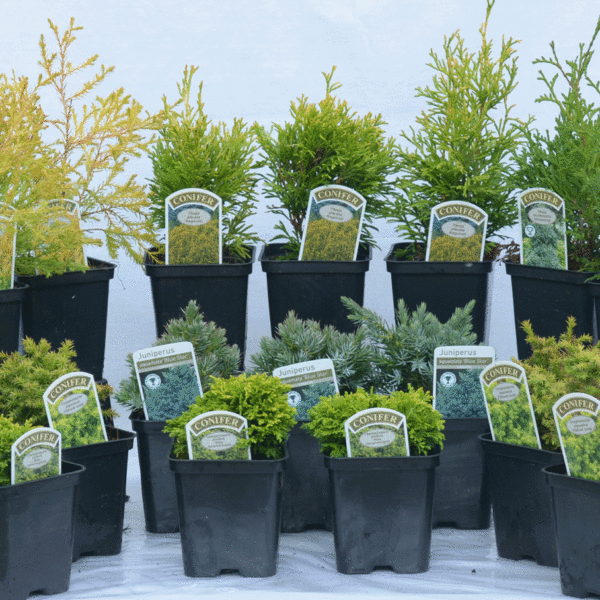
Dwarf conifers are the backbone of a good winter pot display. They hold their shape without clipping, need little attention and look just as good in January as they do in June. A mixed collection of dwarf conifers gives you a range of textures, from soft feathery sprays to neat rounded hummocks, all in shades of green, blue-green and gold.
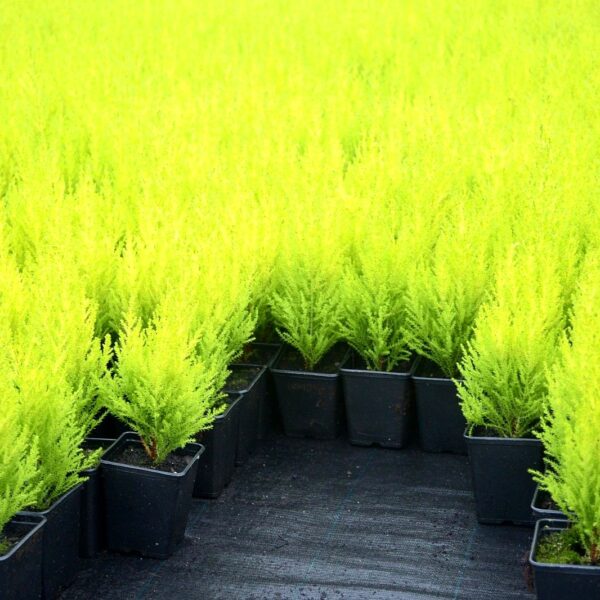
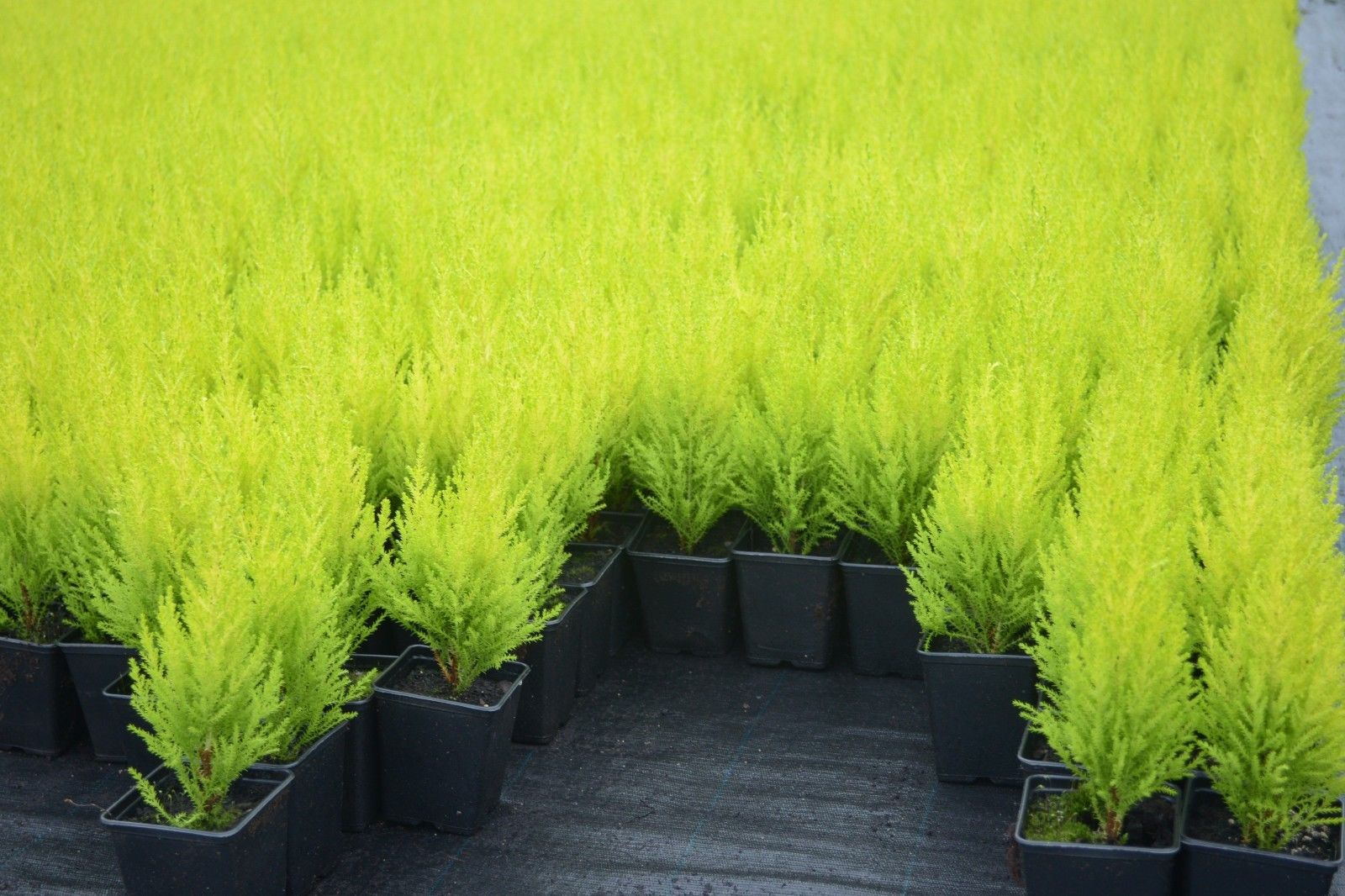
Wilma Goldcrest is a standout for pots. Its bright lime-gold foliage smells of lemon when you brush past it, and it naturally grows into a slim cone shape that suits a tall container. Wilma Goldcrest is available as a single plant in a 2 litre pot or in packs of 6, 12 or 18 plants. The catalogue does not specify a height on arrival. Although it can be kept relatively compact in a container, it is an upright conifer capable of growing well beyond 60 to 100cm if left untrimmed. It is happiest in full sun, which brings out the strongest colour, but it tolerates a little light shade. If you want a larger group, Wilma Goldcrest also comes in packs of 6, 12 or 18 plants, ideal for lining a path or creating a mini avenue of matching pots.
When you plant conifers in pots, use a loam-based compost such as John Innes No 2. It is heavier than multipurpose compost, so the pot is less likely to blow over in wind, and it holds nutrients for longer. Water steadily through the growing season and check the compost does not dry out completely in winter, especially if the pot is under the eaves where rain does not reach.
Hebes, heathers and euonymus
Hebes are some of the most reliable evergreen shrubs for pots. They are tidy, rounded bushes with glossy leaves and, in summer, short spikes of white, pink or lilac flowers that bees love. Hebe Red Edge is a particularly good container plant. Its grey-green leaves have a fine red margin that deepens in cold weather, and it stays compact at around 40 to 60cm. A pack of 4 or 6 in 9cm pots is an affordable way to fill several medium containers.
Mixed hebes give you variety across a set of pots. You might get different leaf colours and flower shades in the mix, which keeps a group of planters looking interesting without being matchy-matchy. They all want the same care: a sunny or lightly shaded spot, free-draining compost and a trim after flowering to keep them bushy.
Mixed garden heathers work well near the front of a container, where their low, fine-textured foliage can spill gently towards the rim. Our mixes come in 9cm pots, in packs of 6, 12 or 18 plants. Flowering time depends on the varieties included: some flower in winter or early spring, while others bloom in summer or autumn. Check the plants in your mix before planning a seasonal display. Plant them at the front of a large container or use several in a wide, shallow bowl. They need full sun and acid to neutral compost. Snip off the old flower stems in early spring and they will stay neat for years.
Euonymus Emerald 'n' Gold and Emerald Gaiety are two of the toughest small evergreen shrubs you can grow in a pot. Both have small, leathery leaves and a naturally low, spreading habit. Emerald 'n' Gold is bright gold and green, while Emerald Gaiety is silver and green with pinkish tints in the coldest months. They grow happily in sun or shade, which makes them perfect for a north-facing doorway or a balcony that only gets morning light. A 2 litre pot plant will fill a 30cm container nicely on its own, or you can underplant it with spring bulbs for an extra layer of colour.
Ericaceous shrubs in pots
If you have a partly shaded spot and can use ericaceous (lime-free) compost, a whole new group of small evergreen shrubs opens up. Dwarf evergreen azaleas, Pieris Forest Flame, Pieris Mountain Fire and mixed dwarf rhododendrons all belong to this family. They need acid soil, which is easy to provide in a pot because you control the compost from the start.
Dwarf evergreen azaleas form low, branching shrubs with a generous display of spring flowers. Our single-colour varieties are supplied as individual plants in 2 litre pots. Choose from the colours listed for the individual plants rather than assuming a particular shade is available. A container around 40cm wide gives the roots room to develop initially, but check each spring for congestion. Replenish the ericaceous compost and move the plant into a larger pot when needed.
Pieris Forest Flame and Pieris Mountain Fire are valued for their colourful young foliage as well as their hanging spring flowers. Forest Flame produces red leaves that develop pink and cream tones before turning green. Mountain Fire has rich red new growth that matures to dark green. Both are sold as individual plants in 2 litre pots, without a specified arrival height. They can eventually grow substantially taller than 60 to 90cm, so allow for larger containers as the shrubs mature. Both are ideal specimen plants for a large pot in dappled shade. Water them with rainwater if you live in a hard-water area, because tap water can raise the compost pH over time.
Mixed dwarf rhododendrons give you big, showy flower clusters on compact plants. Our mixed dwarf rhododendrons come in packs of 3, 4 or 6 plants in 2 litre pots, or packs of 6, 12 or 18 plants in 9cm pots. No arrival height is specified, and mature size depends on the varieties in the mix. Give each plant room to spread and check its growth before choosing a permanent container. These are mixed packs rather than single-plant options, making them useful for a group of matching containers or a larger planting scheme. All ericaceous shrubs benefit from a feed with a liquid ericaceous plant food in spring and again after flowering.
Pot size, compost and watering
Getting the pot and compost right makes more difference than almost anything else. A shrub in the wrong compost or a pot that is too small will struggle no matter how carefully you water and feed.
As a rule, choose a pot that is about 5 to 8cm wider all round than the rootball when you first plant. A young shrub supplied in a 9cm pot may suit a 20 to 25cm container initially, while one from a 2 litre pot may need a container around 30 to 35cm wide, depending on its root system and growth habit. Check the rootball before choosing. Very slow-growing shrubs can start in smaller containers, while vigorous plants need more space and regular checks for crowded roots. Terracotta looks lovely but dries out fast in summer; glazed ceramic and plastic pots hold moisture longer. Whatever you pick, make sure it has drainage holes. Cover the holes with a curved piece of broken pot or a few large pebbles to stop compost washing out.
Use a loam-based compost such as John Innes No 2 or No 3 for most shrubs. It is heavier than peat-free multipurpose mixes, which helps stop tall plants toppling over, and it releases nutrients slowly. For ericaceous shrubs, use a lime-free ericaceous compost instead. Mix in a little horticultural grit if the shrub is one that hates wet roots, such as lavender or hebe.
Watering is the job that catches people out. Pots in full sun can need water every day in hot weather. Push your finger into the compost up to the second knuckle; if it feels dry, water slowly until it runs out of the drainage holes. In winter, check pots every couple of weeks. Evergreens still lose water through their leaves, especially on windy days, so do not let the compost become bone dry. A mulch of gravel or bark chips on top of the compost helps keep moisture in and weeds down.
- Pick a pot 5 to 8cm wider than the rootball.
- Use loam-based John Innes No 2 or No 3 for most shrubs.
- Use ericaceous compost for azaleas, rhododendrons and pieris.
- Add horticultural grit for shrubs that need sharp drainage.
- Water when the top 5cm of compost feels dry.
- Mulch the surface with gravel or bark to hold moisture.
Winter care for potted shrubs
Potted evergreens face two common winter problems: roots sitting in wet compost and rootballs freezing during prolonged cold spells. Raise containers off the ground before winter and check that drainage holes remain clear. More tender plants, including French lavender, may need extra shelter during severe weather.
The biggest winter threat is not cold air but soggy compost. Raise pots onto pot feet, bricks or small wooden blocks so water can drain away freely. If a pot sits flat on a patio, the drainage holes can seal against the ground and the roots sit in water, which leads to rot. In very cold spells, group pots together in a sheltered spot against a house wall, where the bricks give off a little stored warmth. Wrapping the pot itself in bubble wrap or hessian helps insulate the roots; the leaves of evergreens are generally hardy enough to take frost, but frozen roots cannot take up water and the foliage can scorch.
Do not feed shrubs between October and March. The plants are not in active growth and extra nutrients can do more harm than good. Water only when the compost is dry, and always water in the morning on a frost-free day so any spillage has time to drain before night temperatures drop. A light trim of any wind-damaged or brown bits can be done in late winter, but save proper shaping for spring.
- Raise pots on feet to keep drainage holes clear.
- Group pots in a sheltered spot against a wall.
- Wrap pots with bubble wrap or hessian in hard frost.
- Stop feeding from October to March.
- Water sparingly, only when compost is dry.
- Trim wind-damaged growth in late winter.
Monthly care calendar for potted evergreen shrubs
A quick month-by-month guide helps you stay on top of the small jobs that keep potted evergreens looking their best all year.
| Month | Task |
|---|---|
| January | Check pots after storms; water if dry. |
| February | Trim winter damage; top-dress with fresh compost. |
| March | Start feeding; repot if roots are crowded. |
| April | Plant new shrubs; mulch pot surfaces. |
| May | Water regularly as temperatures rise. |
| June | Feed flowering shrubs; deadhead spent blooms. |
| July | Water daily in hot spells; check for pests. |
| August | Trim hebes and lavender after flowering. |
| September | Reduce feeding; move tender types to shelter. |
| October | Raise pots onto feet; stop feeding. |
| November | Wrap pots in cold areas; clear fallen leaves. |
| December | Water only if compost is dry; enjoy winter structure. |
Common questions
What are the best small evergreen shrubs for pots in shade?
Euonymus Emerald 'n' Gold and Emerald Gaiety are the top picks for shade. Both keep their variegated leaves all year and grow happily in a north-facing spot or a courtyard that only gets indirect light. Dwarf evergreen azaleas and pieris also do well in partial shade, provided you use ericaceous compost and keep the roots moist.
How often should I water evergreen shrubs in pots?
In summer, check daily. Push your finger into the compost: if the top 5cm feels dry, water slowly until it runs out of the drainage holes. In winter, check every couple of weeks. Evergreens lose water through their leaves all year, so never let the compost dry out completely, but avoid waterlogging by keeping pots raised on feet.
Can I leave potted evergreens outside all winter?
Many evergreen shrubs can remain outdoors in UK winters, but their tolerance varies by species and location. Dwarf conifers, euonymus and established azaleas are generally hardy, while French lavender may struggle in prolonged cold and wet conditions. Raise pots on feet, keep drainage holes clear and group containers somewhere sheltered. Wrapping the pots with hessian or bubble wrap can protect roots during hard frost. Exposed evergreen foliage may also suffer wind scorch, so shelter matters as much as insulation.
What size pot do I need for a small evergreen shrub?
Choose a pot about 5 to 8cm wider all round than the rootball. A young plant in a 9cm pot can start in a 20 to 25cm container. A shrub from a 2 litre pot needs a 30 to 35cm pot. As the plant grows, move it into a pot one size larger every two or three years, or top-dress with fresh compost annually.
Which compost is best for evergreen shrubs in pots?
A loam-based compost such as John Innes No 2 or No 3 suits most evergreens. It is heavier than multipurpose compost, which helps stop tall pots blowing over, and it holds nutrients well. For ericaceous shrubs like azaleas, rhododendrons and pieris, use a lime-free ericaceous compost. Add horticultural grit for plants that need sharp drainage, such as lavender and hebe.
Do I need to feed potted evergreen shrubs?
Yes, because compost in pots runs out of nutrients after a few months. Feed most evergreens with a balanced liquid feed every two weeks from March to August. Use an ericaceous plant food for acid-loving shrubs. Stop feeding in autumn so the plant slows down naturally for winter. An annual top-dress of fresh compost in spring also helps.