What ericaceous compost is
Ericaceous compost is a lime-free growing medium made for plants that need acidic conditions, typically with a pH between 4.0 and 5.5. Azaleas, rhododendrons and pieris are familiar examples. Their roots struggle to absorb certain nutrients when the soil contains too much lime, even if those nutrients are present. Many of these acid loving plants come from woodland and moorland habitats, where fallen leaves and decaying vegetation help keep the ground naturally acidic.
Standard multi-purpose compost and most garden soils sit around pH 6.0 to 7.5. In that range, lime-hating plants struggle to access iron and manganese, which leads to yellowing leaves, poor growth and disappointing flowers. Ericaceous compost provides the lower pH these plants need around their roots. Depending on the product, it may contain peat or peat-free ingredients such as composted bark, wood fibre and coir, alongside nutrients for early growth. Check the bag for its stated pH and feeding instructions, particularly when using a peat-free mix.
You do not need it for every plant in your garden. It is only essential for a particular group of shrubs and perennials that have evolved to thrive in acid conditions. There is little benefit in buying it for roses or box hedging, and lavender is better suited to neutral or slightly alkaline compost with excellent drainage. Save ericaceous compost for plants that genuinely need acidic conditions.
Which plants need ericaceous compost?
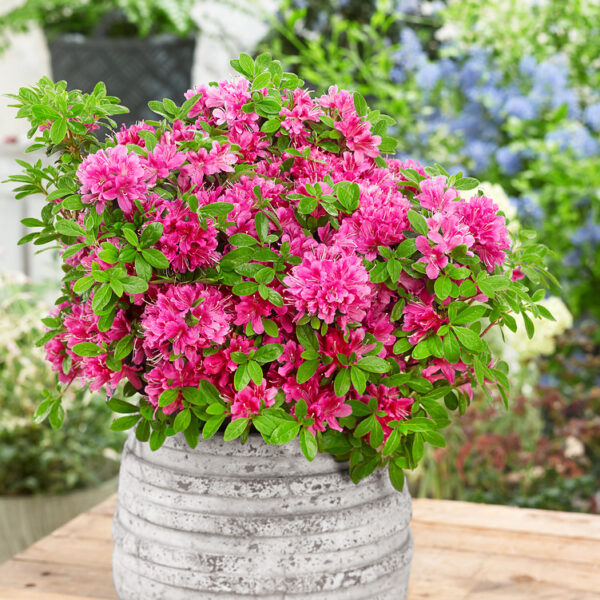
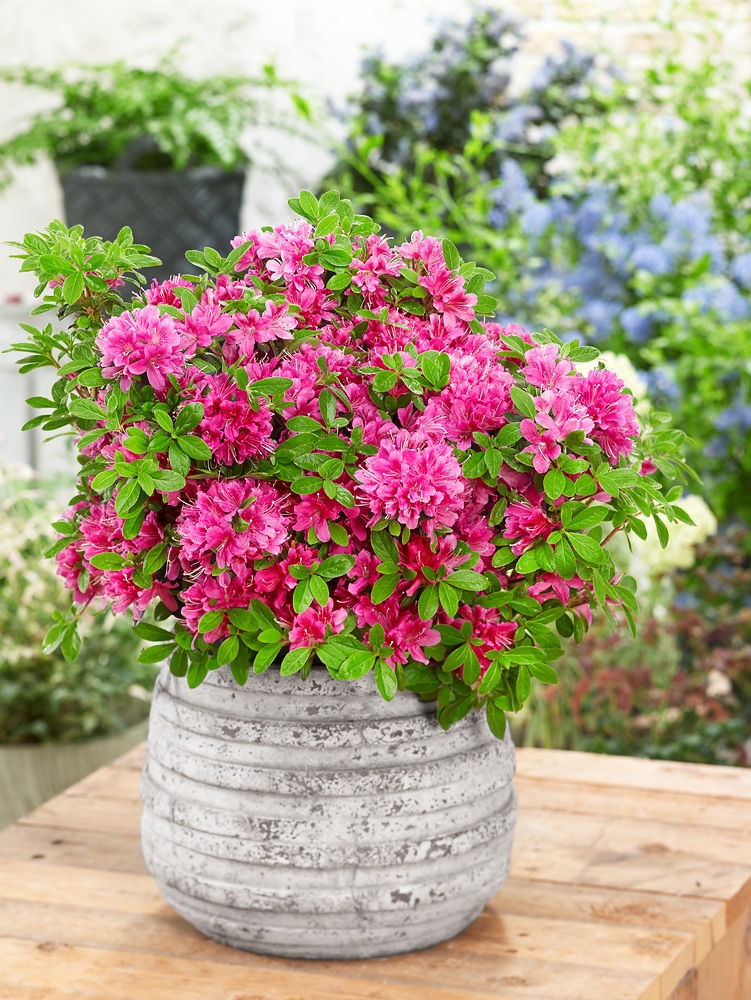
The most common garden plants that need acidic soil include azaleas, rhododendrons, pieris and summer-flowering heathers. These plants are sensitive to lime, although some heathers tolerate a wider range of soil conditions than others. In alkaline ground, their growth may slow and new leaves can turn yellow between the veins while the veins themselves remain green. This is often a sign that the roots cannot absorb enough iron.
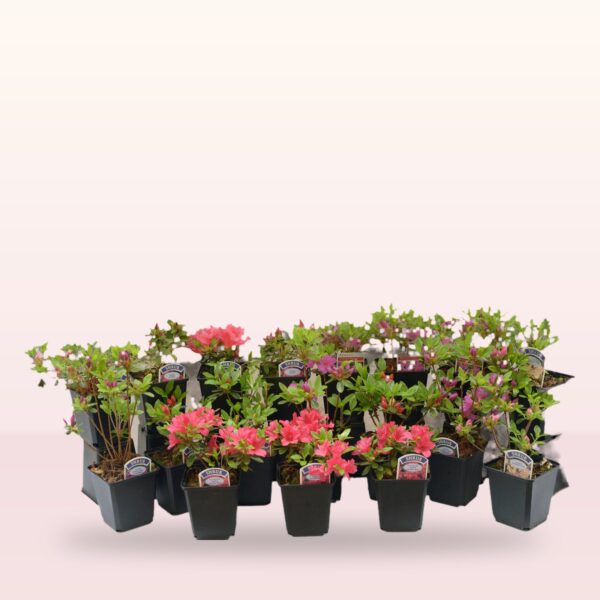
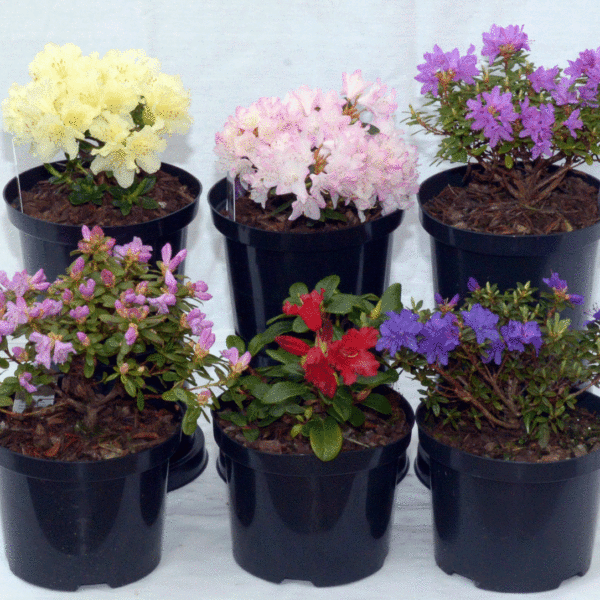
In our range, the plants that need ericaceous compost are:
list
Should I use ericaceous compost in pots or in the ground?
For acid loving plants in pots, use ericaceous compost throughout the container. Their roots depend entirely on the growing medium you provide, so ordinary multi-purpose compost may cause problems if its pH is too high. In borders, test the existing soil first. Naturally acidic ground may already provide suitable conditions without any additional compost. This is especially useful if you garden on chalky or clay soil and still want to grow rhododendrons or pieris on a patio.
For borders, the approach depends on your existing soil. If you already have naturally acidic soil, common in parts of Surrey, Cornwall or the Scottish Highlands, you may not need to add any compost at all. A simple pH test will tell you. If your soil is neutral or alkaline, you have two choices. If the soil is only slightly above the preferred pH, you may be able to improve the wider planting area with suitable organic matter, provided you test the soil again afterwards. Mixing ericaceous compost into strongly alkaline soil will not reliably keep it acidic. For chalky ground, large containers or properly constructed raised beds filled with ericaceous growing medium are generally the safer choice.
One thing to avoid is digging a small, neat hole in alkaline soil and filling it with pure ericaceous compost. On poorly draining ground, the planting hole can collect water and leave the roots sitting wet through winter. Lime from the surrounding soil may also gradually raise the pH of the compost. Where the surrounding soil is suitable, prepare a broad planting area rather than a narrow pocket. On strongly alkaline ground, choose a container or raised bed instead.
For a new-build garden where the topsoil has been stripped and replaced with a thin layer over builders’ rubble, testing the pH is especially important. The subsoil is often very alkaline. In those situations, large containers or dedicated raised beds filled with ericaceous compost are often the most successful way to grow azaleas, rhododendrons and pieris.
How do I test my garden soil pH?
Testing your soil pH is quick, cheap and takes the guesswork out of planting. You can buy a simple soil pH test kit from most garden centres or online. The kit usually includes a test tube, a small capsule of powder and a colour chart. You take a small sample of soil from about 10cm below the surface, mix it with water and the powder, and compare the colour to the chart.
For a more detailed picture, you can send a soil sample to a laboratory for analysis. This will also tell you about nutrient levels and soil texture, which can be useful if you are planning a whole new border. However, for most home gardeners, a basic DIY kit is enough to tell you whether your soil is acidic (pH below 6.5), neutral (pH 6.5 to 7.5) or alkaline (pH above 7.5).
If the result is above pH 7.0, most rhododendrons, azaleas and pieris are likely to struggle in the ground. An annual mulch helps retain moisture and improve soil structure, but it will not reliably change the pH of alkaline soil. Growing these shrubs in containers of ericaceous compost gives you much better control. Test the soil in several spots around the garden, as pH can vary, especially near paths, walls or old building rubble where lime may have leached into the ground.
Should I water acid loving plants with rainwater?
Yes, using rainwater is one of the best things you can do for ericaceous plants, especially those in pots. Tap water in much of the UK, particularly in the south and east, is hard. It contains dissolved calcium and magnesium carbonates that gradually raise the pH of the compost. Over a single growing season, watering a container-grown pieris or azalea with hard tap water can turn the compost alkaline enough to cause leaf yellowing and poor flowering.
Rainwater is naturally soft and slightly acidic. Collecting it in a water butt is easy and free. If you run out of rainwater during a dry spell, you can use tap water occasionally, but try to alternate it with rainwater when you can. In areas with very soft tap water, such as parts of Scotland, Wales and the north-west of England, the risk is lower, but rainwater is still the ideal choice.
If you regularly use hard tap water, monitor the compost pH and look for yellowing between the leaf veins. An ericaceous feed containing iron may help correct a nutrient deficiency, while a suitable acidifier can be used according to its instructions if testing confirms that the pH is too high. Fertiliser alone will not remove the alkalinity introduced by hard water. Mulching the surface of pots with composted bark or pine needles also helps slow down the drying of the compost and reduces how often you need to water.
How do I feed acid loving plants?
Feeding ericaceous plants is straightforward if you use the right product. Look for a liquid or granular fertiliser labelled for ericaceous plants, rhododendrons or azaleas. These feeds contain the right balance of nutrients, plus extra iron and magnesium to prevent the yellowing that is so common in lime-hating plants. Avoid general purpose fertilisers that contain lime or calcium nitrate, as they will raise the pH.
For plants in pots, a liquid ericaceous feed applied every two weeks during the growing season, roughly April to August, works well. Stop feeding by early autumn so any soft new growth has time to harden off before winter. For plants in borders, a granular ericaceous fertiliser sprinkled around the root zone in early spring, and again after flowering if the plant looks tired, is usually enough. Always water it in well.
An annual mulch of ericaceous compost, leaf mould or composted bark, laid 5 to 8cm deep around the base of the plant, feeds the soil slowly and helps maintain the acidic conditions. Keep the mulch away from the stems to prevent rotting. This is particularly useful for rhododendrons and azaleas, which have shallow, fibrous roots that appreciate cool, moist soil.
table
What are the signs my ericaceous plant is unhappy?
The most obvious sign that an acid loving plant is in the wrong soil is lime-induced chlorosis. The leaves turn yellow, but the veins stay green. It shows on the youngest leaves first because iron is not mobile within the plant. Left unchecked, the leaves can turn almost white, growth slows, and flowering is poor.
Other problems can look similar. Overwatering causes yellowing and drooping, but the soil will feel wet and the roots may be brown and mushy. Underwatering leads to wilting and crispy leaf edges. Cold wind can scorch evergreen leaves, turning them brown at the tips. If you see yellowing with green veins, test the soil pH first. If the pH has risen above 6.5, sequestered iron may help with iron-related yellowing, but the underlying soil conditions also need attention. Recovery depends on the severity of the problem and the health of the roots. In a pot, replacing exhausted compost may be necessary.
In pots, the compost naturally degrades and loses acidity over two to three years. If a container plant that was thriving starts to look sick, it is often time to repot it into fresh ericaceous compost. Even if the pot size is still adequate, refreshing the compost can make a dramatic difference.
Common questions
Can I use ericaceous compost for normal plants?
Yes, you can, but it is usually unnecessary and more expensive than standard multi-purpose compost. Most common garden plants, including hedging like privet, beech and laurel, are happy in neutral to slightly alkaline soil. Using ericaceous compost for them will not cause harm, but it offers no real benefit. Save it for the plants that genuinely need it.
Does lavender need ericaceous compost?
No, lavender does not need ericaceous compost. Lavender is native to the Mediterranean and thrives in alkaline to neutral, well-drained soil. Planting it in acidic compost can lead to soft, floppy growth and a shorter lifespan. Our French lavender Bandera Purple will do best in ordinary potting compost with some grit added for drainage.
How long does ericaceous compost stay acidic?
In a pot, ericaceous compost will maintain its acidity for roughly two to three years before the pH starts to rise. Watering with rainwater and using ericaceous feeds helps extend this. In the ground, the surrounding soil gradually influences the pH, so an annual mulch of fresh ericaceous compost or leaf mould is the best way to keep conditions right.
Can I make my own ericaceous compost?
You can create an acidic planting mix by combining leaf mould, composted pine needles, bracken or fine bark with a loam-based or peat-free base, but getting the pH consistently right is tricky. For reliable results, especially in pots, a bagged ericaceous compost is the safer choice. It is formulated to the correct pH and contains the right starter nutrients.
Is ericaceous compost the same as rhododendron compost?
Yes, rhododendron compost is simply another name for ericaceous compost. Both are acidic, lime-free growing media designed for the same group of plants. You may also see it labelled as azalea compost or camellia compost. They are all interchangeable and suitable for any lime-hating plant, including pieris and heathers.
Do hebes need ericaceous compost?
Most hebes, including our Hebe Red Edge and mixed hebes, are happy in neutral to slightly alkaline soil and do not need ericaceous compost. They are not true lime-haters. A well-drained ordinary potting compost or garden soil suits them perfectly. If your soil is very chalky, adding some organic matter will help, but ericaceous compost is not required.