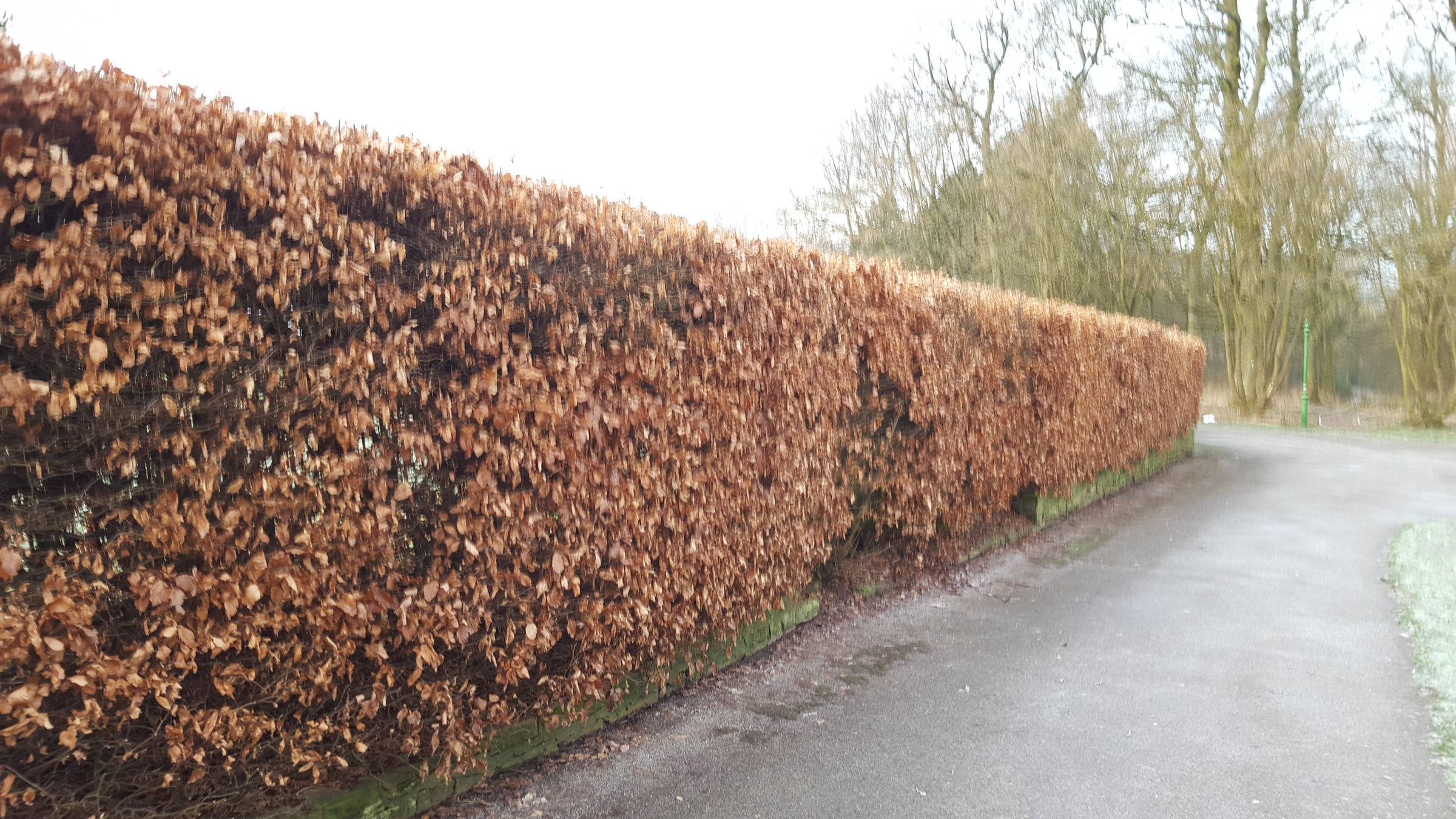
When is the right time to trim a beech hedge?
August is usually the best month for the main annual trim of an established beech hedge. By then, much of the season's growth has firmed up and you can shape the sides and top without encouraging excessive late growth. An optional light tidy in early February can remove stray shoots before spring. Check carefully for active birds' nests before either cut, particularly in August when some birds may still be breeding.
The reason August works so well is that the hedge has finished its main growth spurt but still has time to heal before colder weather arrives. A February trim removes any frost-damaged tips and neatens the shape before spring growth begins, but it must be light: you are only snipping the very ends, not cutting into old wood.
- Main trim: late summer (August)
- Optional light tidy: early February
- Avoid trimming between March and July while birds are nesting
- Never cut during freezing weather or in full sun on a hot day
What is the best month to trim a beech hedge?
By August, beech has usually completed its strongest flush of spring and early summer growth. The new shoots are firmer and easier to cut to an even outline, and the hedge has time to settle before winter. If you miss August, early September is another reasonable opportunity in most UK gardens. Avoid cutting during periods of extreme heat or drought, and inspect the hedge for occupied nests before starting.
A February trim plays a different role. It is not about controlling bulk: it is a cosmetic tidy. Snip off any twiggy ends that have been caught by frost, and lightly reshape the top and sides. Because the hedge is still dormant, it will not respond with a flush of soft new growth that could get zapped by a late frost. Keep the February cut very shallow, taking off no more than a centimetre or two.
| Trim | When | What to do | Why it matters |
|---|---|---|---|
| Main annual trim | August (or early September) | Cut back this year's growth to the desired shape | Builds density and keeps the hedge neat through winter |
| Optional winter tidy | Early February | Lightly snip frost-damaged tips and neaten outline | Tidies appearance before spring without triggering frost-prone growth |
How does trimming help keep the winter leaves on a beech hedge?
Beech is deciduous, but when grown as a hedge it holds onto its coppery dead leaves through winter, a trait called marcescence. Regular trimming encourages this. Regular trimming encourages a network of young, closely spaced shoots, which tend to retain their dead leaves better than mature branches on an unpruned tree. The amount of foliage held through winter still varies with the age of the hedge and its exposure to wind.
If you let a beech hedge grow tall and leggy without trimming, the lower stems become bare and the winter screen thins out. The August cut keeps the side shoots short and twiggy, which is exactly the kind of growth that holds leaves longest. A light February tidy can sharpen the outline, although cutting through leaf-bearing shoots will also remove some of the remaining winter foliage. Keep this optional trim shallow if you want to preserve as much of the copper-brown screen as possible.
When and how do you hard prune or renovate an overgrown beech hedge?
If you have inherited a beech hedge that has turned into a row of small trees, a hard prune can bring it back. The safest window for hard pruning beech is late winter to early spring (February to early March), while the hedge is still dormant and before nesting season begins. This gives the plant the whole growing season to push out new shoots.
Hard pruning means cutting stems back by a third to a half, or even down to 30 to 60cm from the ground for a full renovation. Do one side at a time over two winters if the hedge is very old: cut one face and the top in year one, then the other face in year two. This reduces stress and keeps some screening in place. After a hard prune, feed the hedge with a general-purpose granular fertiliser in April and water well during dry spells. New shoots should appear within a few weeks of spring warming up.
- Best window: February to early March
- Cut back by one third to one half for overgrown hedges
- For full renovation, cut down to 30 to 60cm
- Tackle one side per winter on very old hedges
- Feed and water well after hard pruning
What tools and technique give the cleanest cut on a beech hedge?
Sharp tools make the job quicker and healthier for the plant. For a young or short beech hedge, sharp hand shears allow careful shaping around new shoots and buds. A hedge trimmer is useful for longer runs, especially where the sides need to be kept straight. Choose a tool you can handle comfortably at the hedge's height and keep the blades clean and sharp. Keep the blade sharp and wipe it with a disinfectant solution between hedges to avoid spreading any disease.
Shape the hedge so it is slightly wider at the bottom than the top: a gentle batter, or slope, lets light reach the lower branches and stops the base going bare. Set up a string line if you want a perfectly level top. Trim the sides first, working from the bottom up, then finish with the top. Sweep clippings off the top as you go so they do not sit and rot into the canopy.
- Use sharp hand shears for small hedges, a cordless trimmer for long runs
- Cut sides from the bottom up, top last
- Keep the base slightly wider than the top (a batter)
- Use a string line for a level top
- Clean blades with disinfectant between hedges
Can I trim a beech hedge during bird nesting season?
Under the Wildlife and Countryside Act 1981, it is an offence to intentionally damage or destroy an active bird's nest. The main nesting season runs from March to August, so it is safest to avoid any hedge trimming during those months. Check the hedge carefully before you start any cut, even in February or late August. If you see a nest with eggs or chicks, leave that section alone and come back after the young have fledged.
August still falls within the main bird nesting season. Blackbirds, robins and other garden birds may have late broods, so do not assume the hedge is empty because summer is nearly over. Watch for birds entering the foliage, then inspect the hedge thoroughly before cutting. If an active nest is present, postpone any work that could damage or disturb it until nesting has finished.
Month-by-month beech hedge trimming calendar
This calendar summarises what you can do each month. It assumes a mature, established hedge. Newly planted beech hedges need careful formative pruning rather than the routine used for established plants. A light late-summer trim can encourage branching, but the amount removed should depend on how well the plants have established. Avoid severe cutting of weak or drought-stressed young plants.
| Month | Action | Notes |
|---|---|---|
| January | No trimming | Ground may be frozen; hedge is fully dormant |
| February | Light tidy-up trim | Snip frost-damaged tips; check for nests first |
| March | No trimming | Nesting season begins; watch for birds |
| April | No trimming | Peak nesting; hedge in active growth |
| May | No trimming | Fast growth; do not cut |
| June | No trimming | Nesting continues; let growth extend |
| July | No trimming | Late broods possible; wait until August |
| August | Main annual trim | Cut back this year's growth to shape |
| September | Main trim (if missed August) | Finish by mid-month before nights cool |
| October | No trimming | Leaves turning; let hedge settle for winter |
| November | No trimming | Dormant; bare root planting window opens |
| December | No trimming | Dormant; enjoy the winter leaf screen |
How do I trim a young beech hedge in its first few years?
New beech hedges need a slightly different approach to build a dense framework from the ground up. In the first winter after planting, once the plants are established and dormant, you can shorten vigorous leading shoots by about a third where formative pruning is needed. Our green beech hedging is sold as individual 90 to 120cm plants, with no root type specified in the catalogue, so do not assume it is supplied bare root. Avoid automatically cutting back weak or poorly established plants.
During the second year, a light late-summer trim can help shape the sides and encourage branching lower down. By the third year, a well-established hedge can usually follow the regular August trim, with a February tidy if needed. Keep the base slightly wider than the top so sunlight reaches the lower stems. This is especially important while the hedge is young, as bare lower branches are harder to correct later.
- Year one (winter after planting): cut leading shoots back by one third
- Year two: light trim in late summer to shape
- Year three onwards: regular August main trim plus optional February tidy
Common questions
Can you cut a beech hedge in winter?
Yes, a light tidy-up trim in February (late winter) is fine and can be useful for removing frost-damaged tips. Avoid heavy cutting in winter because the hedge is dormant and wounds heal slowly. The main annual trim is best kept for late summer when the plant is still actively growing and can recover quickly.
How often should you trim a beech hedge?
Once a year is enough for a mature beech hedge, with a second optional light tidy in late winter. A single August trim keeps the hedge dense and neat. If you want a very crisp, formal look, the extra February tidy helps, but missing it will not harm the hedge.
What happens if I trim my beech hedge too early in summer?
Trimming in June or July removes the soft new growth that the hedge needs to build energy, and it can disturb nesting birds. You may also trigger a second flush of soft shoots that are vulnerable to scorch in hot weather. It is better to wait until August when the growth has hardened off.
Can I use a hedge trimmer on beech, or should I use secateurs?
A sharp hedge trimmer is fine for established beech hedges and makes light work of long runs. Use hand shears or secateurs for young plants or if you want a very precise finish. The key is sharp blades: beech leaves cut cleanly when blades are sharp, but tear and turn brown at the edges if blades are blunt.
Will trimming stop my beech hedge from holding its winter leaves?
No, regular trimming actually encourages beech to hold its dead leaves through winter. The juvenile, twiggy growth that trimming promotes is better at retaining leaves than older, unpruned branches. A well-trimmed beech hedge will keep its coppery screen right through until the new green leaves push the old ones off in spring.
How much can I cut off a beech hedge in one go?
For a routine trim, remove no more than the current season's growth, which is usually the softer, lighter-coloured wood at the tips. For a hard renovation prune, you can cut back by a third to a half of the total height in one dormant season, but avoid cutting into very old, thick, leafless wood as it may not regrow well.