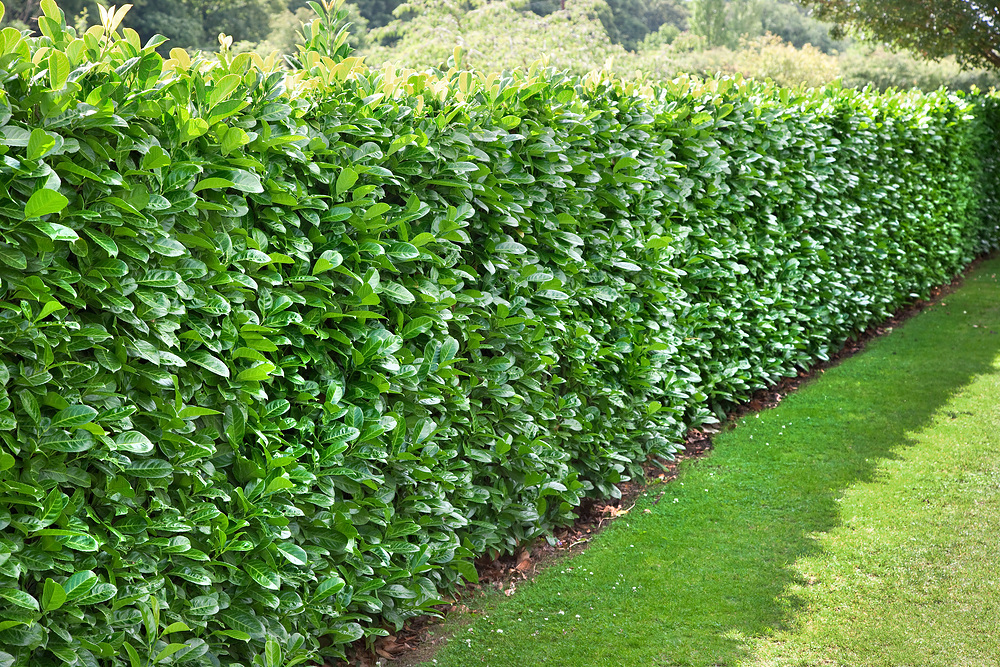
When to prune a laurel hedge
The best time to prune a laurel hedge is late spring or early summer, after the first flush of new growth has matured. A light trim in June keeps the hedge neat, while a second tidy-up in late August or early September helps it stay crisp through winter. The key is to prune when the soft new shoots have darkened and hardened slightly, which gives you a clean finish and avoids a second crop of straggly regrowth before autumn.
Laurel is a vigorous hedging plant, and in a warm, sheltered garden it can put on 30 to 60cm of growth in a season. If you only prune once, aim for June. If your hedge is in a small town garden where a crisp outline matters, or a family garden where you need to keep a clear path, a second light trim around late summer works well. Avoid pruning after September: any soft regrowth after that date can be nipped by early frosts, leaving brown tips that hang around all winter.
- Cherry laurel (Prunus laurocerasus): prune once in June, or twice in June and late August to early September.
- Portuguese laurel (Prunus lusitanica): prune once in late June or July, after the reddish new stems have turned green.
- Avoid routine trimming from October to March, when growth is slow and cut stems may remain visible for longer. Late winter or early spring pruning can still be appropriate when renovating an overgrown hedge.
When to trim a laurel hedge: month by month
Laurel grows most strongly from spring into summer, with pruning usually best once the new shoots have begun to firm up. Use this month-by-month guide to plan routine trimming, leaving enough time for the hedge to recover before cold weather. Always check for nesting birds before starting work.
| Month | Pruning task | Notes |
|---|---|---|
| January | Do not prune | Plant is dormant. Bare brown cuts would show until May. |
| February | Do not prune | Same as January. Focus on checking for winter damage instead. |
| March | Do not prune | Nesting season begins. Law protects active nests. |
| April | Do not prune | New growth appears. Let it extend fully. |
| May | Do not prune (except light tip-pinch) | Growth is soft and sappy. A very light pinch on a small hedge is okay, but wait if you can. |
| June | Main prune | Best month. New growth has hardened. Trim to desired height and width. |
| July | Prune if missed June | Still a good window. Finish any main cuts by mid-month. |
| August | Second light trim | Tidy straggly shoots. Keep cuts light so regrowth is minimal. |
| September | Last chance trim | Only in mild areas. Stop by mid-September to let cuts heal before frost. |
| October | Do not prune | Frost risk increases. Any regrowth will get scorched. |
| November | Do not prune | Plant enters dormancy. Bare root planting season starts. |
| December | Do not prune | Wait until next June for the first trim of the year. |
Nesting birds and the law
Under the Wildlife and Countryside Act 1981, it is an offence to damage or destroy an active bird's nest. The main nesting season runs from March to August, though some birds nest earlier or later. Before you cut a laurel hedge between those months, you must check carefully for nests. If you find one, leave that section untouched until the chicks have fledged.
A dense laurel hedge is a favourite nesting spot for blackbirds, robins and wrens. Watch the hedge for birds carrying nesting material or food, then inspect it carefully before bringing out the tools. A check the day before is useful, but check again immediately before cutting. If you find an occupied nest, postpone work in the affected area until the birds have finished nesting. Do not assume that trimming close to a nest is safe, as noise and movement may disturb the adults.
Secateurs not hedge trimmers: why leaves matter
Large laurel leaves look ragged when sliced in half by a hedge trimmer. The cut edges turn brown, and the whole hedge can look scorched for weeks. The better approach is to use secateurs or loppers to cut individual stems back to a leaf joint. This keeps the remaining leaves whole, so the hedge looks fresh and green straight after pruning.
Cutting individual stems takes longer on a mature boundary hedge, so start with the sides that face the house, patio or main path. Young laurel is usually easier to prune by hand because the stems are thinner and fewer cuts are needed. For a long established hedge, sharp shears or a hedge trimmer can handle the less visible sections, followed by secateurs to remove badly torn leaves. If you do use a hedge trimmer, go back afterwards with secateurs to snip out any half-leaves that catch the eye.
Hard pruning an overgrown laurel
An old laurel hedge that has been left to grow can be cut back hard into old wood, and it will usually regrow. The safest time to do this is in late spring, around May or early June, when the sap is rising strongly and the plant has the whole summer to recover. Cut stems back to 30 to 60cm from the ground, or to a visible cluster of dormant buds on the bare wood.
Hard pruning is a shock, so spread the work over two seasons if the hedge is very thick. Cut one side or the top in the first year, then the other side the following spring. After cutting, water the hedge well during dry spells and apply a general-purpose slow-release fertiliser. New shoots may appear within four to six weeks in favourable growing conditions, although recovery can take longer after severe pruning or during cold, dry weather. Once the shoots are 15 to 20cm long, pinch out their tips to encourage branching and help rebuild a dense framework.
Portuguese laurel trimming
Portuguese laurel grows more slowly and neatly than cherry laurel, with smaller, darker green leaves and reddish stems. It needs less frequent trimming: once a year in late June or July is usually enough. Allow the newest growth to firm up before trimming. The reddish stems are a distinctive feature of Portuguese laurel, so there is no need to wait for every stem to turn green.
Because the leaves are smaller, you can use sharp hand shears on Portuguese laurel without the shredded-leaf problem you get with cherry laurel. Still, secateurs give the cleanest finish on a formal hedge. If you have a mixed planting where Portuguese laurel sits beside other shrubs in a border, a light clip with shears in July keeps it in scale without much effort.
Aftercare after a hard cut
A laurel hedge that has been cut back hard needs a little extra help to push out strong new growth. Water the base thoroughly once a week during dry weather for the first two months. A mulch of well-rotted compost or leaf mould, 5 to 8cm deep, keeps the roots cool and moist. Keep the mulch away from the stems to avoid rot.
Where soil fertility is low, apply a balanced granular fertiliser in spring, following the manufacturer's instructions. Water it into the root zone and avoid excessive feeding, which can encourage soft growth. Container-grown laurel may need more regular feeding during the growing season, alongside careful watering. A healthy hedge can produce substantial new foliage in one season, but recovery after a hard cut depends on its age, root condition and growing conditions.
Frequently asked questions about pruning laurel hedges
Common questions
Can I prune a laurel hedge in winter?
It is best not to prune laurel in winter. Laurel grows much more slowly through the colder months, so pruning cuts can remain visible until spring. Tender new shoots produced during an unusually mild spell may also suffer frost damage. However, late winter or early spring can be suitable for major renovation pruning. Wait until late spring or early summer when the hedge is actively growing.
How do I prune a laurel hedge without damaging the leaves?
Use secateurs or loppers to cut individual stems back to a leaf joint, rather than running a hedge trimmer across the surface. This keeps the large leaves whole and avoids the brown, shredded edges that can make a hedge look scorched. On a long hedge, trim the most visible sections by hand and use shears carefully on the rest, then tidy any torn leaves with secateurs.
What is the difference between pruning cherry laurel and Portuguese laurel?
Cherry laurel grows faster and has larger leaves, so it needs pruning once or twice between June and early September. Portuguese laurel grows more slowly and has smaller leaves, so one trim in late June or July is usually enough. You can use shears on Portuguese laurel without the shredded-leaf problem, but secateurs still give the neatest finish on both types.
How hard can I cut back an overgrown laurel hedge?
You can cut laurel back into old, bare wood down to 30 to 60cm from the ground, and it will usually regrow. Do this in May or early June so the plant has a full growing season to recover. On a very thick hedge, spread the work over two years, cutting one side or the top first, then the other side the following spring.
When should I stop trimming laurel for the year?
Stop trimming laurel by mid-September at the latest. Any later and the soft new growth that follows a cut can be damaged by early autumn frosts, leaving brown tips that stay visible all winter. In colder parts of the UK, finish all trimming by the end of August.
Is it illegal to cut a hedge when birds are nesting?
Yes, it is an offence under the Wildlife and Countryside Act 1981 to damage or destroy an active bird's nest. The main nesting season is March to August. Always check your laurel hedge carefully before trimming during those months, and leave any section with a nest untouched until the chicks have fledged.