Lavandula stoechas 'Bandera Purple'
£9.99 per plant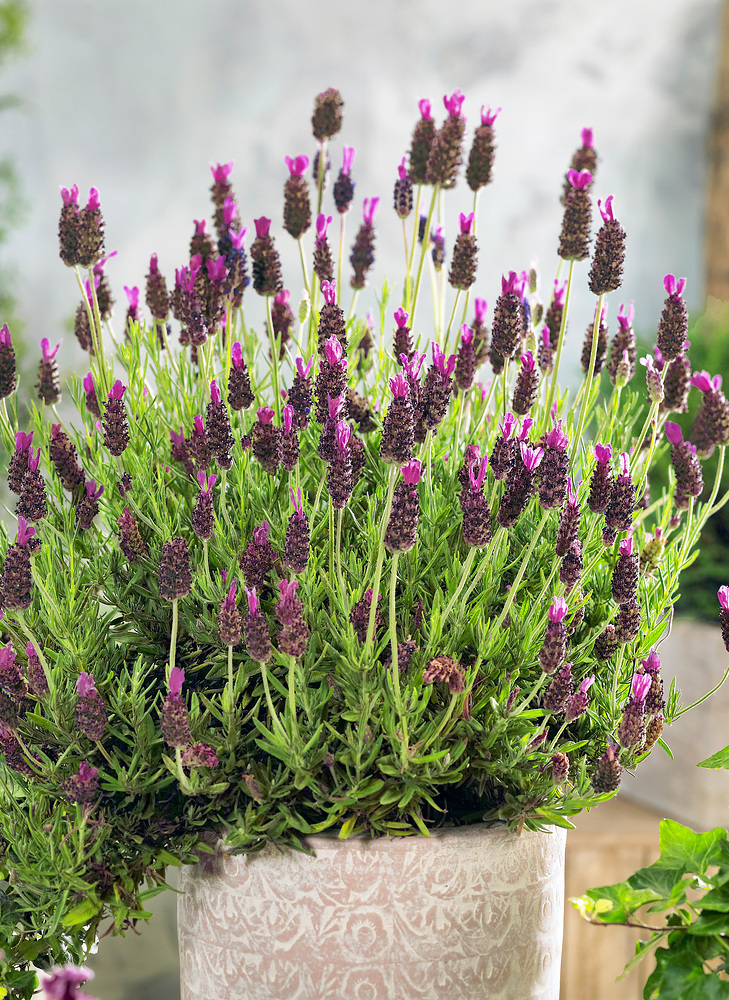
- UK Nursery Grown
- Grow Guarantee
French lavender Bandera Purple (Lavandula stoechas)
Lavandula stoechas 'Bandera Purple'
£9.99 per plant
Bandera Purple is a compact French lavender with dark purple flower heads topped by showy purple flags, all above aromatic grey-green foliage. It loves a sunny patio pot or a sheltered, freely draining border. French lavender is less hardy than English types, so plan to move pots under cover or protect plants during hard frosts.
- Dark purple flowers with purple flags
- Aromatic grey-green foliage
- Compact habit, ideal for pots
1. How would you like it supplied?
Grown and sent in a pot, so you can plant it in any month when the soil is not frozen or waterlogged. Ask us a question
Pots, bare root and rootball
- Bare root
- Arrives with bare roots and little soil. Keep them damp and plant while the weather is cool.
- Rootball
- Arrives with soil wrapped around the roots. Lift it by the soil ball rather than the stems and plant as directed.
- Potted
- Comes in a nursery pot. Each option shows the pot size and the height you will receive.
2. Pick your plant
Not sure which shrub to pick?Tell us about your garden and we will help you choose
Position
Full sun; sheltered position
Soil
Freely draining soil
Supplied size
1 litre pot
Ordering
Order from 1 plant
Description
French lavender Bandera Purple (Lavandula stoechas)
What is French lavender Bandera Purple?
French lavender Bandera Purple is a neat, branching evergreen shrub that carries its flowers on short spikes topped with a tuft of purple bracts, like little flags. The flowers are a rich dark purple and the narrow leaves are grey-green and strongly fragrant when brushed. It stays naturally compact, making it a good choice for pots on a sunny patio or for the front of a border where you can enjoy the scent up close.
Why choose French lavender Bandera Purple?
Bandera Purple produces its distinctive dark flower heads from late spring into summer when grown in full sun and freely draining soil. Its grey-green leaves remain aromatic between flowering periods, particularly when brushed along a path or patio. The bumblebee-friendly flowers appear from late spring and often carry on into summer, and a light trim after the first flush can encourage a second show. Because it stays small and bushy, it rarely outgrows its spot. The aromatic foliage releases scent whenever you brush past, making it perfect beside a path, doorway or seating area.
How tall and wide does it grow, and how quickly?
Expect Bandera Purple to reach around 40 to 60cm tall with a similar spread, forming a rounded mound. It is a moderate grower, putting on roughly 10 to 15cm of growth each year once settled. Container-grown plants may remain smaller, especially where root space is limited. Allow enough room around the pot for the rounded branches and flower stems to develop.
Where can I use French lavender Bandera Purple?
Give Bandera Purple the sunniest, best-drained position available. Its roots are particularly vulnerable to prolonged wet conditions during winter. Use it in a terracotta pot by the front door, line a sunny path with a row of them, or dot several through a gravel garden. French lavender is also happy in raised beds where winter wet drains away quickly. Avoid heavy clay or spots that stay damp in winter, unless you improve drainage with plenty of grit or grow it in a raised container.
Choosing a size
Bandera Purple is supplied in 1 litre pots, with options for 1, 2 or 4 plants. A single plant suits an individual patio container, two can be positioned beside a doorway, and four give enough plants for a short run along a sunny path or several matching pots.
Use the quantities and spacing below to plan your planting.
| Option | Supplied size | Pot or root type | Best for | Plants per metre |
|---|---|---|---|---|
| 1 plant | 1 litre pot | Pot grown | A single pot for a table or small patio | 30 to 40cm apart |
| 2 plants | 1 litre pot | Pot grown | A matching pair for a doorway or path | 1 per 30 to 40cm |
| 4 plants | 1 litre pot | Pot grown | Filling a border drift or a set of pots | 1 per 30 to 40cm |
What is special about French lavender compared to English lavender?
French lavender (Lavandula stoechas) stands out because of the tufted 'ears' or flags on top of each flower spike. English lavender (Lavandula angustifolia) has simpler, more slender flower heads without those flags. French lavender also tends to flower earlier and for longer in mild conditions, but it is less hardy. If you garden in a colder part of the UK or have heavy soil, English lavender is often the safer choice. In a sheltered town garden or a pot you can move under cover, French lavender can flower over an extended period in mild weather, with its tufted purple flower heads creating a distinctive display.
Growing and care
Planting and looking after it
When and how should I plant French lavender?
Pot-grown French lavender can be planted at any time the ground is workable, but spring is ideal. That gives the roots a full growing season to settle before winter. Water the pot well before planting. Dig a hole the same depth as the pot and twice as wide, and mix a little grit into the backfill if your soil is heavy. Set the plant so the top of the rootball is level with the soil surface, firm in gently and water thoroughly.
How far apart should I space French lavender plants?
For a dense, informal hedge or a ribbon of lavender along a path, space plants about 30 to 40cm apart. In a mixed border or gravel garden, you can give them a little more room, around 40 to 50cm, so each plant keeps its rounded shape. The table below shows how many plants you need for common lengths.
table rows markdown formatted for clarity, but output as JSON array of arrays
| Length to cover | Spacing 30cm (dense) | Spacing 40cm (medium) |
|---|---|---|
| 5 metres | 17 plants | 13 plants |
| 10 metres | 34 plants | 25 plants |
| 20 metres | 67 plants | 50 plants |
How do I water, feed and trim French lavender?
Water regularly while the plant establishes, especially in the first few months. Once the roots are down, French lavender is drought-tolerant. In pots, check the compost in warm weather and water when the top few centimetres feel dry. Never leave a pot standing in a saucer of water. Feed lightly in spring with a general-purpose liquid feed, but avoid rich fertilisers that encourage soft growth at the expense of flowers.
Trim lightly after the main flush of flowers fades, usually in late summer. Cut back the spent flower stems to just above a set of leaves, always staying within the green, leafy growth. Avoid cutting into bare woody stems, as these rarely regrow well. A light annual trim keeps the plant compact and encourages more blooms the following year.
Will French lavender survive a UK winter?
French lavender is less cold-tolerant than English lavender and may be damaged when temperatures fall below around minus 5 degrees Celsius. Survival depends on drainage, exposure, how long the frost lasts and whether the roots remain wet. In colder areas or during harsh winters, it needs protection. Wet winter soil is often more damaging than cold alone. If you are growing it in a pot, move it to a cold greenhouse, a porch or against a warm house wall. In the ground, mulch the roots with grit and consider covering the plant with horticultural fleece when prolonged frost is forecast.
Choose plants for sunny containers Compare single plants and packs Watering and seasonal care
Our planting guideMore growing help: RHS plant and growing guidance
Sizes and prices
French lavender Bandera Purple sizes, prices and minimum orders
| Option | Supplied height | Pot or root | Plants | Price | Minimum order | Availability |
|---|---|---|---|---|---|---|
| 1 litre pot | 1 plant | – | 1 litre pot | 1 | £9.99 per plant | None | Unavailable |
| 1 litre pot | 2 plants | – | 1 litre pot | 2 | £18.99 per pack | None | Unavailable |
| 1 litre pot | 4 plants | – | 1 litre pot | 4 | £24.99 per pack | None | Unavailable |
Prices are for the option you select. Pack size is the number of plants you receive, and the minimum order is the smallest number we can send.
How sizes and quantities workDelivery
Delivery for your plant order
You will see delivery options and any charge in your basket before you pay.
Your plants are alive when they reach you, so open the box on the day, water if the compost feels dry and stand them somewhere sheltered until planting.
Delivery informationPlant questions
Good to know
Will French lavender come back each year?
Yes, French lavender is a perennial evergreen shrub, so it keeps its leaves through winter and flowers again the following year. In colder parts of the UK, it may suffer dieback or be killed by a hard winter. Giving it full sun, sharp drainage and some winter protection greatly improves its chances of returning strongly each spring.
What is the difference between lavender and French lavender?
The main difference is the flower shape. French lavender (Lavandula stoechas) has a short, dense flower spike topped with a tuft of showy bracts, often called flags or ears. English lavender (Lavandula angustifolia) has longer, simpler flower spikes without those flags. French lavender also tends to be less hardy and flowers earlier, while English lavender is tougher in cold, wet winters and has a more traditional lavender scent.
Does French lavender survive UK winter?
In mild, sheltered gardens, French lavender usually comes through winter without trouble. In colder areas or during very wet winters, it can struggle. The key is excellent drainage and a warm, sunny spot. Growing it in a pot lets you move the plant under cover when hard frosts are forecast, which is often the safest approach in northern or exposed gardens.
What is special about French lavender?
French lavender stands out because of the distinctive tufted flower heads that look like little purple butterflies. It flowers over a long season, often from late spring well into summer, and a light trim can bring a second flush. The aromatic grey-green foliage adds fragrance to a patio or path, and its compact size makes it perfect for pots and small spaces.
Can I grow French lavender in a pot?
Yes, it is one of the best lavenders for container growing. Use a pot with good drainage holes and a freely draining compost mix, adding extra grit or perlite. Place the pot in full sun and water when the compost feels dry. A container also makes it easy to move the plant to a sheltered spot in winter.
How hard should I prune French lavender?
Prune lightly, never hard. After the flowers fade, trim back the spent flower stems to just above a set of healthy leaves, always staying within the green growth. Cutting into old, bare wood often stops the plant from regrowing. A gentle annual trim keeps the shape neat and encourages more flowers next year.
Ask us about this plant