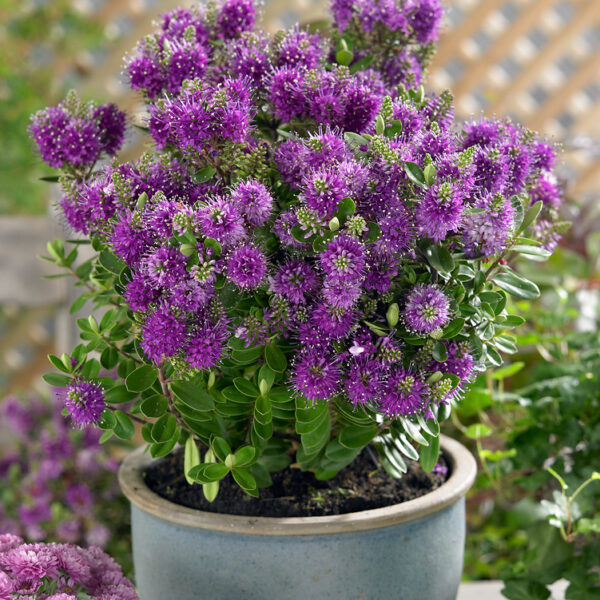
Veronica 'Red Edge' (Hebe 'Red Edge')
£13.99 per pack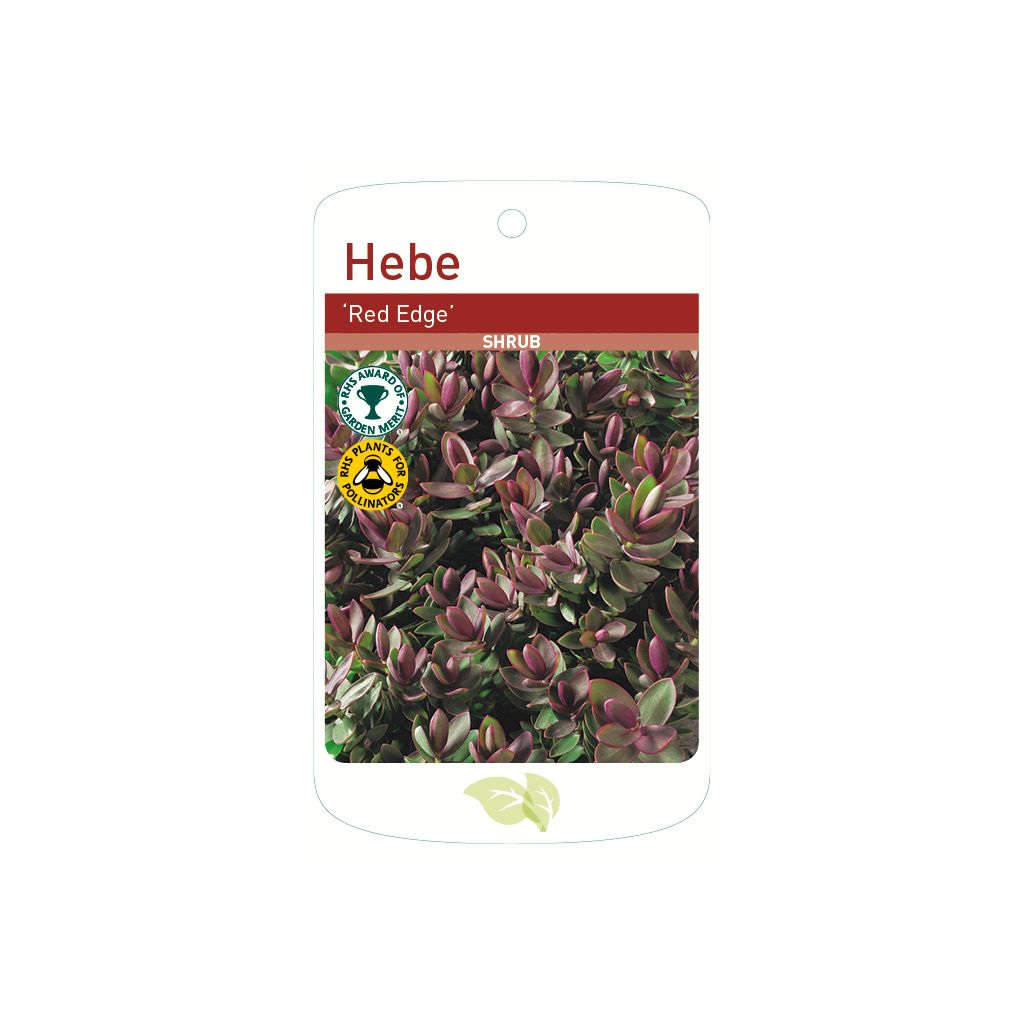
- UK Nursery Grown
- Grow Guarantee
Hebe Red Edge Shrub: Veronica Red Edge Plants
Veronica 'Red Edge' (Hebe 'Red Edge')
£13.99 per pack
Hebe Red Edge is a neat, rounded evergreen shrub with blue-grey leaves finely edged in red, especially vivid in winter. Pale mauve flower spikes appear in summer, fading to white. Its compact shape suits the front of a sunny border, a rock garden or a patio pot. Needs well-drained soil and shelter from cold winds.
- Blue-grey leaves with red winter margins
- Compact, rounded evergreen shrub
- Pale mauve summer flower spikes
1. How would you like it supplied?
Grown and sent in a pot, so you can plant it in any month when the soil is not frozen or waterlogged. Ask us a question
Pots, bare root and rootball
- Bare root
- Arrives with bare roots and little soil. Keep them damp and plant while the weather is cool.
- Rootball
- Arrives with soil wrapped around the roots. Lift it by the soil ball rather than the stems and plant as directed.
- Potted
- Comes in a nursery pot. Each option shows the pot size and the height you will receive.
2. Pick your plant
Not sure which shrub to pick?Tell us about your garden and we will help you choose
Position
Sun or partial shade, sheltered spot
Soil
Moist but well-drained soil
Supplied size
9cm pot
Ordering
Order from 1 pack
Description
Hebe Red Edge Shrub: Veronica Red Edge Plants
What is Hebe Red Edge?
Hebe Red Edge is a compact evergreen shrub grown for its small, blue-grey leaves and fine red margins. The red edge becomes stronger in cold weather, giving winter interest long after the flowers have faded. Botanically it is now listed as Veronica 'Red Edge', though most gardeners still know it as a hebe.
The shrub forms a low, rounded outline that rarely needs much trimming. Short spikes of pale mauve flowers open in summer and gradually fade to white, attracting bees and other pollinators. Its naturally rounded habit suits sunny border edges, sheltered coastal gardens and patio containers, with little pruning needed beyond occasional tidying.
Why choose Hebe Red Edge?
The blue-grey foliage develops stronger red margins as temperatures fall, while short, pale mauve flower spikes appear in summer. Against dark green shrubs, the fine leaf edges are particularly noticeable in winter. Hebe Red Edge keeps a compact, rounded shape naturally, so regular clipping is rarely necessary.
Hebe Red Edge tolerates coastal air and grows well in containers with free-draining compost. It still needs protection from severe, cold winds and persistently wet soil, especially during winter. A pack of several plants lets you repeat the silvery blue foliage through a scheme, tying different parts of the garden together.
How big does Hebe Red Edge grow and how fast?
Expect a mature height and spread of around 60 to 75cm, though in ideal conditions it can reach 90cm. It is a slow to moderate grower, putting on roughly 10 to 15cm of new growth each year. The compact habit means it fills its space without swamping neighbouring plants.
Its rounded growth makes it easier to place near paths than a tall, spreading shrub, although the mature branches still need space. Container-grown plants may remain smaller than those in open ground, particularly where root space is restricted. If you are planting a group, allow about 50 to 60cm between the centres so each shrub can develop its rounded outline without crowding.
How to use Hebe Red Edge in your garden
At the front of a sunny border, three or five plants spaced in a loose group create repeated mounds of blue-grey foliage. Dark green evergreens bring out the red leaf margins, while bronze carex and fine ornamental grasses provide a contrasting texture. Leave room around each shrub so the lower branches receive light.
In a family garden, Hebe Red Edge is soft enough to brush past without scratching. It works well in a rock garden or at the top of a low wall, where you can see the leaf detail close up. Along a new garden path or driveway, a repeated row of these shrubs gradually forms a low evergreen edge. Keep them back from the paving to allow for their mature spread.
Containers are another strong option. A pair of matching pots either side of a front door, or a single specimen in a wide terracotta pot on a sunny patio, will look good all year. Just make sure the pot has generous drainage holes and use a soil based compost mixed with a little grit.
Choosing a size: Hebe Red Edge packs
Hebe Red Edge is available in 9cm pots in packs of 2, 3, 4 or 6 plants. Two work as a pair of patio specimens, while three or more allow you to repeat the foliage along a border. The table shows the listed quantities and their suggested planting uses.
Smaller packs are ideal for trying the variety in a pot or filling a gap, while the larger packs give you enough plants to create a repeated drift along a border. All options use 9cm pots, although individual plants may differ slightly in height and branching. Choose the quantity according to the available planting space and allow for a mature spread of around 60 to 75cm.
| Pack option | Supplied size | Pot or root type | Best for | Plants per pack |
|---|---|---|---|---|
| 9cm pot | 2 plants | Young plant, approx 10 to 15cm | 9cm pot | A pair of patio pots or filling two gaps | 2 |
| 9cm pot | 3 plants | Young plant, approx 10 to 15cm | 9cm pot | A group of three in a small border | 3 |
| 9cm pot | 4 plants | Young plant, approx 10 to 15cm | 9cm pot | Four plants for a short front of border row | 4 |
| 9cm pot | 6 plants | Young plant, approx 10 to 15cm | 9cm pot | A longer drift or splitting between pots and beds | 6 |
Are hebes better in pots or the ground?
Hebe Red Edge grows happily in both, as long as the roots never sit in wet soil. In the ground, choose a spot where water drains freely after rain. In a pot, you have more control over the compost and can move the plant to a sheltered corner in a harsh winter.
Potted hebes do need more attention to watering. Check the compost regularly in summer, because a container in full sun can dry out surprisingly fast. A mulch of gravel on top of the compost helps retain moisture and shows off the foliage colour.
Growing and care
Planting and looking after it
When and how to plant Hebe Red Edge
You can plant pot grown Hebe Red Edge at any time of year when the ground is not frozen or waterlogged. Spring and early autumn are ideal, giving the roots a chance to settle before the extremes of summer heat or winter cold. In a coastal or mild garden, winter planting is usually fine too.
Water the nursery pot thoroughly before planting. Dig a hole slightly wider than the rootball and set the plant at the same depth it was in the pot. Backfill with the garden soil, firm gently and water well. For containers, use a mix of two thirds soil based compost and one third horticultural grit, and make sure the drainage holes are clear.
Spacing Hebe Red Edge for groups and borders
If you are planting a group or a front of border row, space the plants about 50 to 60cm apart. This gives each shrub room to develop its natural rounded shape without gaps looking too large in the first couple of years. For a denser, quicker effect you can reduce the spacing to 40cm, but be prepared to lift and move every other plant if they start to crowd.
The table below shows how many plants you need for three common border lengths. These numbers are a guide for a single row at 50cm spacing.
| Border length | Plants needed (at 50cm spacing) | Recommended pack |
|---|---|---|
| 5 metres | 10 plants | Two packs of 6 (12 plants, with two spare) |
| 10 metres | 20 plants | Four packs of 6 (24 plants, with four spare) |
| 20 metres | 40 plants | Seven packs of 6 (42 plants, with two spare) |
Watering and feeding
Keep the soil or compost evenly moist during the first growing season while the roots establish. After that, Hebe Red Edge is fairly drought tolerant in the ground, though a good soak during prolonged dry spells will keep the foliage looking its best. Pots need more regular checking: water when the top few centimetres of compost feel dry.
Feed lightly in spring with a general purpose granular fertiliser or a controlled release feed for shrubs. Avoid high nitrogen feeds, which can produce soft growth that is more vulnerable to frost. A mulch of garden compost or leaf mould around the base in spring helps retain moisture and gradually feeds the soil.
Trimming and care calendar
Hebe Red Edge needs very little pruning. If you want to tidy the shape, trim lightly after flowering in late summer or early autumn. Always cut back to a healthy leaf or side shoot, and never cut hard into bare, woody stems because hebes do not reliably regrow from old wood.
Remove any frost damaged shoots in spring once you see new growth starting. Deadheading spent flower spikes is optional but keeps the shrub looking neat. The table below gives a simple month by month reminder.
| Month | Task |
|---|---|
| March to April | Remove winter damaged shoots; apply spring feed and mulch |
| May to August | Water during dry spells; enjoy the flowers |
| September to October | Light trim after flowering if needed |
| November to February | Check pots are not waterlogged; move to shelter in very cold spells |
Choose shrubs for borders and pots Choose your pack size Planting and aftercare essentials
Our planting guideMore growing help: RHS plant and growing guidance
Sizes and prices
Hebe Red Edge sizes, prices and minimum orders
| Option | Supplied height | Pot or root | Plants | Price | Minimum order | Availability |
|---|---|---|---|---|---|---|
| 9cm pot | 2 plants | – | 9cm pot | 2 | £13.99 per pack | None | Unavailable |
| 9cm pot | 3 plants | – | 9cm pot | 3 | £14.99 per pack | None | Unavailable |
| 9cm pot | 4 plants | – | 9cm pot | 4 | £15.99 per pack | None | Unavailable |
| 9cm pot | 6 plants | – | 9cm pot | 6 | £19.99 per pack | None | Unavailable |
Prices are for the option you select. Pack size is the number of plants you receive, and the minimum order is the smallest number we can send.
How sizes and quantities workDelivery
Delivery for your plant order
You will see delivery options and any charge in your basket before you pay.
Your plants are alive when they reach you, so open the box on the day, water if the compost feels dry and stand them somewhere sheltered until planting.
Delivery informationPlant questions
Good to know
How big does Hebe Red Edge grow?
It typically reaches 60 to 75cm in height and spread, and in good conditions can reach about 90cm. It is a slow to moderate grower, adding roughly 10 to 15cm of new growth each year. The compact, rounded habit means it rarely outgrows its space, making it a reliable choice for smaller gardens and containers.
Are hebes better in pots or the ground?
Hebe Red Edge grows well in both. In the ground it needs a spot with good drainage. In a pot you have more control over the soil, but you must check watering more often because containers dry out faster. A pot also lets you move the plant to a sheltered spot in a very cold winter, which can be useful in frost prone areas.
Where is the best place to plant a hebe?
Choose a sunny or lightly shaded position with shelter from cold, drying winds. A south or west facing border is ideal. Hebe Red Edge also copes well with coastal conditions, so it is a good choice for seaside gardens. Avoid low lying spots where water collects after rain, because wet winter soil can damage the roots.
When to plant Hebe Red Edge?
Pot grown plants like ours can be planted at any time of year, as long as the soil is not frozen or waterlogged. Spring and early autumn give the roots the easiest start, avoiding the stress of summer heat or deep winter cold. In mild gardens and coastal areas, winter planting is usually fine too.
How much ground or how many pots will a pack of 2 cover?
A pack of 2 gives you two individual plants. You could fill two medium patio pots, place one on each side of a doorway, or plant them about 50cm apart in a border for a small pairing. If you want a longer row, choose a larger pack size. The 6 plant pack covers roughly 2.5 to 3 metres of border at 50cm spacing.
Is Hebe Red Edge toxic to pets or people?
Hebe Red Edge is not generally regarded as a highly poisonous garden shrub, but this should not be taken as a guarantee that eating it is harmless. Discourage children and pets from chewing leaves or flowers, as unfamiliar plant material can cause irritation or stomach upset. Wash hands after gardening and seek veterinary or medical advice if a significant amount is swallowed.
Ask us about this plantGoes well with